


Captivating Rajgir
(vero;2025-July-30)
Rajgir has been on our radar since our Nindia13 trip: we had designed a "Buddha Circuit" within the trip and had thought of the town as the base to visit the ruins of the Buddhist university of Nalanda. Alas, we were a bit India-tired when we passed through Bihar on our way to Nepal, so we had skipped Nalanda promising ourselves to come back later. And when we planned this trip aimed at "filling the gaps" it was obvious that Rajgir would definitely be on the map. 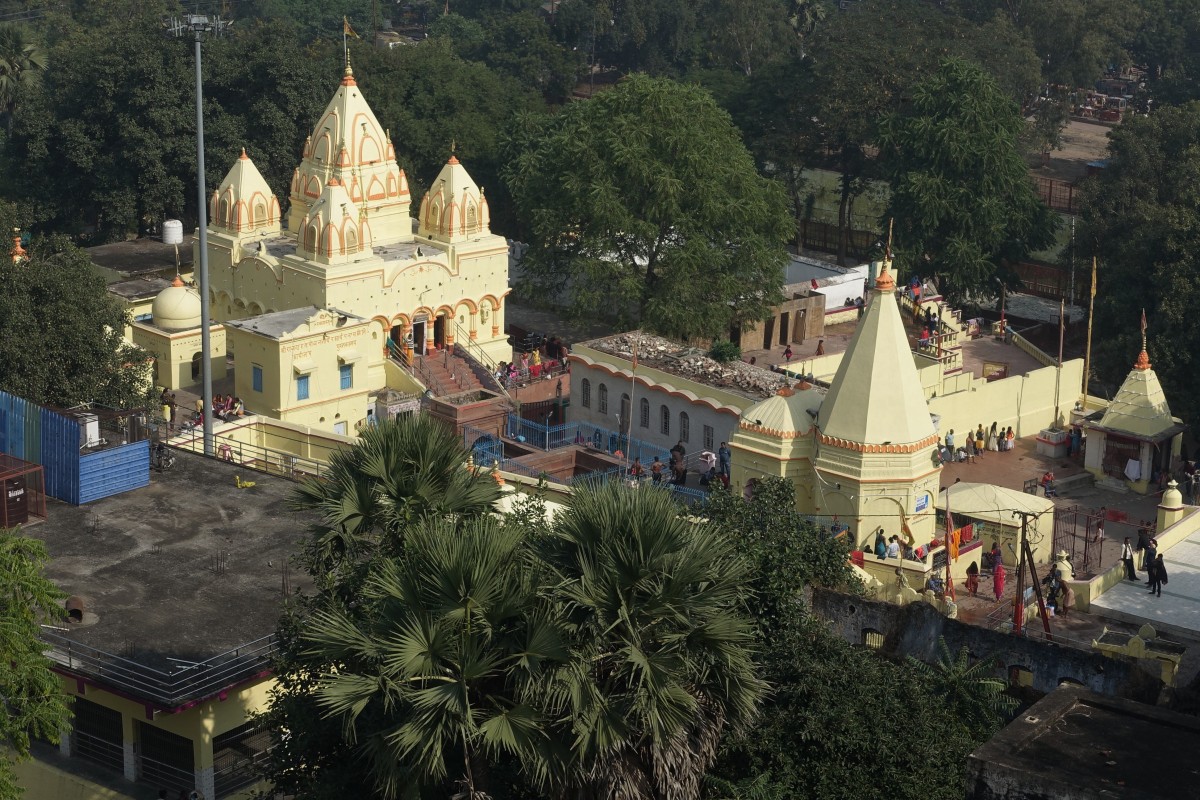
We took a night train from Varanasi to Rajgir (BUDHPURNIMA EXP for 259 Rs p.p. in Sleeper class) where we arrived in the early hours. It was still dark so we waited for a while at the station before heading into town. Rajgir was quite sleepy in the morning but we managed to wake somebody up and find a room in the "Raj Hotel" not far from the bus station, a basic no-frills place, clean and friendly.
We enjoyed Rajgir very much; we had not expected the diversity of sites around the town, the hilly landscape and the many pilgrims and tourists to the place, Buddhists, Jains and Hindus alike. We witnessed a few weddings in the evenings, all very loud and happy occasions and we keep wonderful memories of our stay in the town.
 We spent our first day exploring the immediate surroundings of Rajgir (all on foot). The town is surrounded by five holy hills dotted with temples and caves and it was a pleasure to be back in a rural environment after the busy and polluted towns of Uttar Pradesh. Rajgir sees quite a lot of visitors and is an important stop for many pilgrims: Mahavira (599-527 BCE), founder of Jainism spent fourteen "rainy seasons" preaching there while Gautama Buddha (566-486 BCE) spent several months meditating and preaching some defining sermons in the neighbouring hills. Hindus are also coming in numbers to pay their respect at the Lakshmi Narayan Temple, mentioned in the Mahabharata (one of the two great epics of India) and blessed with the presence of hot springs.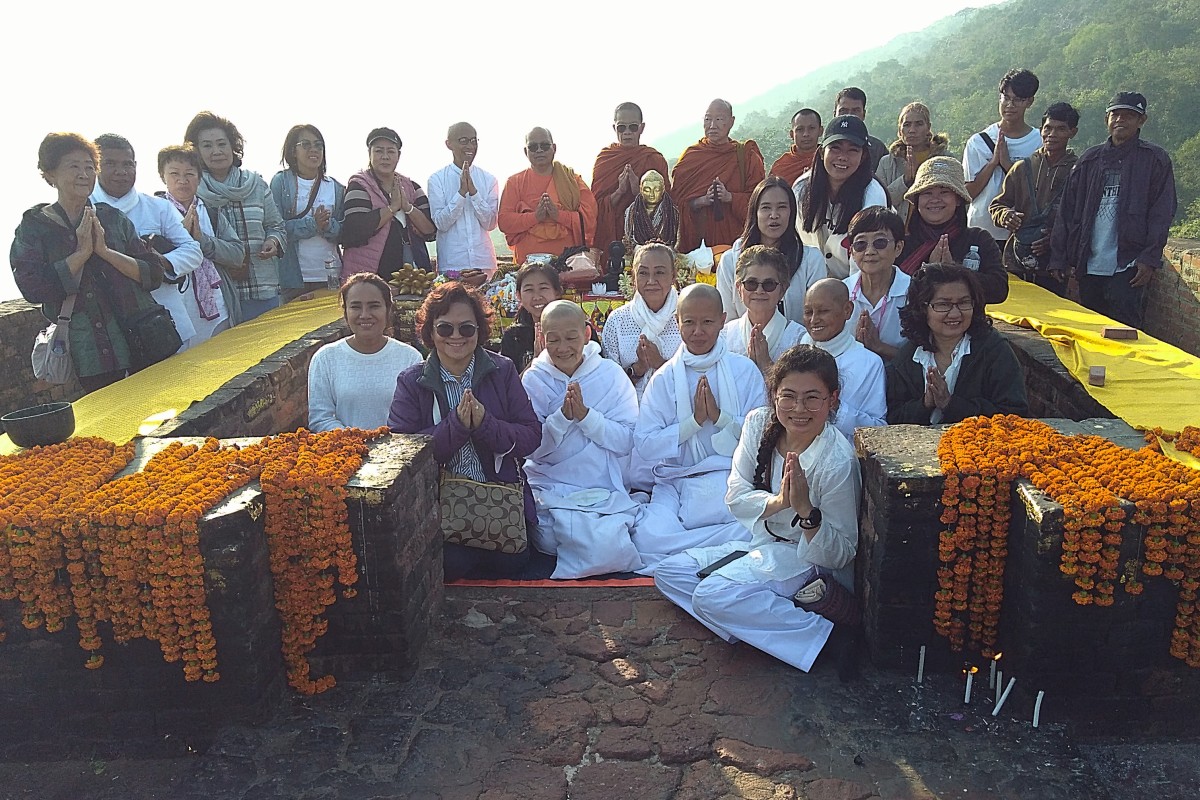
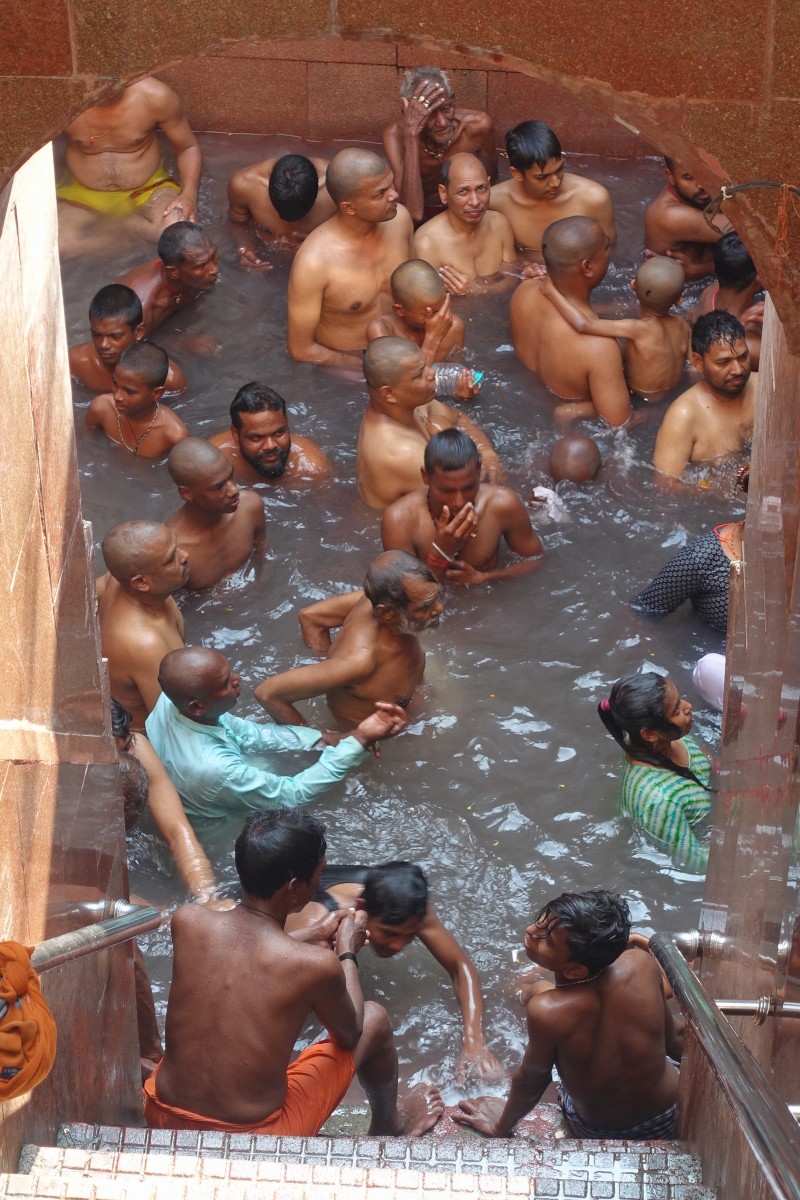
Our first stop was the Lakshmi Narayan Temple at the foot of Vaibhara Hill: it was quite busy and fun to watch with many people enjoying the hot springs. Men and women were bathing in different underground pools, the women in full clothing, but we found the colour of the water not very appealing. We then continued up the hill (180 m elevation) to find the Saptaparni Cave, the place where the first Buddhist council met six months after the Buddha's death in order to write down his teachings. The cave is quite nondescript, we could not go inside and except for a group of Westerners meditating in front of it, there was nobody around.
Our next stop was Ratnagiri Hill topped by the white Japanese built Vishwashanti Stupa, which meant we had to go all the way back down to the road and climb again (230 m elevation) to reach it. The stupa is 40 m high and features four gilded statues of Buddha in the four stages of his life (birth, enlightenment, preaching and death); there should be a rope way to get there but it was closed when we visited. The place was busy with many families and groups, the atmosphere happy and cheerful and the views over the surrounding countryside quite good.
We left the stupa and wandered a short walk away to Griddhakuta Hill also known as Hill of the Vultures, a highly venerated Buddhist place, where the Buddha preached two of his most famous sermons and whose slopes are dotted with caves where he is believed to have retreated several times. The atmosphere was much quieter with many devotees paying their respects.
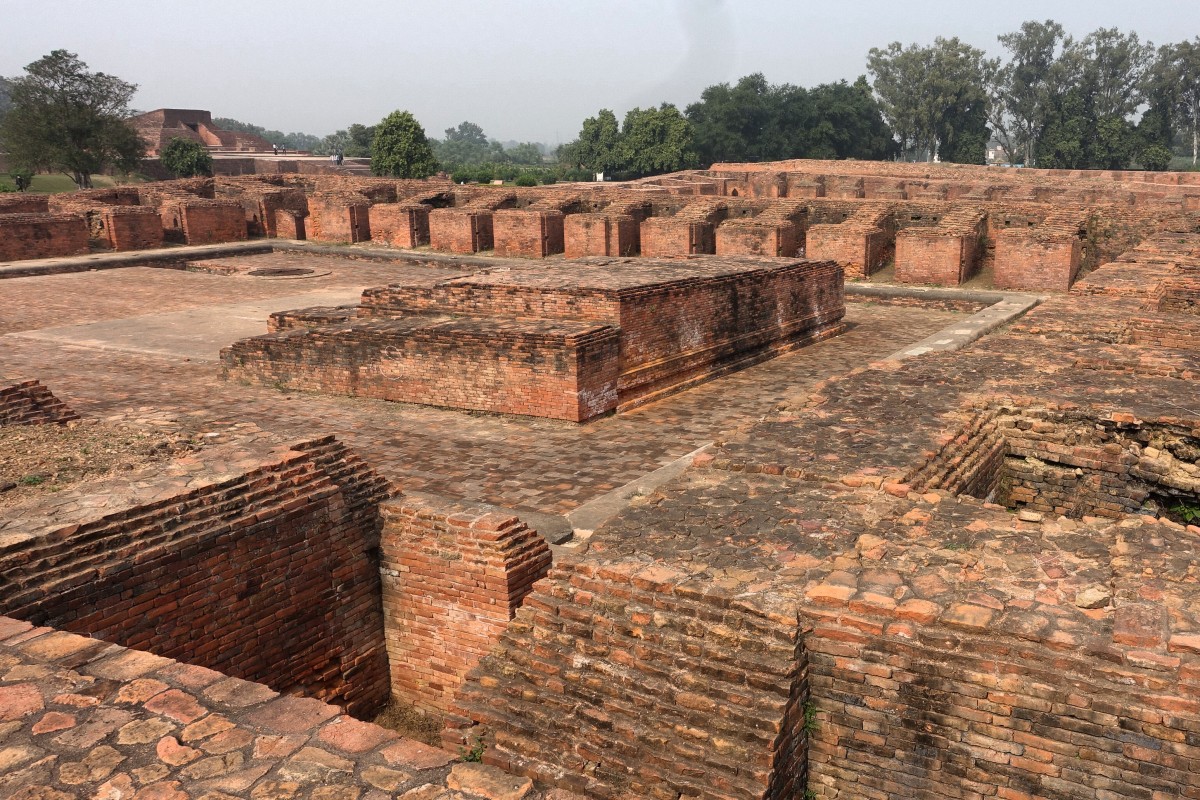 Our second day was Nalanda day (at last!); the Buddha himself is said to have delivered lectures in a mango grove near the village of Nalanda; furthermore, one of his two chief disciples, Shariputra, was born in the area and later attained nirvana there. But it was not until the fifth century AD that the site started developing into an important religious centre, eventually becoming a highly reputed centre of knowledge, an university which fame attracted thousands of students and monks from all over Asia. Its decline started in the eighth century with the rise of Hinduism, the final blow being delivered in 1199 AD when Muslim invaders sacked and looted Nalanda.
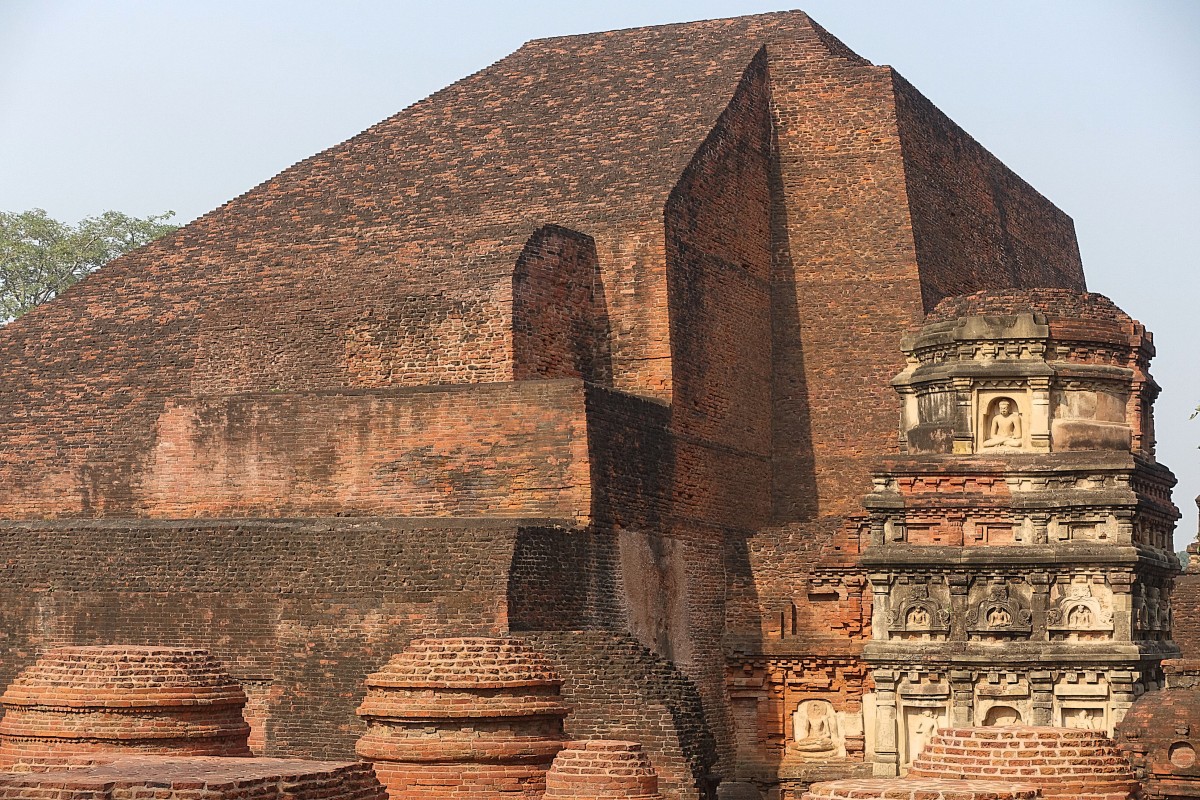 We took a bus bound for Bihar Sharif which we left at Nalanda town (20Rs one-way p.p.). It is an easy three km walk to the ruins from the bus stop but tuk-tuks ply the road for those such inclined. We did not expect much of the ruins and were positively surprised. The site is large and contains only ruins but for once, we found it easy to imagine how the whole complex might have looked with its numerous temples and monasteries, all built in red brick. The temples follow a well-defined layout: they all have a square outline with a stupa (many of which are still quite impressive) in the centre and shrines, many still boasting some carvings dotted around. The structure of the monasteries (11 of them) is easily recognisable although only foundations and low walls remain, with an inner courtyard surrounded by monks' cells.
We concluded the visit with a stop at the adjacent museum (5Rs p.p.) which we truly recommend. Inside are beautiful carvings and many stone and bronze statues found at Nalanda and neighbouring sites, all well-presented and without overload.
We had some time left on our hand, so we decided to walk two to three kms north of the ruins to the unprepossessing village of Kundalpur; it is the alleged birth place of Mahavira, the founder of Jainism and home to a forgettable big white Jain temple cum pilgrim centre built in his honour. We took a tuk-tuk back to the main road and the bus stop (50Rs for the both of us).
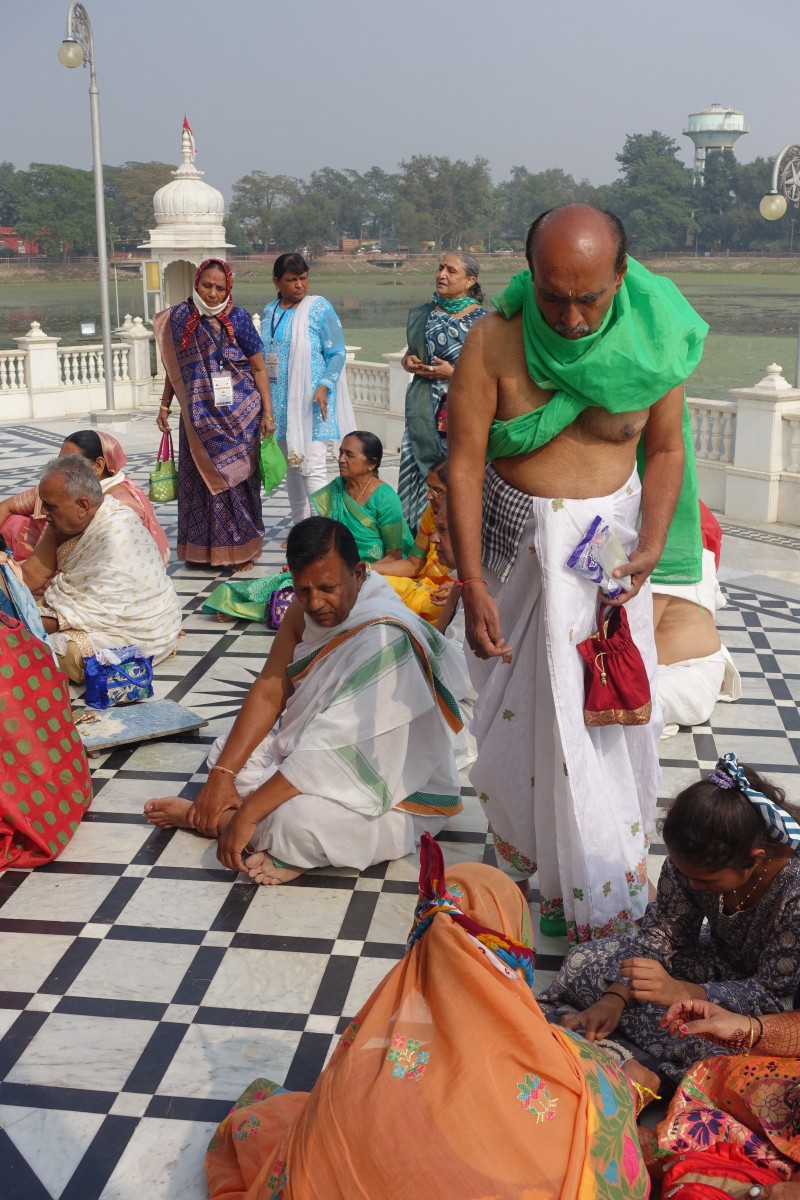 For our final day, we decided to go to Pawapuri, a place sacred to Jains as it is the place where Mahavira died in 527 BC. Jal Mandir, a white marble temple located in the middle of a lotus-filled sacred water tank has been built on the site of his cremation. Contrary to the temple in Kundalpur, this one was brimming with devotees and very busy. Most pilgrims were part of groups touring important Jain sites in Bihar and around; many of them for example had just climbed Parasnath Hill the day before (our next stop!). Many men were draped in white or pale robes while the women were dressed in their usual saris. Some of them held a white handkerchief in front of their mouths (maybe to avoid swallowing innocent insects inadvertently?). The atmosphere was a quiet one, no comparison to the usual hectic of a Hindu temple. We went around the water-tank and crossed the road to the Juna Samvasarna Mandir: a beautifully carved temple which we enjoyed more than the Jal Mandir.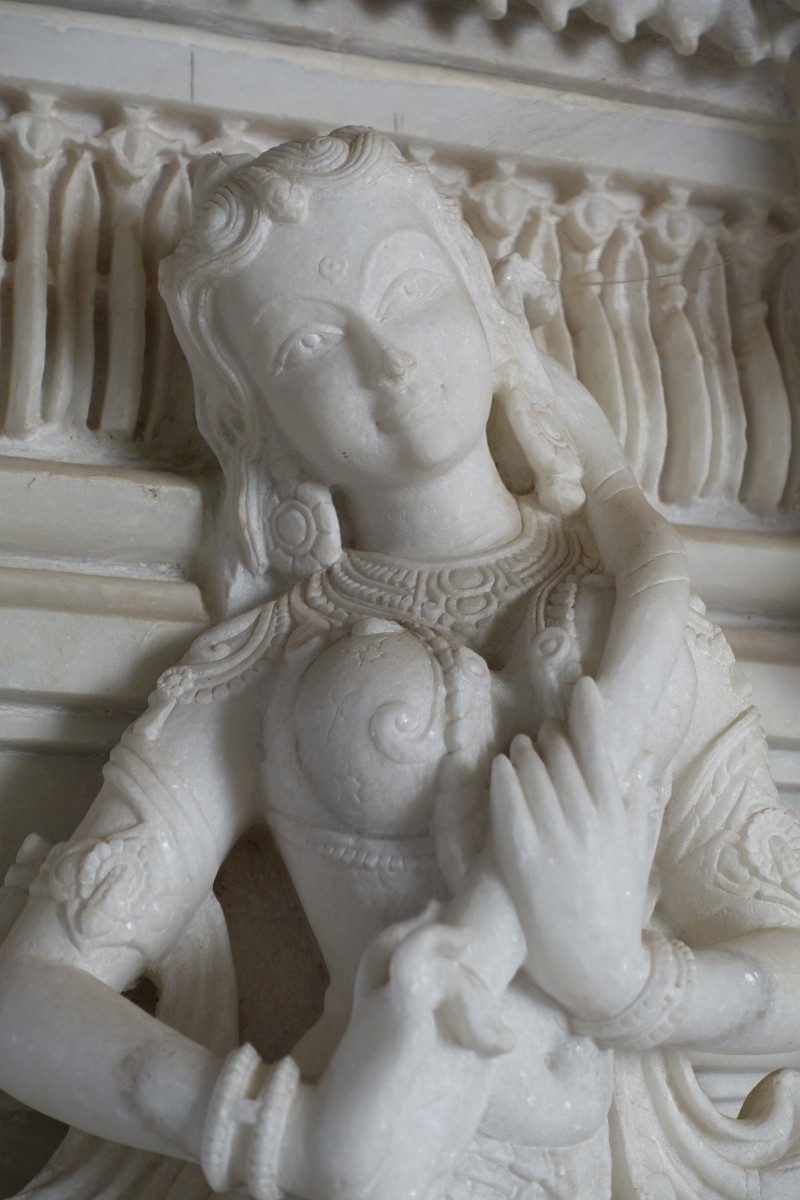
This was a good outing and getting there (and back) was half the fun: there is no direct bus from Rajgir to Pawapuri, one has to travel via Ghiriyak. We left Rajgir walking along the road to Ghiriyak and started hitch-hiking. A bus stopped but wanted 30 Rs p.p. for the mere 12 km to Ghiriyak, so we gave it a pass and were soon picked-up by an insurance representative who dropped us at the crossroad NH20/SH71. The village runs along the busy NH20 road (Bihar Sharif to Patna) and is overshadowed by a huge fly-over which is currently being built as a future by-pass. We walked below the fly-over until we reached the point where it rejoins the old road and tried hitch-hiking again. A car stopped very soon: it was on its way to Patna and on board were a bio-chemistry professor, his son and a chauffeur. The man was very chatty and friendly and asked his chauffeur to make a small detour to drop us right in front of the temple. This was really nice.
The return trip got more adventurous... We left the temple area and walked along the road until we reached its junction with the NH20 and waited, and waited, and waited until a pick-up stopped at last and was OK to drop us in Ghiriak. Or so we thought: we were approaching Ghiriak, we did not pay that much attention and our driver took the fly-over before we realised that he should have taken the exit into Ghiriak. So we were driving with Ghiriak below us and no chance to get down. There was no end to the fly-over, so we asked the man to stop, left the car and surveyed the situation: we were past the crossroad to Rajgir by a good distance and it was impossible to come down which meant that we had to walk all the way back to its very beginning. This was not fun but fortunately the south-north lane was still closed to traffic so we were safe. At one point in time, we spotted a slip road: hurrah! we would not have to go until the bitter end. Alas, the slip road was not finished and after a while, we faced a drop of 6m down a concrete wall: this meant end of road and we were quite frustrated. And then we saw them: working men waving to us from the street below. One of them, an excavator driver got a great idea and mimicked that he could bring the digging bucket of his machine to the top of the wall for us to climb into it and be brought down (if we were not afraid!). We found the idea really good and down we went amidst laughter and shouts down to the road. Too bad that we did not think of filming or taking a photo of the situation. We thanked them profusely and headed back to our crossroad where a car quickly stopped for us: two employees of the AXIS bank on an inspection tour took us all the way to Rajgir.
End of a wonderful stay, Rajgir was a definite highlight of our trip.
Want to read more? Go back to Uttar Pradesh with a Difference or go on to Climbing Parasnath Hill or go up to Blog
$ updated from: Blog.htxt Sun 24 May 2026 15:57:26 trvl2 — Copyright © 2026 Vero and Thomas Lauer unless otherwise stated | All rights reserved $