



Our Trip Highlights
(vero;2026-May-17)
In chronological order:
The People of the North-East
One defining memory of this trip is of all the people we met in those two months. They were all welcoming, curious and eager to speak with us.
Sunny, the young man on the picture below gave us a lift to North Guwahati so we could catch the ferry back to the other side of the Brahmaputra. He is a musician, a drummer, you can watch and hear him play on his YouTube channel.
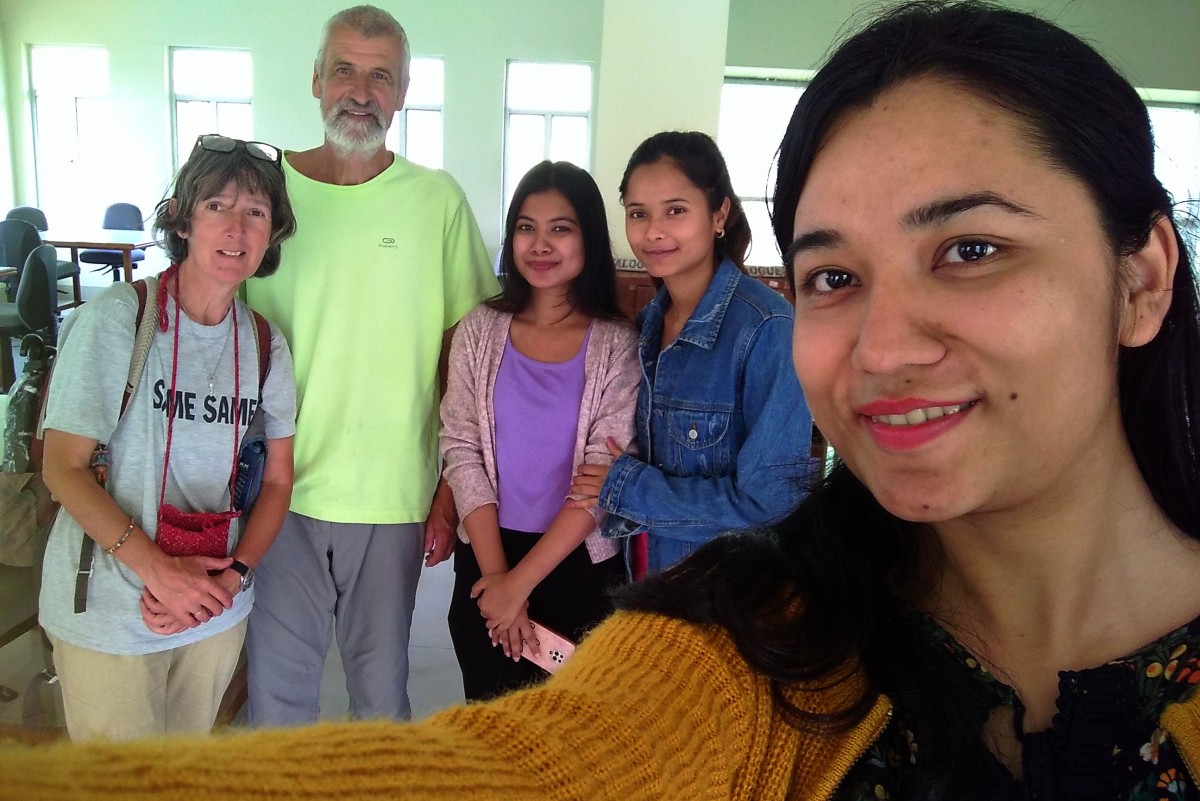
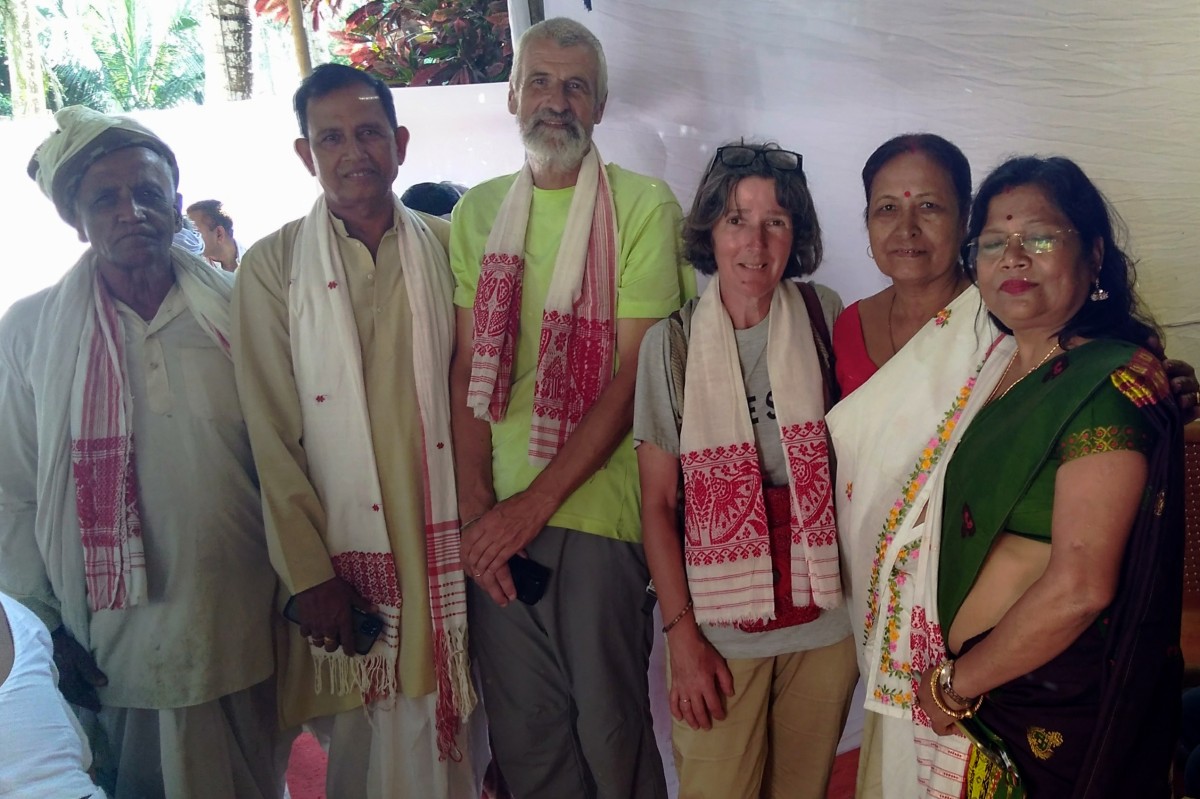
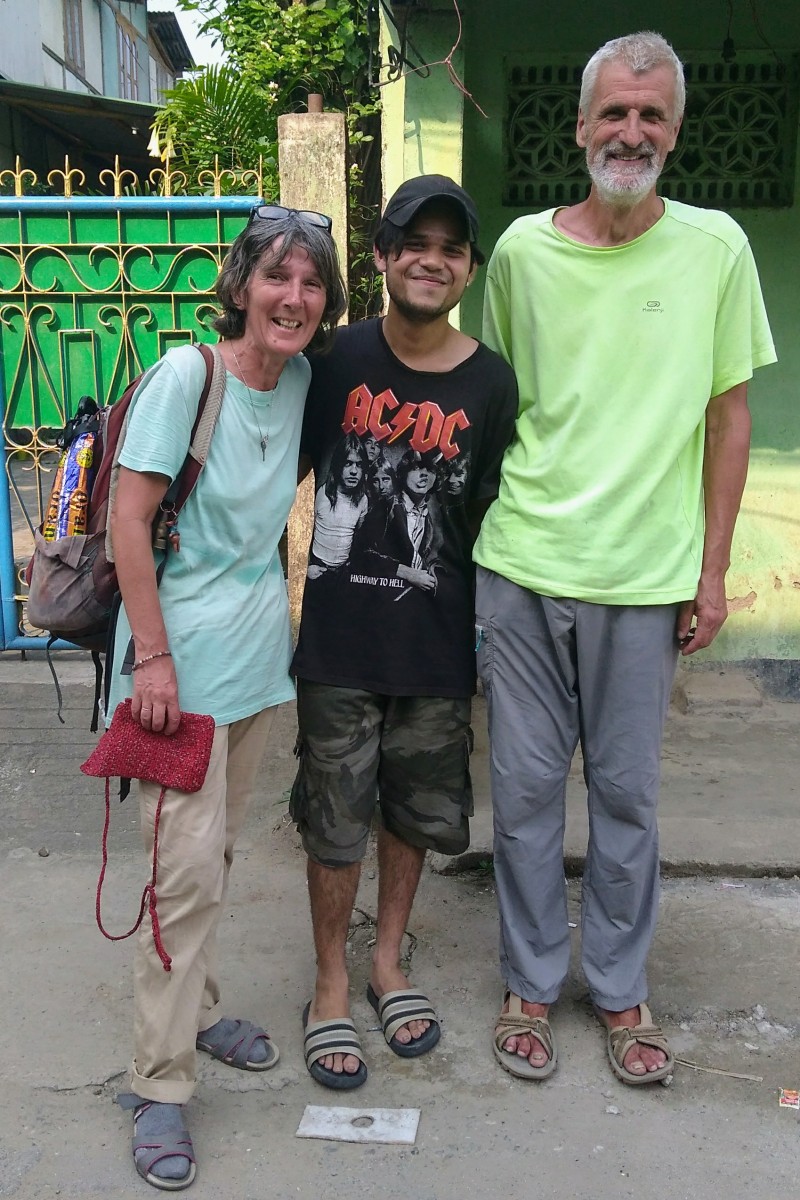 The three ladies on the second picture were our guides at the Toklai Tea Research Institute in Jorhat and the third picture shows us with organisers of a religious festival on Majuli Island who invited us to join them and gave us a Garmosa, the typical white and red scarf of the Assam people.
We have very quickly stopped counting all the times when people asked us for a selfie! We have a few individual portraits of remarkable people we met along the road:
- The Dharmanagar Boys
- The Dancing Queens of Agartala
- Lakshmi in Imphal
- Ali in Kohima
- The Shaman of Hari
- The Archers of Tawang
We have also two photo galleries where we tried to capture them all.
Living Bridges and Waterfalls of Nongriat (Meghalaya)
One highlight of Meghalaya is Nongriat, a small village in a deep valley only accessible by foot. We spent two nights there, sleeping at the community guesthouse. It was a nice experience to be in the nature and have nice walks, far from the hectic and chaos of Guwahati.
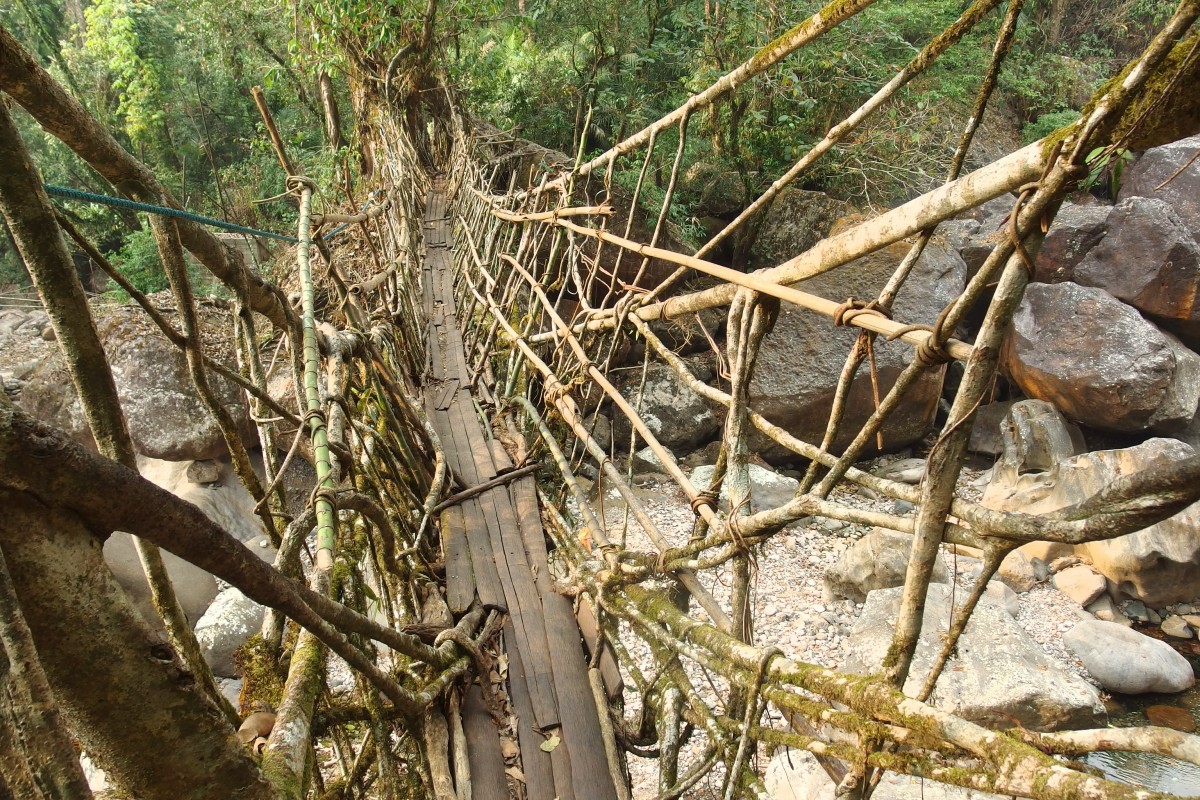
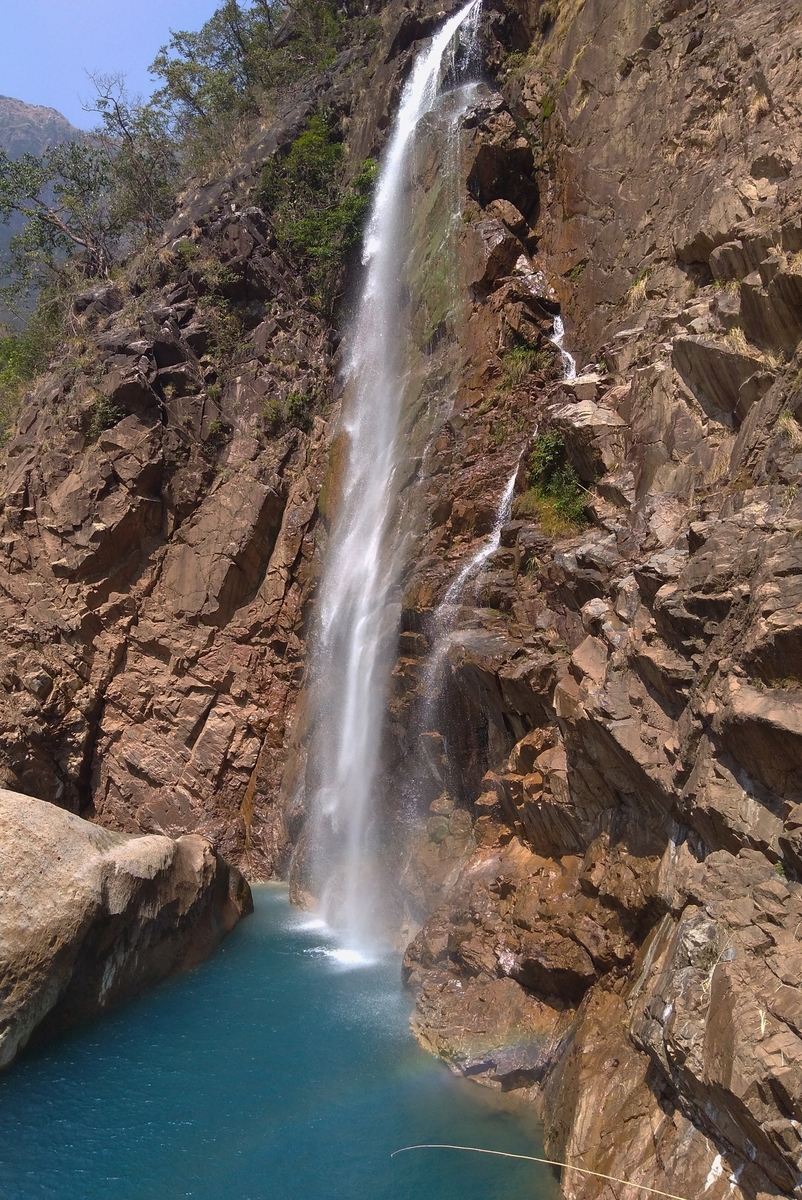 The place is famous for its living bridges and waterfalls. We were not in the right season for the waterfalls which are at their best during of after the monsoon but we managed to see a few which were impressive enough.
The living bridges are incredible; they are painstakingly made of the roots and other "living" woodwork of ficus trees located on opposing river banks and forced to grow above the river until they meet and connect. Creating such a bridge can take up to 30 years.
On the right is a picture of one of the great waterfalls of the region, the Rainbow Falls. It's hard to see in the pic but in the lower third there's indeed a weak rainbow from the spray.
You can also check a few more pictures of Nongriat on this page.
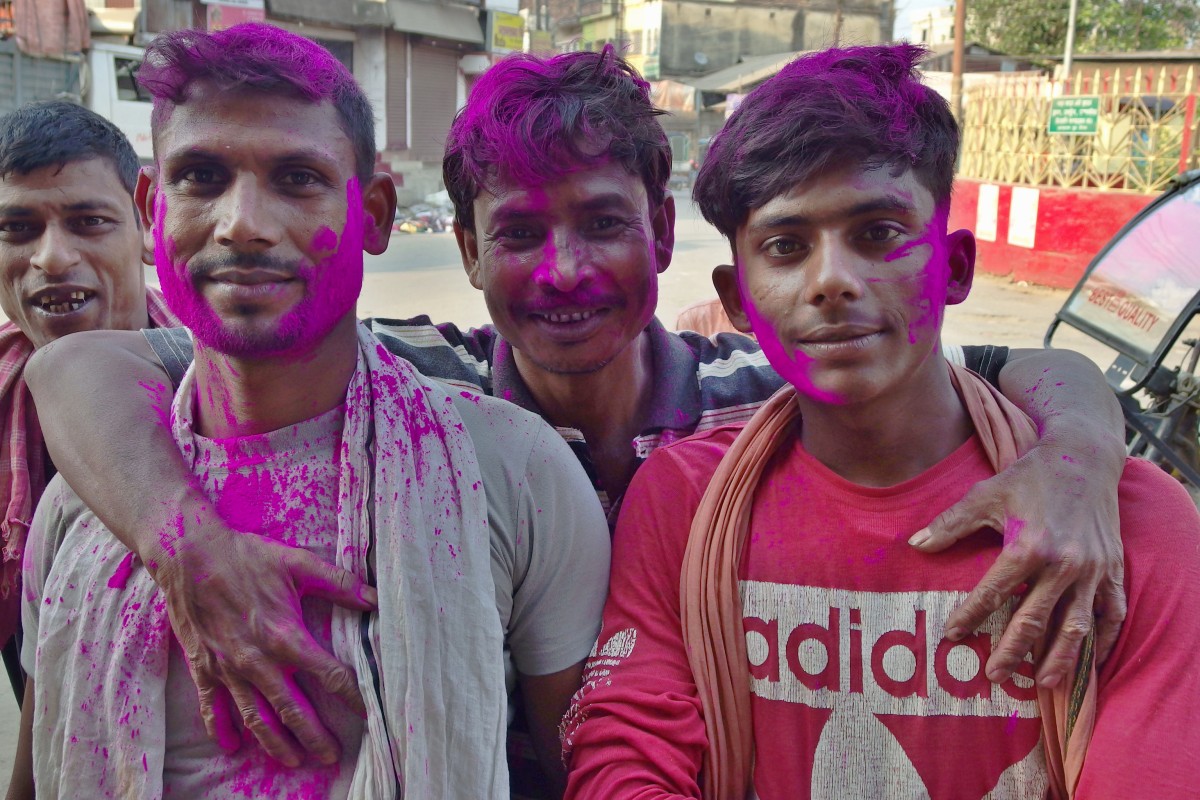 The state of Tripura
Tripura turned out to be one of our favourite places during this trip. We found this mainly Hindu state relaxed and interesting with plenty to see. We stayed four days in the capital Agartala and from there visited the Sundari temple in Matabari and the palace of Neermahal. This was easy going as the roads were good and the bus connections frequent.
 Agartala itself is pleasant, the inhabitants friendly and there was a lot to discover while strolling through the streets: a palace cum museum and a busy city life. The museum was quite chaotic with a lot of redundancy but the part about the Independence War of Bangladesh in 1971 and its consequences for Tripura in terms of refugees influx was very interesting and an eye opener about the history of the region.
We spent a whole morning in the Heritage Park, made special by our encounter with The Dancing Queens of Agartala, a day we will never forget.
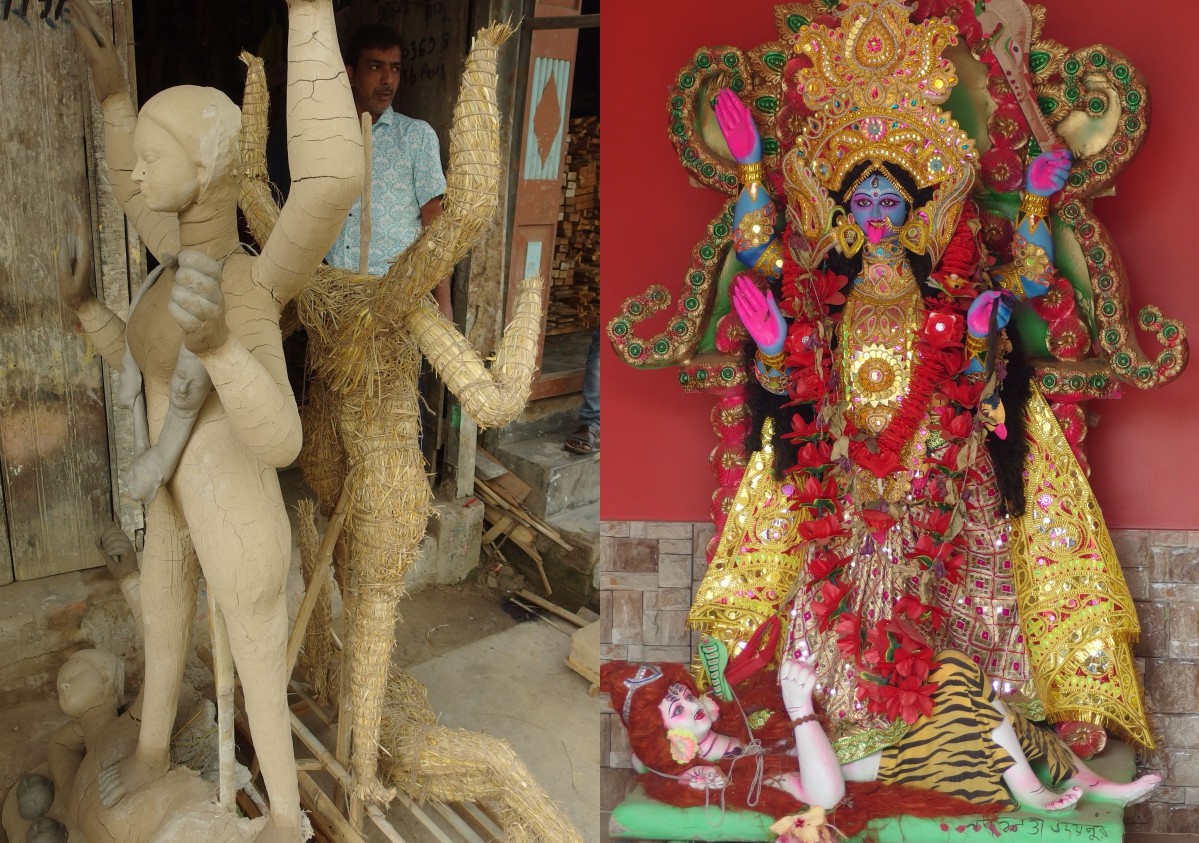
There would be much to say about Agartala; another good memory is exploring a certain street where paper mache sculptures were being designed and built. In the picture on the right, you can see two steps in the creation of the colourful statue of Kali standing on the right: first the armature made of straw and then how the frame is covered with the paper mache left to dry.
We left Agartala by train for Dharmanagar in the northern part of the state to visit the next highlight of Tripura: the rock sculptures of Unakoti.
 The rock sculptures of Unakoti (Tripura)
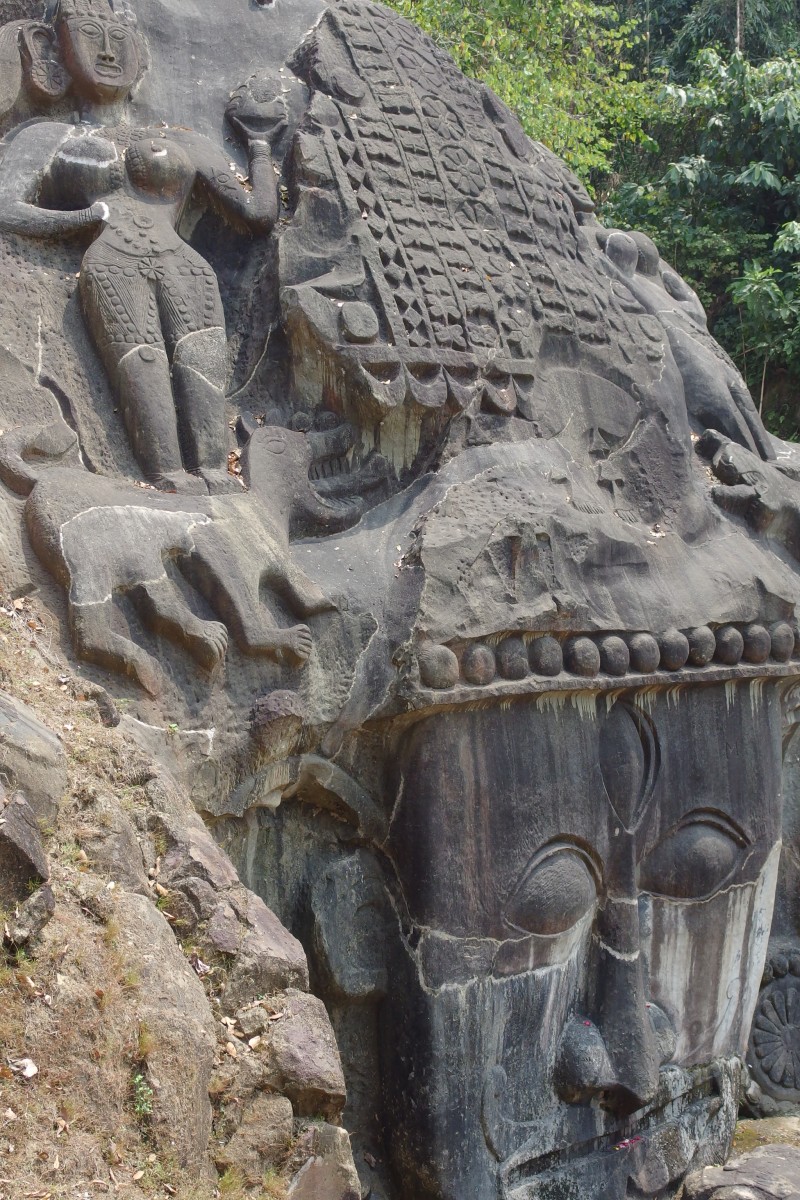
Unakoti has been a Hindu pilgrimage site since the 7th century. It is famous for its impressive bas-relief sculptures, the largest in India, depicting mostly Shiva, Durga, and Ganesh. Here again, mingling with the locals made this day-trip particularly memorable.
Check this site for some information about the site. 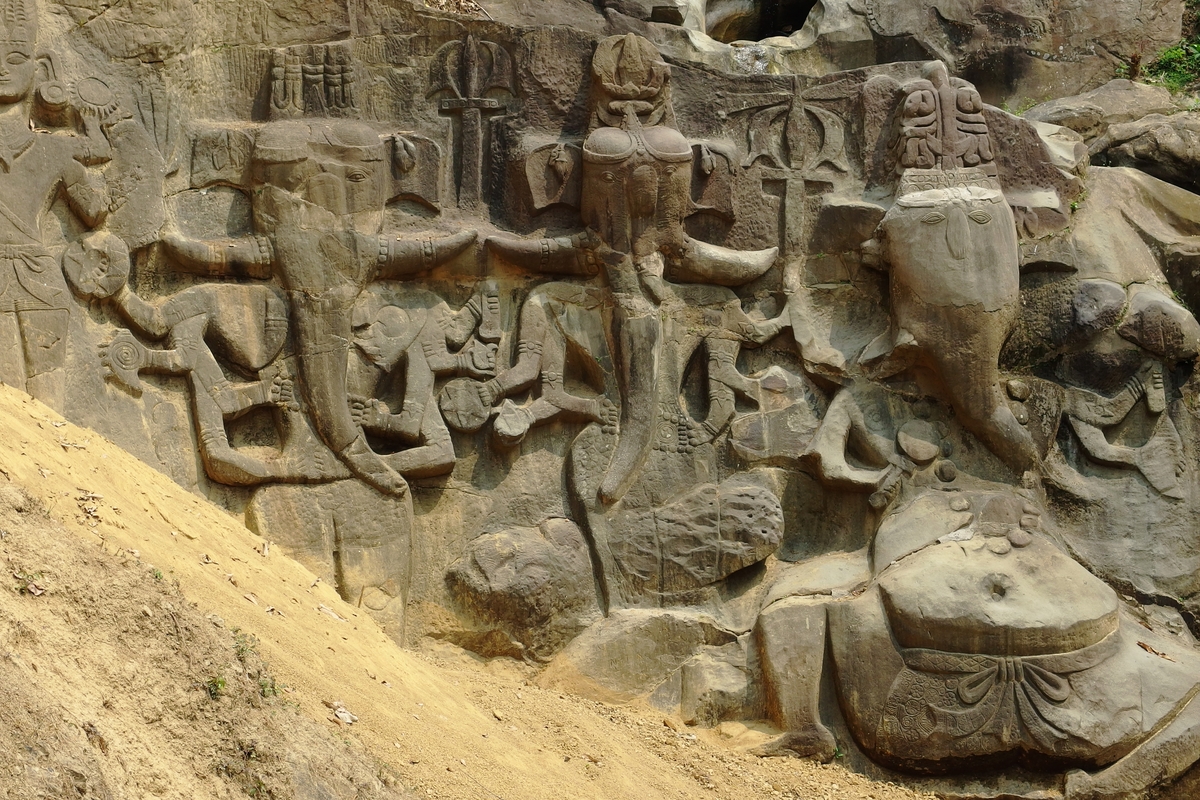
Getting back to Dharmanagar from Unakoti was an adventure in itself, you can read about it in our blog entry about The Dharmanagar Boys.
Dharmanagar was a pleasant stop. We had to stay an extra day in order to catch our next train to Manipur and were invited by a man we met on the street to attend a dance festival organised by the local schools; it was good fun.
Ima Keithel (Women's Market in Imphal, Manipur)
Compared to the other north-eastern states we did not like Manipur very much, except for the great Ima Keithel or Women's Market where around 5,000 women (and only women!) sell everything from fruits and veggies to household stuff and clothing; a feast for the eyes and the senses.
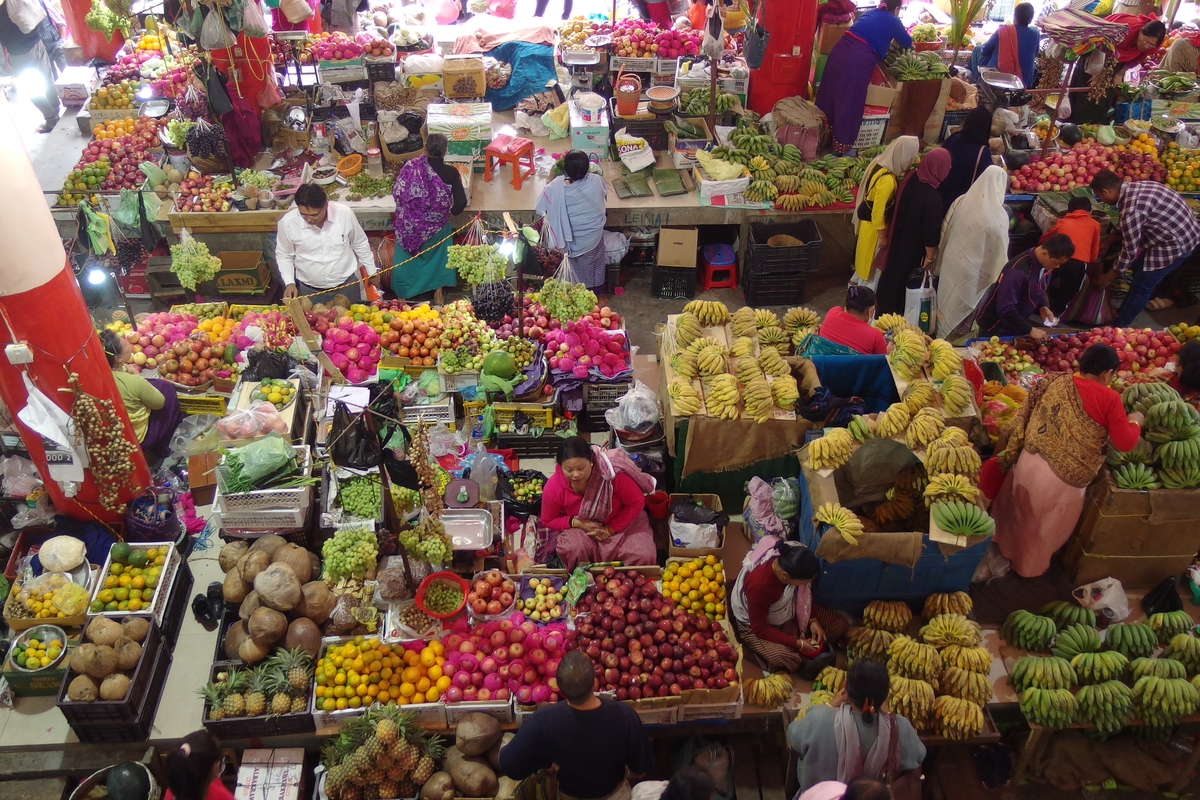 Thangkla Road leading to the market hall is pedestrianised (with some benches to sit on, which is very unusual in India) and perfect for people watching: many women sit on the pavement selling fruit, vegetables and dried fish (an important and omnipresent staple of Manipuri cuisine). The houses lining the street are built very close to each other, only separated by narrow alleys protected from sun and rain by a roof and turned into shopping streets; this makes for a large commercial area, where one goes up an alley and then turn to the right (or left) at the end to find the next alley descending back to Thangkla Road and so on...
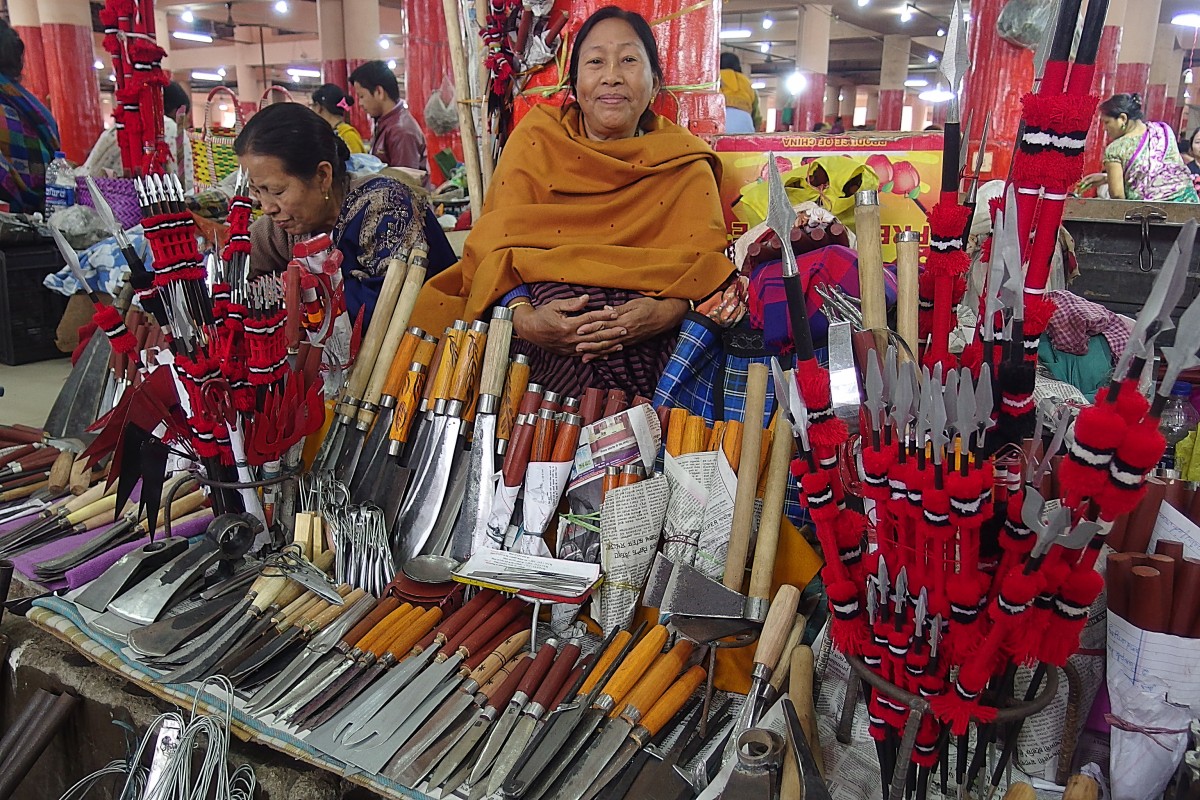 Unfortunately, we were in Manipur at the time of the Manipur New Year and on our second day we faced a nearly empty market with just a few stalls open, but it was not that bad: it gave us the opportunity to meet Lakshmi who saved the day for us.
We were amazed at the diversity of the people we saw: a mix of Burmese, Chinese, Tibetan and Indian origins reflected in their faces and clothing, from Tibetan style long skirts to Saris and Salwar Kameez but also many younger women dressed in trousers and tee-shirts.
Other than that, we found the capital Imphal quite run-down, polluted and congested with too many cars and trucks. We visited the Kangla Fort, a quiet green oasis in the middle of town with some temples and an archeological museum and made a forgettable day-trip to Loktak Lake.
We paid a visit to the State Museum on our last day which did not convince us, it was full of dusty and haphazard exhibits.
Dzükou Valley (Nagaland)
Apparently the jumbled remains of a giant ex-volcano, the Dzükou Valley is an amazing landscape, forming a huge rim at around 2600m to 3000m altitude. The vegetation consists mostly of small bamboo shoots which cover every hill as far as the eye can see.
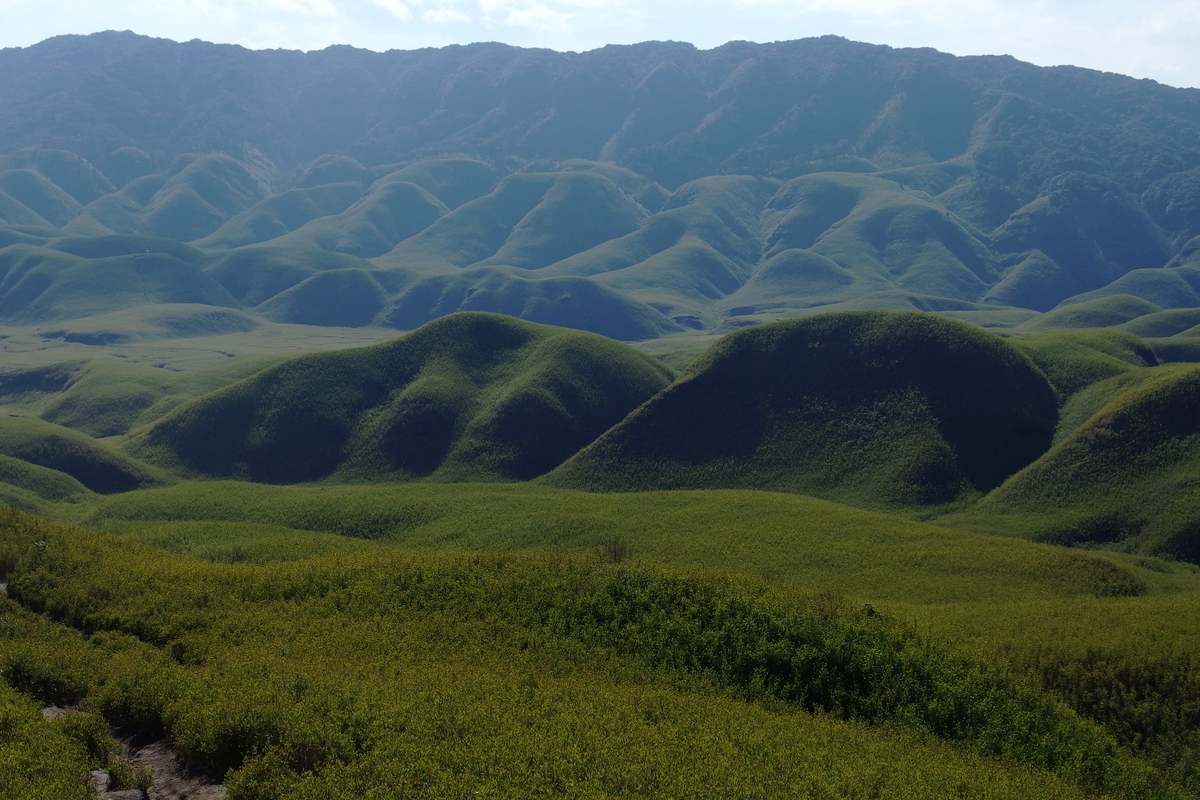 Dzükou Valley was high on our list while planning the trip, a small adventure in the unknown. There are two approaches to Dzükou, the Jakharma and the Wiswema trails. We chose the Jakharma trail to go up: it is steeper, quicker and not so frequented on the way down, while most people take the other approach, the Wiswema trail which is longer (although one can "cheat" by hiring a car to avoid walking about 8km on a dirt road before the "real" start of the climb) but not so steep.
We took a Jakharma-bound shared taxi in Kohima and arrived there around 8:30 am; we walked up the road and reached the starting point of the Jakharma trail in ca. 20 minutes. We climbed slowly and steadily, the path was steep in some places but well maintained with some stones serving as stairs. It took us three hours to reach the hut where a lot of people were busy getting ready to go back down to the road while many others arrived from the Wiswema trail. The hut has two dorms: one with concrete floor, the other with earth floor. We decided for the first one and although we had our two-seasons sleeping bags with us we rented two (quite) thin foam mattresses and two big blankets. It was a good idea because the night was really cold...
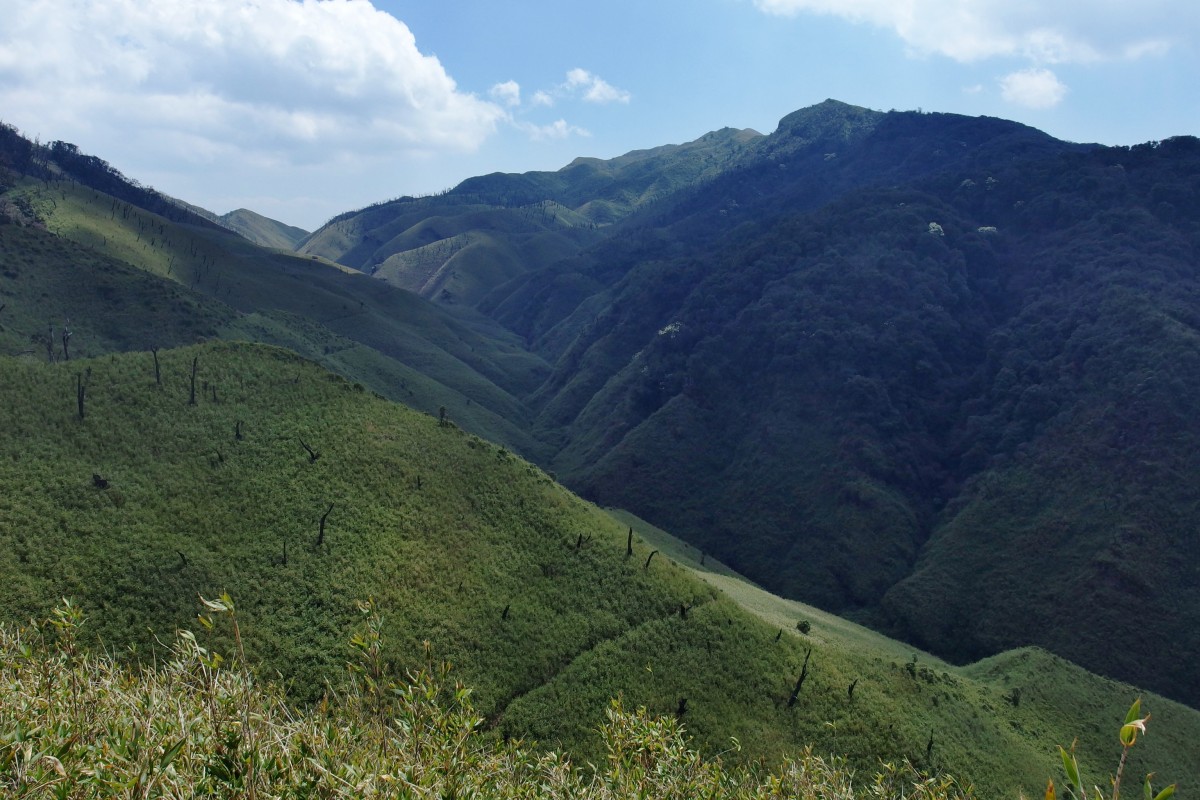 We spent the afternoon walking around and admiring this unique landscape with all those green hills densely covered with bamboo and from time to time interpersed with some dead trees surging from the green and reaching for the blue sky. We were there at a week-end and there were many people around to chat with. It got really cold as soon as the sun disappeared, dinner (Veg Thali for us, 250Rs per person) was served around 18:15 in the dark (the sun was long gone) and we were in our sleeping bags at 19:00, fully clothed. The night was not very quiet with people snoring, coughing, clearing their throat and much more. I was happy to have brought some earplugs, but poor Thomas who does not like them had to endure :-)
It was foggy and a thunderstorm was in full force when we got up. Fortunately it soon stopped and after a hot tea and some biscuits, we went down via the Wiswema trail which is not so steep (hence we thought better for our knees). You can check this page from the travellers of Lost with Purpose for information on the two different approaches.
Kohima (Nagaland)
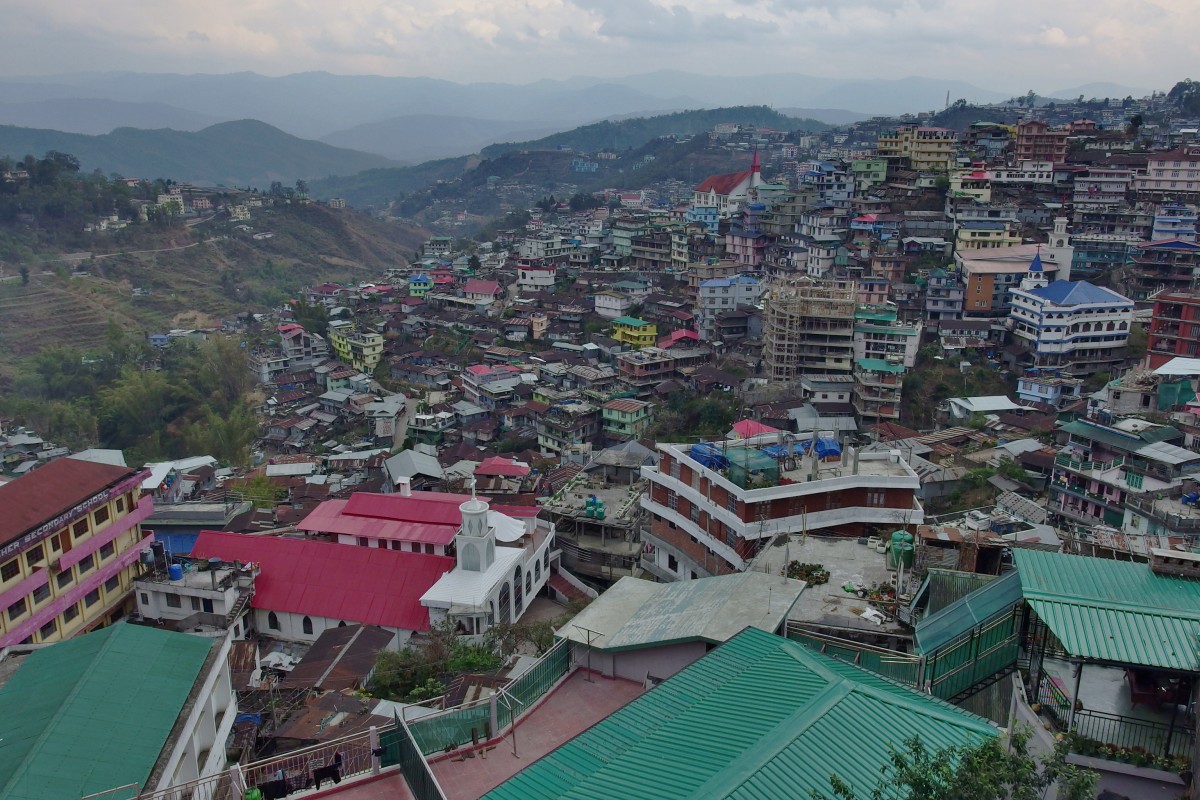
We enjoyed our stay in Kohima although the weather was cold with grey skies and the occasional rain. We found the town relaxed and orderly: there are no tuk-tuks, parking is regulated, honking is forbidden, all this made a big difference to other Indian cities. The place will stay long in our memories, first as staging point for our Dzükou adventure, but most importantly because of Chrissie and Ali.
 Chrissie was our wonderful host at the Maple Homestay; she was utterly friendly, generous, chatty, interesting and made our stay in Kohima very special (click here to see her, 1st pic of the 2nd gallery of the page).
 We came upon Ali and his rice hotel as we were looking for an affordable place to have dinner. We ate at his place every evening and were treated to the best thalis with lots of vegetables.
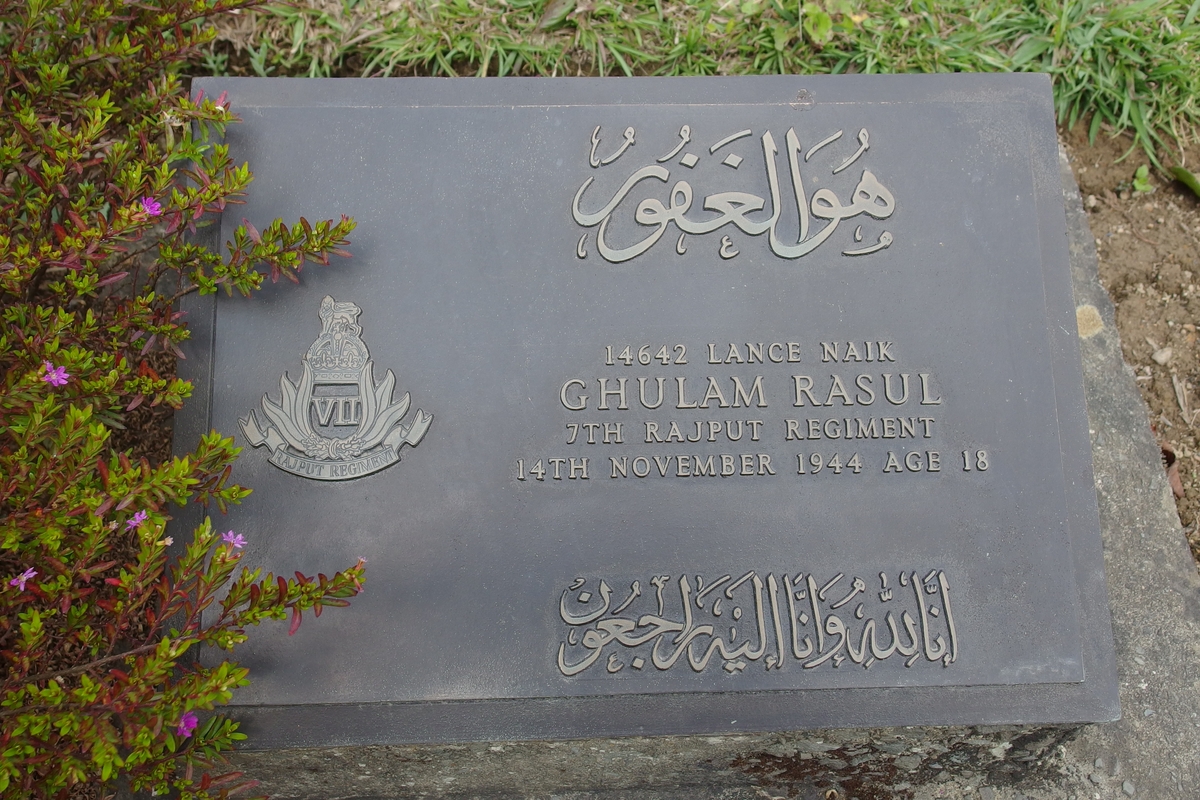
Kohima is built on the slopes of several hills and involves a lot of up and down hill when strolling through its neighbourhoods. Some highlights were the Commonwealth WWII Cemetery and strolling through the tribal market.
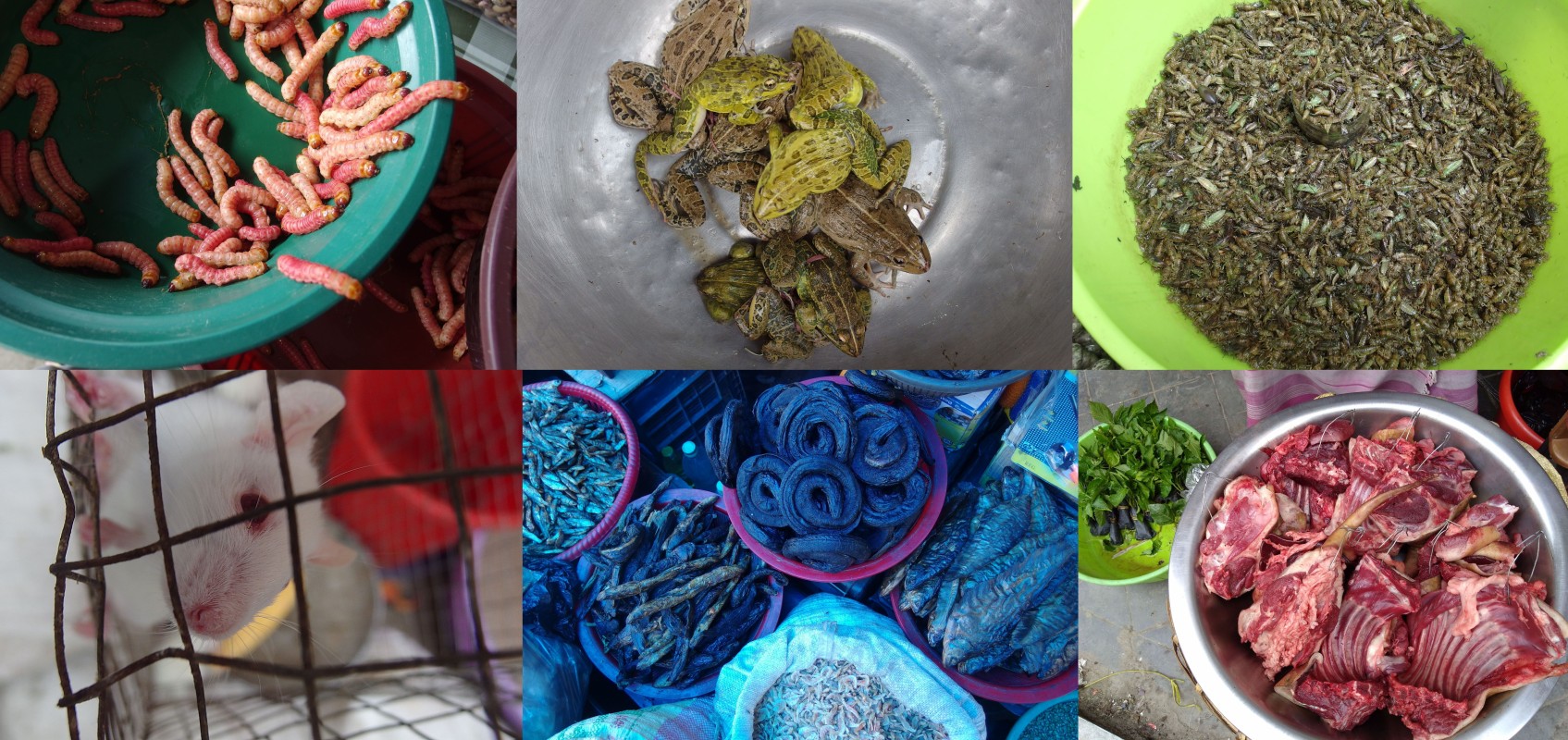
The collage on the right shows some of the tribal foodstuffs we could have bought in Kohima. The frogs and worms are probably self-explanatory, but the mouse may not: adding a mouse to soups and stews will apparently give them a divine taste... we haven't tried that. Also, dog lovers should perhaps refrain from visiting this market.
WWII cemeteries of Imphal and Kohima
Imphal and Kohima are home to two huge Commonwealth War Cemeteries which bear testimony to the terrible WWII battles fought in Manipur and Nagaland from March to July 1944.
After their sweeping victory in Burma the Japanese Army pushed their advance towards India and launched attacks on the state of Manipur and further away Kohima with the aim of destroying the Commonwealth forces who had retreated there.
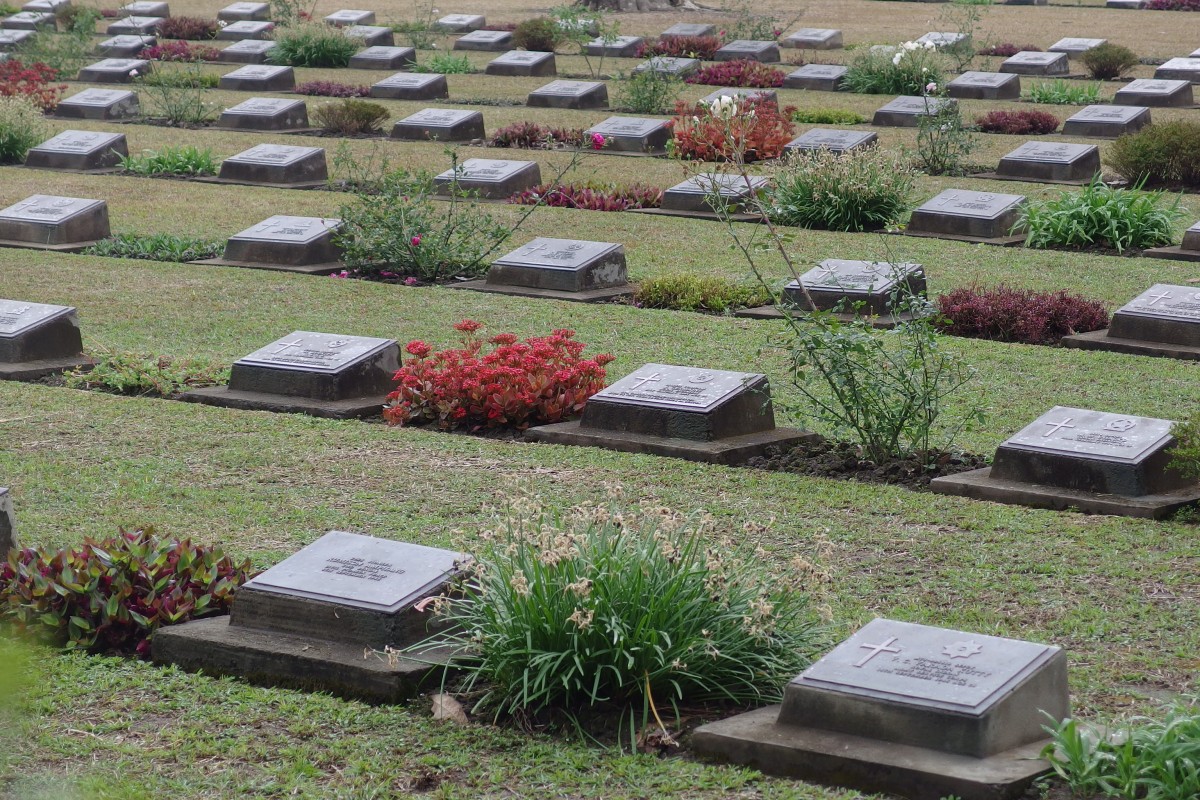 In Kohima the Japanese having severed the road to Dimapur laid siege to the town. The British garrison was continually shelled and mortared, some of the heaviest fighting taking place around the Deputy Commissioner's bungalow and tennis court (where the cemetery is now located). The Japanese captured the tennis court area and the Commonwealth forces retreated onto Garrison Hill, holding their position until they were finally relieved by a reinforcement of troops who had succeeded in breaking the roadblocks on the Dimapur road, a turning point towards victory as they then could advance to relieve Imphal.
 Imphal: simultaneously, there had been heavy fighting in the state and plains of Manipur and Imphal eventually found itself encircled by the Japanese. The town was under siege for over three months under constant bombardments and was relieved by reinforcements coming from liberated Kohima.
The combined battles of Imphal and Kohima became a decisive turning point of WWII in Asia: after five months of intense and cruel fighting in the region, the Japanese exhausted and having suffered heavy losses were running out of supplies and food and were finally forced to abandon their offensive.
Visiting those two cemeteries was a poignant experience where we learnt a lot about the history of WWII in Asia. There are 1,600 soldiers from the Commonwealth and the UK buried in Imphal's cemetery and 1,420 soldiers buried in Kohima's cemetery. The epitaph carved on the memorial of the 2nd British Division in Kohima's cemetery has become world-famous and is known as the Kohima Epitaph.
It reads: When you go home, tell them of us and say, For your tomorrow, we gave our today
Majuli Island (Assam)
We had high expectations about Majuli, a much-praised destination in the blogs of Westerner and Indian travellers alike. We arrived on the ferry from Nimati-Ghat in Jorhat, a crowded affair with all passengers crammed together under deck, the space on-deck being occupied by three cars and many motorbikes and scooters.
 The staff tried to force us downstairs but we stood our ground and stayed outside (under a fine rain), not wanting to miss our "romantic" crossing of the Brahmaputra (which happened to be foggy)!
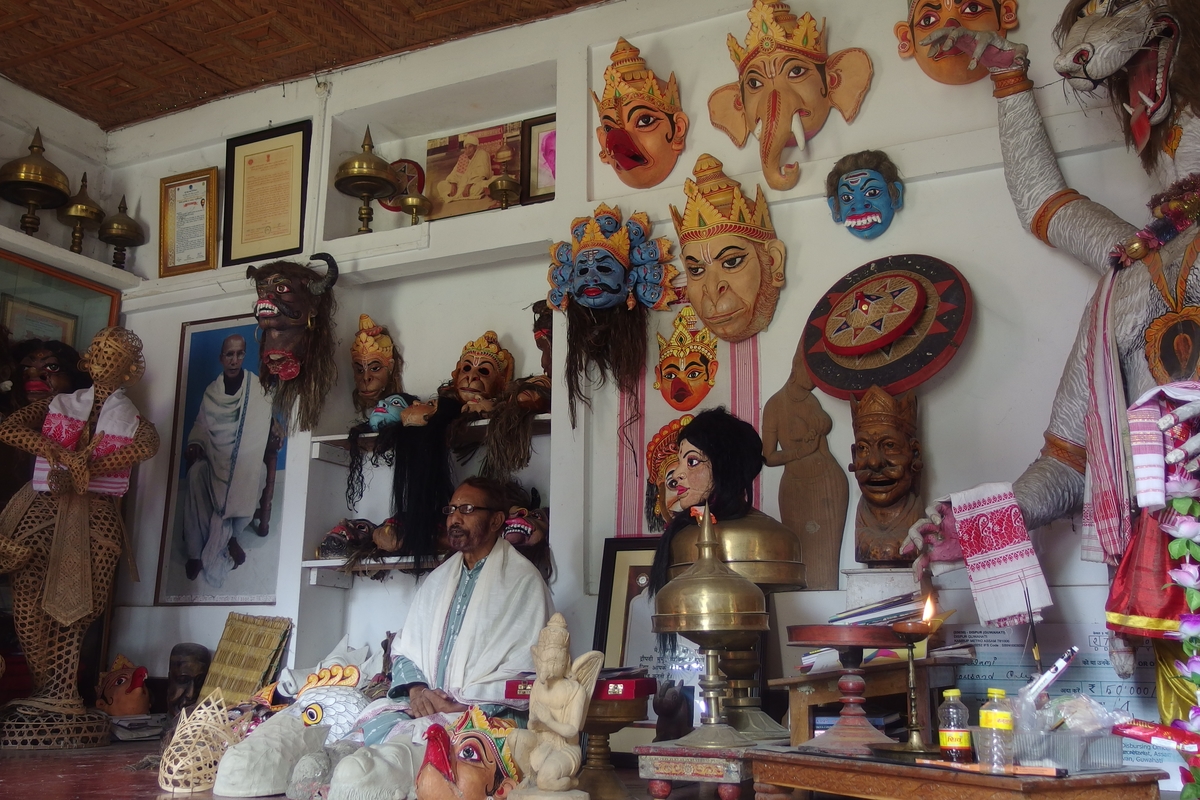
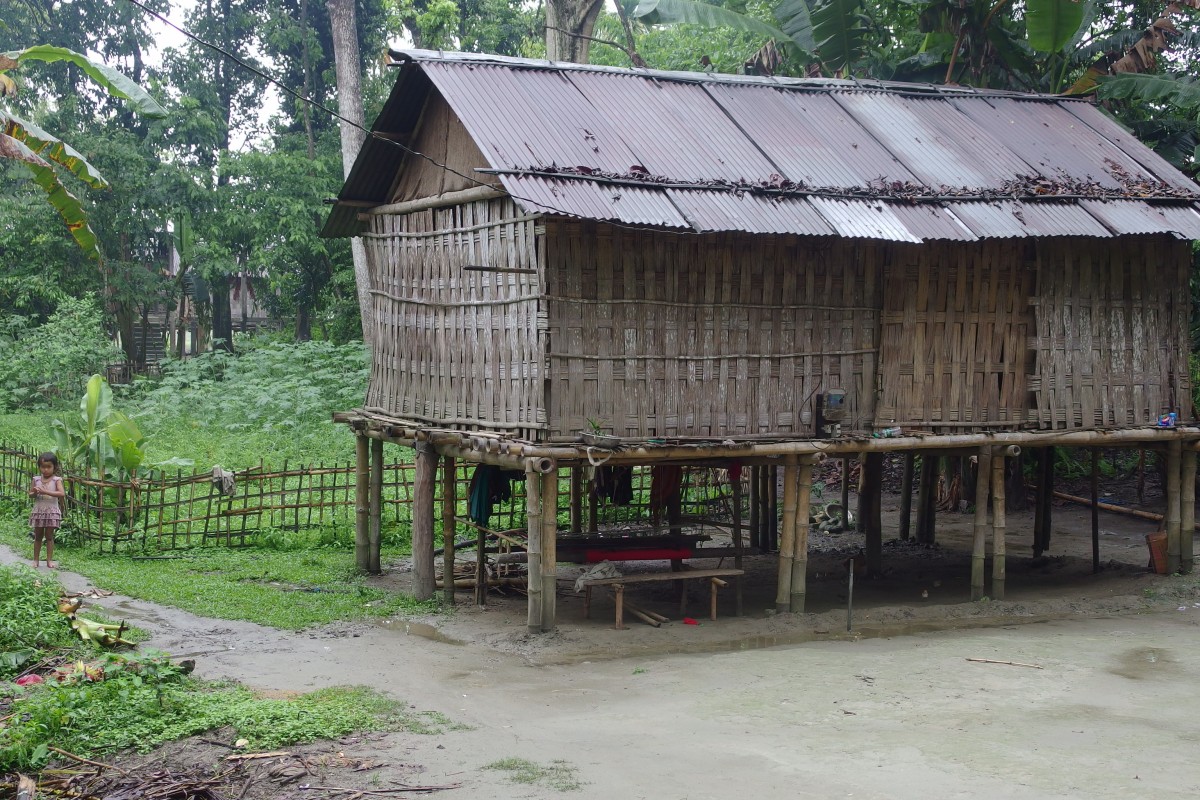 We based ourselves in Garamur and spent our days exploring the area around the village. On our first day we walked to the Chamaguri Satra famous for its mask production (see picture). It was a long (around 24 km return!) and pleasant walk through villages and small settlements in a landscape of green marked by palm and banana trees,bamboos and rice fields. There were many ponds, cows and goats were roaming freely around.
Life in Majuli is slow, very rural and pleasant; walking as we did we could observe the village life as we went and on our way back passed two villages where people were attending some ceremonies dedicated to Krishna. Every time we were welcomed and warmly invited to join and watch the people dancing or share their meals.
On our second day we walked to Kamalabari and stopped at three satras on the way, although they were a quiet affair with not much to see. But as always the way is the destination and it was very pleasurable to stroll through the countryside and the rice fields.
Ziro Valley (Arunachal Pradesh)
Ziro has extensive rice fields (mile after mile after mile) and while we were a bit late for the big paddies, we found freshly planted smaller rice fields such as in the picture below. The plants are still tiny and will stay there for a few weeks before being moved into bigger paddies.
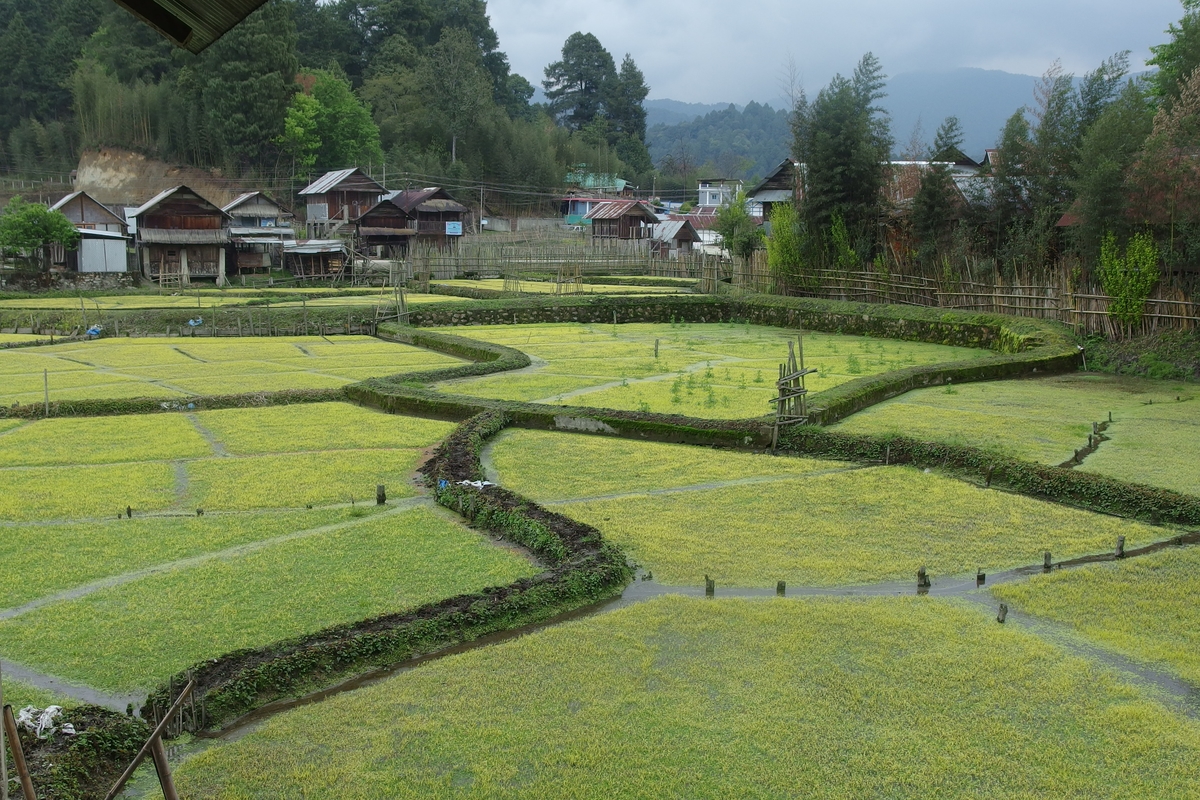 True to ourselves, we explored the area on foot, walking through rice fields, bamboo groves and villages. Ziro is home to the Apatani peole, a distinctive tribal group who speak a local language called Tani and worship the sun and the moon.
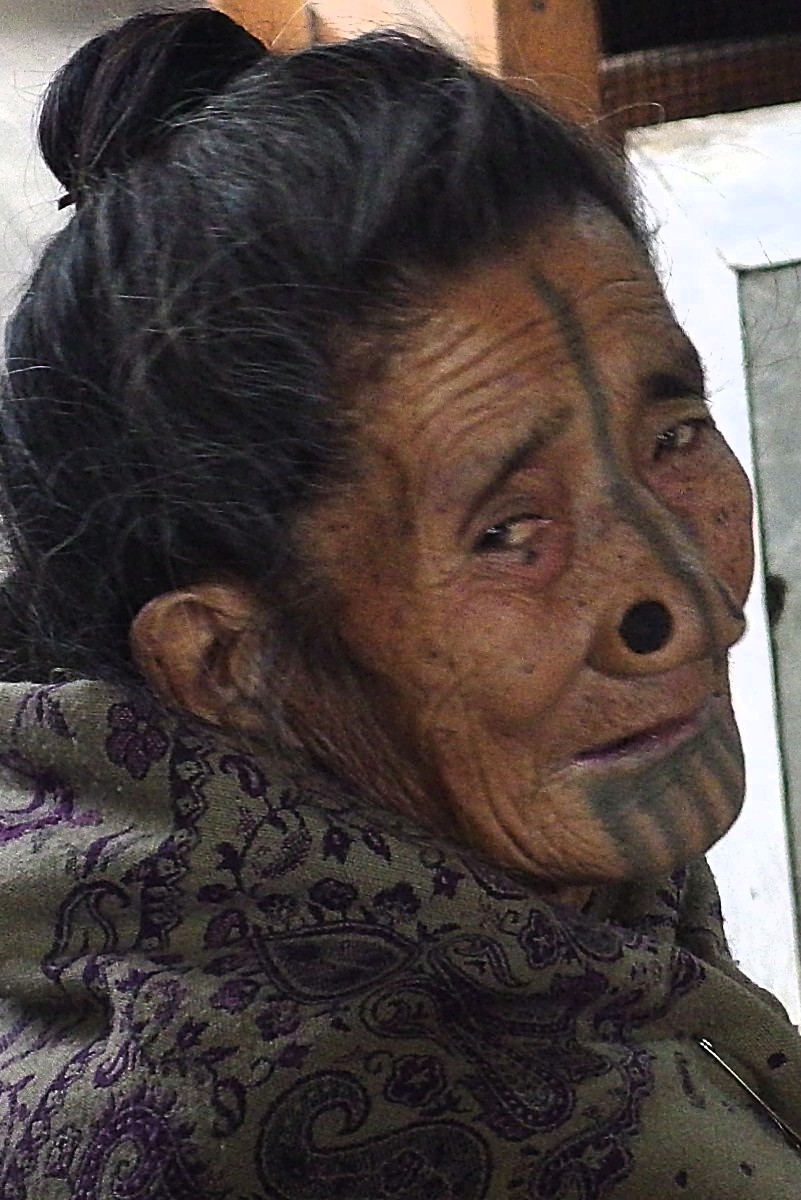
 Their elderly women folk are known for their distinctive facial tattoos and nose plugs, a tradition that began as a means of protection against abduction by making them unattractive and is now banned.
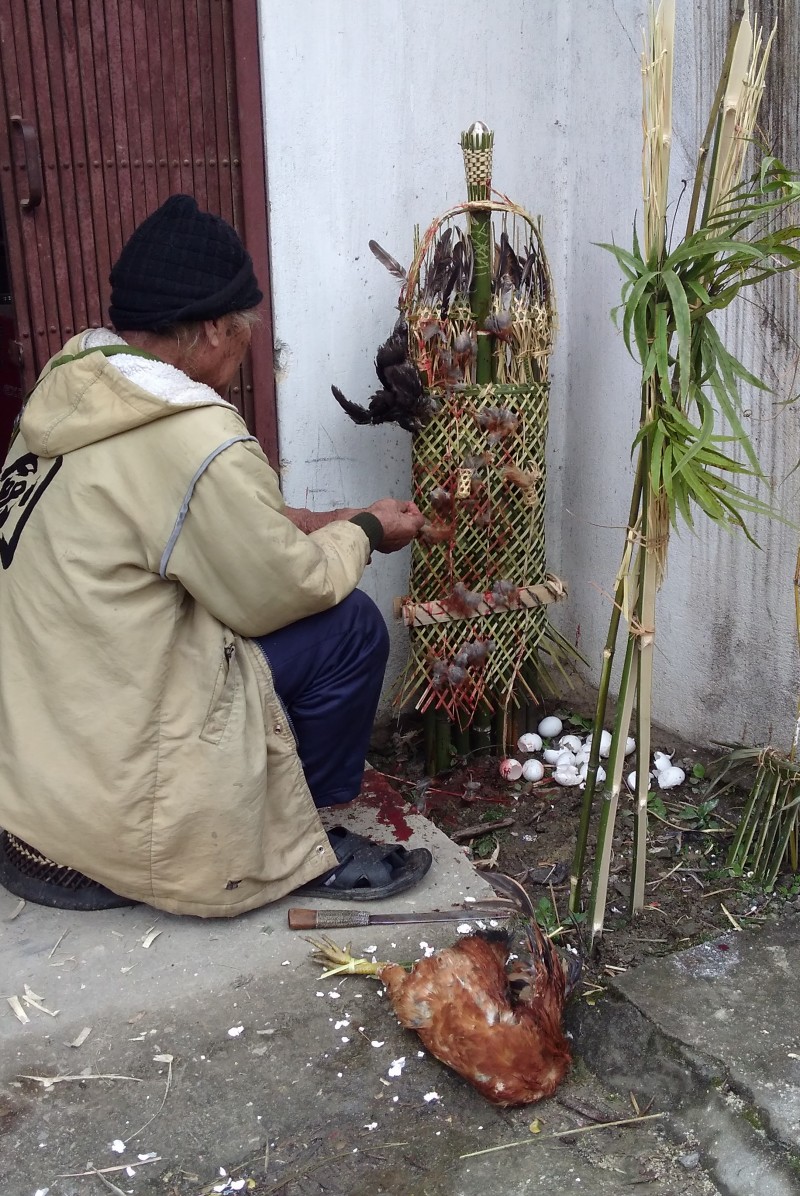
We were there one week after the Myoko festival, a festival celebrating inter-village friendship and hosted every year in rotation by a different village. In 2023, it was the village of Hari's turn and we happened to pass through it on our walk: some houses were decorated with "Babos", some tall T-shaped wooden poles indicating that sons are living inside and in other houses, people were busy to have their home and family blessed by a shaman to ensure health and prosperity. We were so lucky to spot a shaman performing a sacrifice in front of a home and to be invited inside the home to join in the ceremony; click here for our portrait of the Shaman of Hari and watch him at work.
Tibetan Buddhist Debate in Bomdila (Arunachal Pradesh)
Bomdila is a welcome break on the long and gruelling drive from Itanagar to Tawang.
 There is not much to see in the town and we went straight to the Upper Gompa upon arrival, happy to stretch our legs and have some exercise after having been squeezed for so many hours in the back of a Sumo.
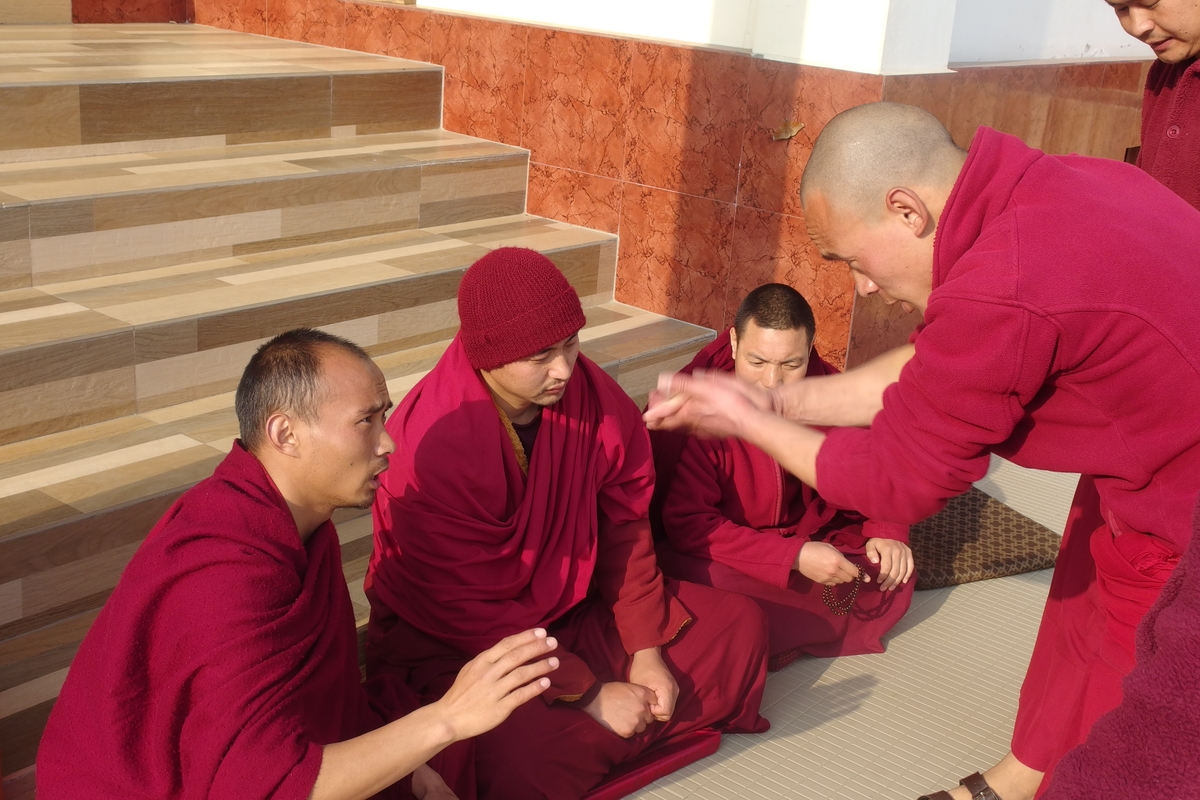
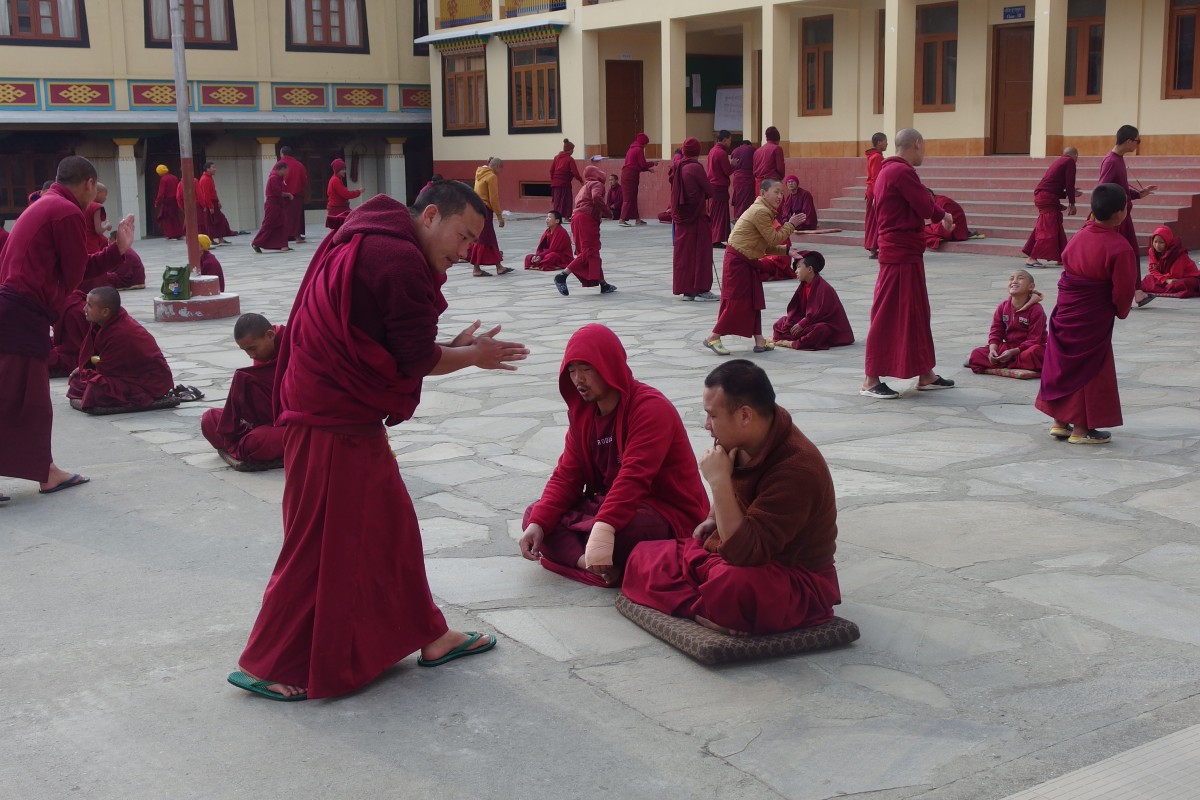 And as luck would have it, we came exactly at the moment when the monks were training the art of the Tibetan Buddhist Debate. The courtyard in front of the monastery was full with monks who were debating vigorously.
As shown on the pictures, the debate takes place between a Challenger, standing and asking questions, and a Defender, sitting and answering those questions. The Challenger confronts respectfully the Defender with a quandary and expects an answer. He will counter the Defender's response by a counter-argument punctuated by a dramatic clapping of his hands and so on.
We could not understand a word but were fascinated to watch the whole proceeding.
Se La Pass (Arunachal Pradesh)
This 4170m pass between the Brahmaputra valley and the Tawang valley is among the highest motorable roads in India.
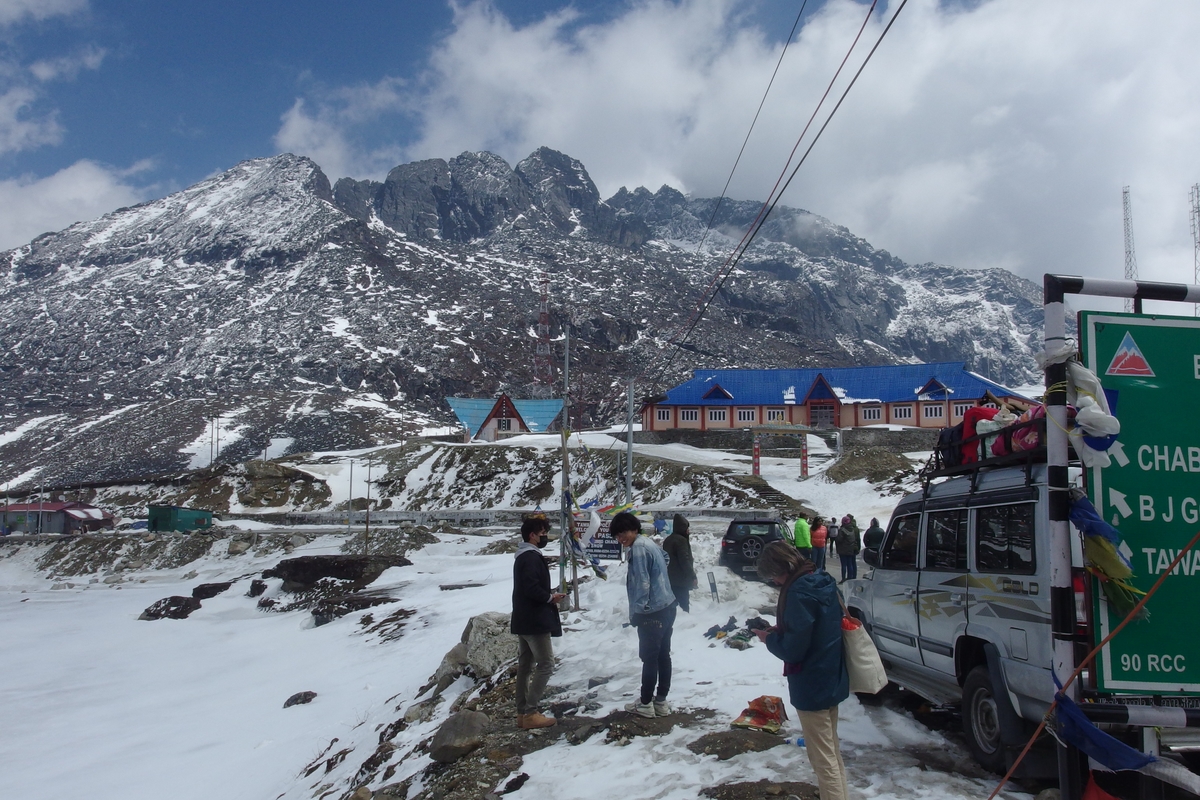 It's icy cold up there but the road is an utterly impressive achievement. The 15 to 16 hours drive from the river up to the pass makes this one of the greatest road trips in the world (and for once, the road was in relatively good shape... the region around Tawang is of great strategic importance to India as China is, for a long time now, lusting after Arunachal Pradesh which it thinks is part of Tibet).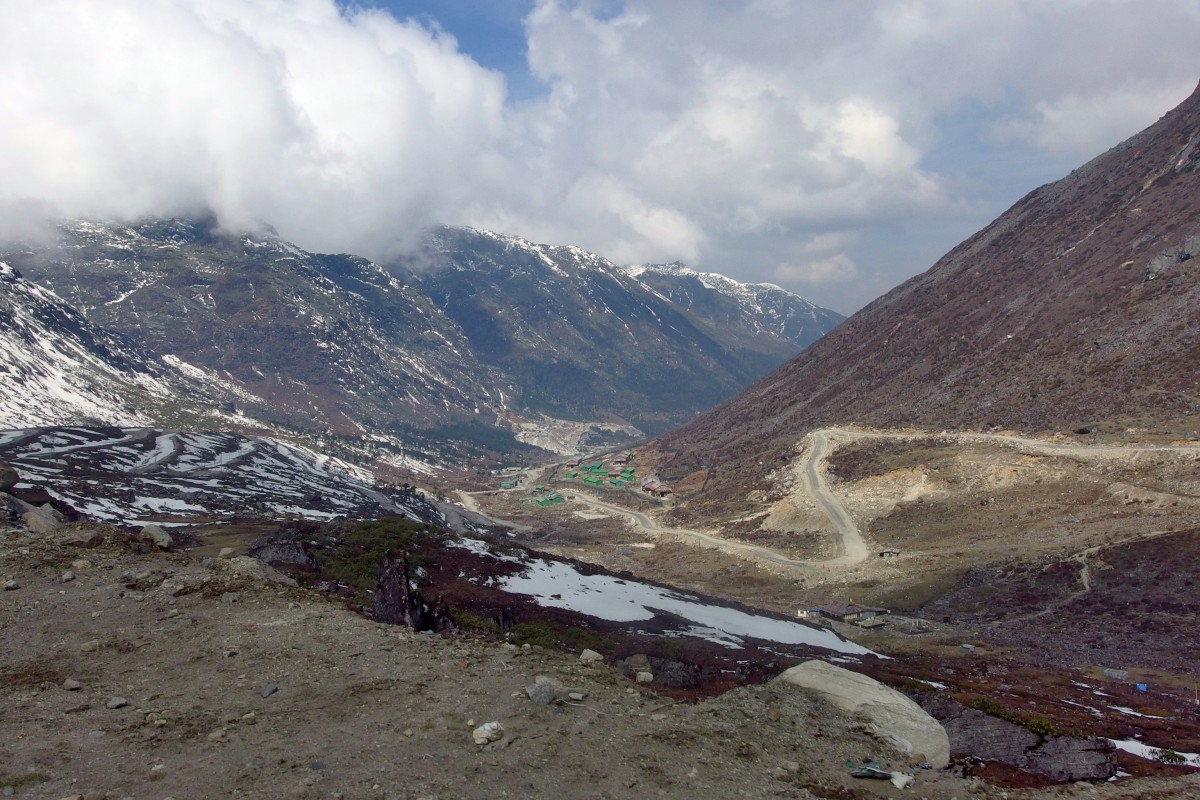
We recommend reading our blog article about the Border Roads Organisation who is among other things responsible for the road infrastructure in the border regions between India and China.
Tawang (Arunachal Pradesh)
Tawang was the end of the road for us. Some people might venture further north but this is highly sensitive border territory and subject to further permissions from the authorities and only doable with a guide.
 It was cold, electricity was scarce and our hotel's inverter had difficulties coping with the many power cuts.
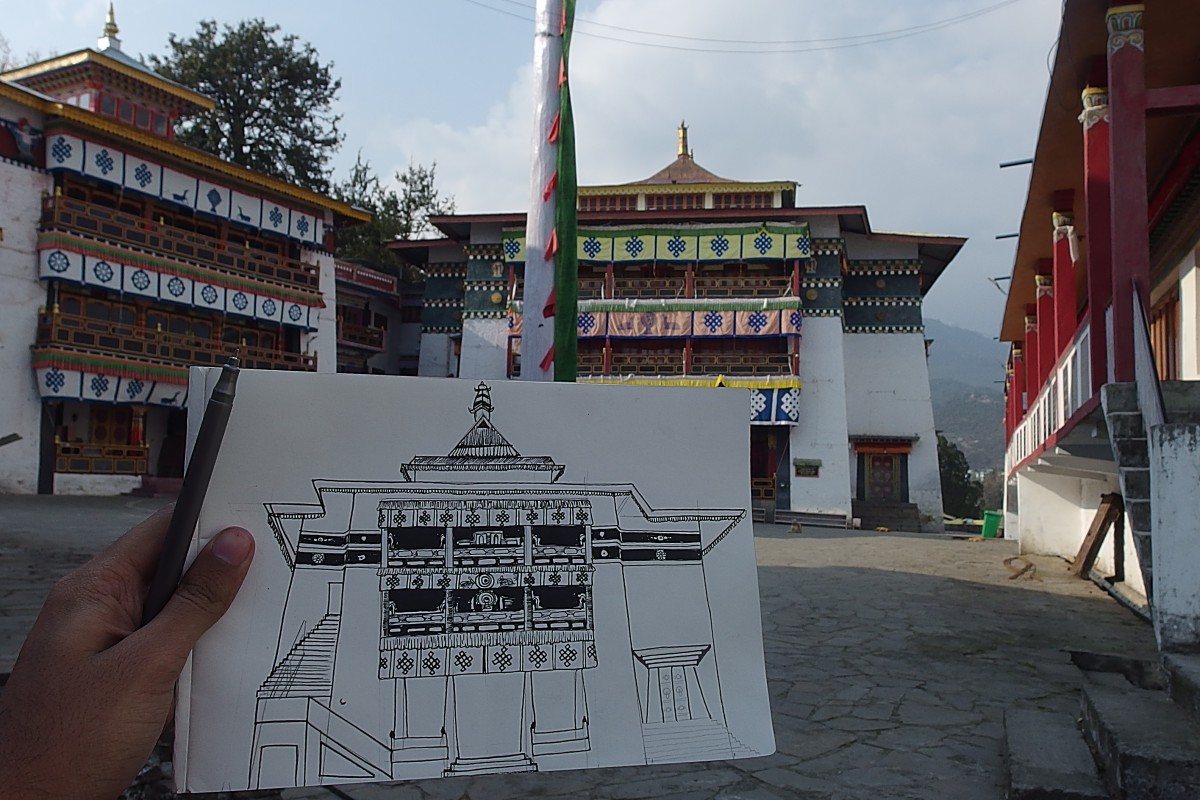 We spent two full days in the town which we did not find very attractive, except for its monastery, reportedly the second biggest Buddhist monastery in the world where we spent a lot of time.
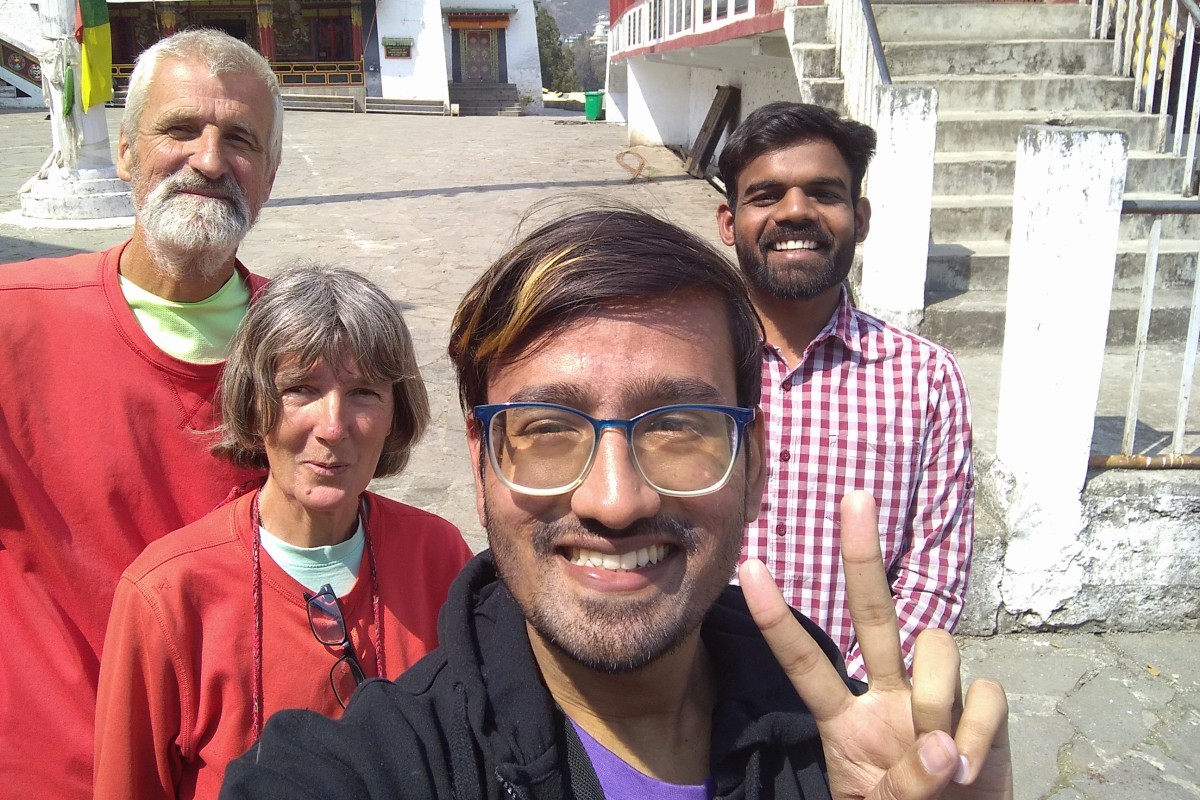
However, the best memories of our stay in Tawang have again to do with the people we met. Like Shree, a young man aged 33, and his friend with whom we had shared the back seats of our Sumo on the way up. Shree was very interesting and spoke a good English: he is originally from Indore but lives and works in Bangalore, lucky to have a job allowing him to work remotely and to combine his job and his love of travels. He is also a very good artist as proven by the sketch he did of the monastery while we had long conversations discussing our respective countries, the world's politics and religion.
Strolling through the town and its surroundings, we came accross local people practising archery, an other highlight. You can read everything about them in our article about The Archers of Tawang.
Want to read more? Go back to The Joys of Public Transport in North East India or go on to Why India needs a big BRO or go up to Blog
$ updated from: Blog.htxt Sun 24 May 2026 15:57:25 trvl2 — Copyright © 2026 Vero and Thomas Lauer unless otherwise stated | All rights reserved $