


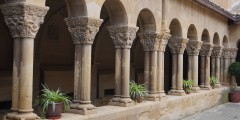
The Sierra de Francia: great outdoor and quaint villages
(vero;2026-March-10)
After much sightseeing in the towns of Léon and Salamanca, we left the city life behind and headed to the Sierra de Francia, a mountain range located around 70 km south of Salamanca at the border with Extremadura. The region is home to the Natural Park Batuecas - Sierra de Francia and is known for its beautifully preserved but often depopulated mountain villages. They are mostly inhabited by the elderly, most young people having left a long time ago in search of jobs and a better life. The name Sierra de Francia has nothing to do with the country of France: the Francia is a 25 km long tributary of the Río Alagón which has its source at 1,350 m in the Valle de Lera, up in the Sierra.
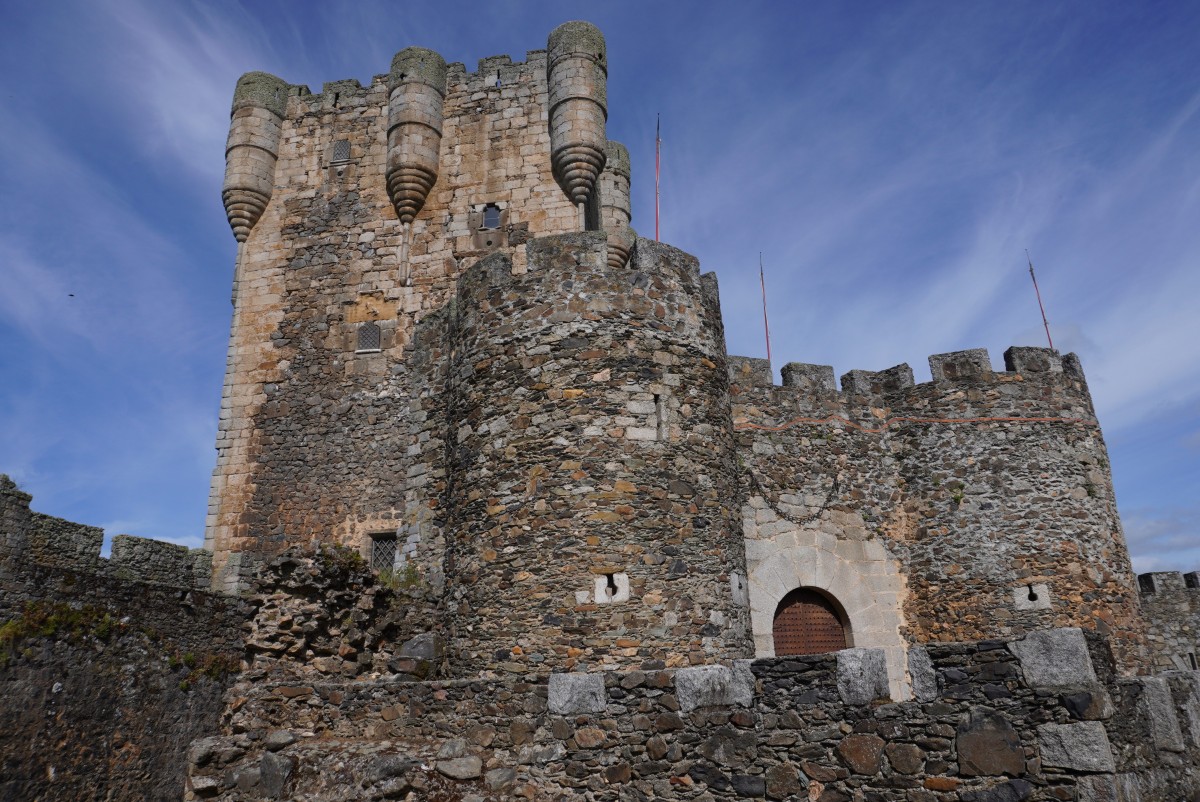
We stopped en route in Monléon (88 inhabitants in 2025), a small walled medieval village located on a rocky spur at the confluence of the Alagón River and its tributary the Riofrío. A castle, built in the 15th century, has an impressive five-storeys tower and hovers above the plain below.
After pitching our tent at the Camping Vega De Francia in Sotoserrano (recommended), we drove to the village of Las Casas del Conde where we parked the car and grabbed our walking sticks for a ten-kilometre loop that took us along old mule tracks from village to village, through deciduous woods (oaks among others) interspersed with old olive and cherry orchards, vineyards and ancient terraces now abandoned and given over to weeds. This path is known as the Camino asentadero Bosque de los Espejos (Forest of Mirrors), click here for a description (in Spanish) and a gpx file.
The houses of Las Casas (63 inhabitants in 2025) are picturesque, decorated with carved wooden figures; there was a small hermitage at the end of the village and the path went along olive hains, some of the trees beautifully carved. Next was San Martín del Castañar (233 inhabitants in 2025), another pretty village and we continued to Sequeros (216 inhabitants in 2025). The path between those two villages is embellished with works of art, some of which we found interesting. Check on Wikiloc to download a GPS track and a description of the trail.
We have a photo gallery with pictures of some of the villages we visited in the Sierra de Francia.
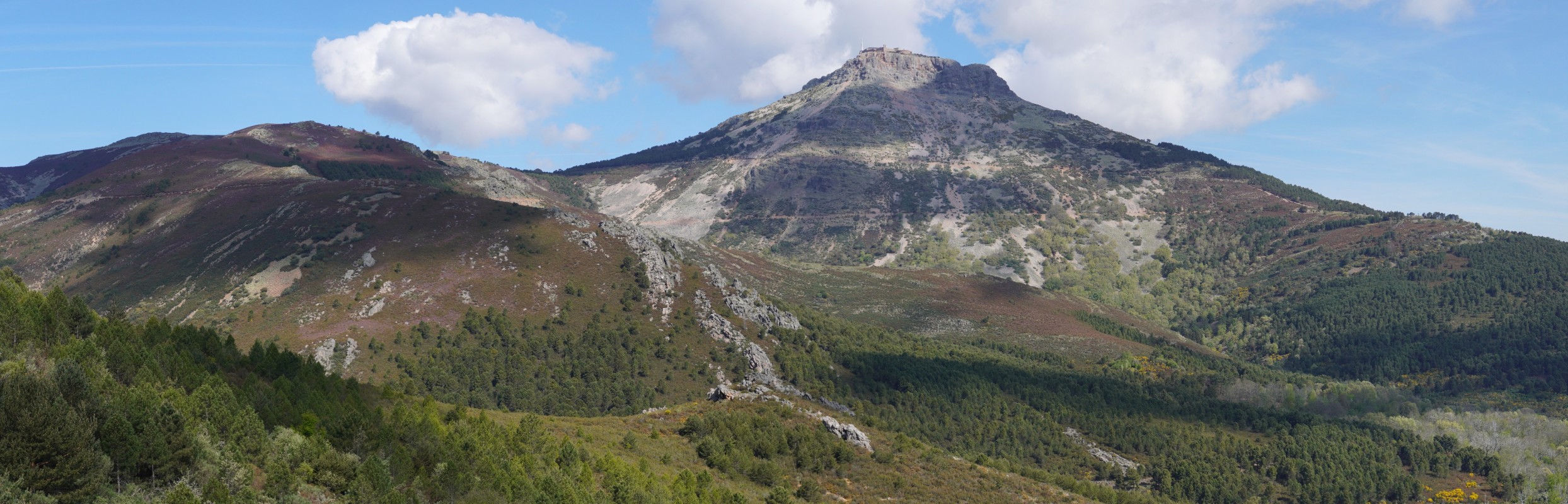
On our second day, we decided to walk from the village of La Alberca to the summit of the Peña de Francia (1727m): a 23km loop with around 800m of ascent. The walk was pleasant, we had good views of the summit most of the time and the hills opened the higher we climbed. Up to 1300m, the vegetation is pine forest and fern undergrowth, and when the trees disappear, they make space to a heathland covered by broom bushes and heather, changing into a rocky terrain in the very last part. Not forgetting some splendid lavender plants in-between.
Arriving on the top, we met with a crowd of tourists disembarking from a bus: a road is leading to the summit to the Dominican monastery of the Holy Virgin which crowns the mountain. Next to it are a hostel and a telecommunication antenna. We had our picnic on the terrace enjoying the wide landscape around us before making our way down the valley on another path.
Check on Wikiloc to download a GPS track and a description of this walk. We also have a photo gallery dedicated to this walk.
We strolled through La Alberca (1034 inhabitants in 2025) on our return: the town is livelier than the villages we saw the day before, it is a tourist hub for the region and a centre for walkers and cyclists.
Driving back to Sotoserrano we stopped in Mogarraz, a quirky village which dates back to the medieval times. Like many other villages in the region, Mogarraz suffered a population bleed in the 60s, many inhabitants emigrating to other countries. This is when a photographer had the idea of taking pictures of all the 388 remaining villagers. Today, these portraits hang on each one of their houses, dressed up in the traditional way. Nothing much has changed in Mogarraz since then: according to the 2025 census, there are now only 236 people living in the village.
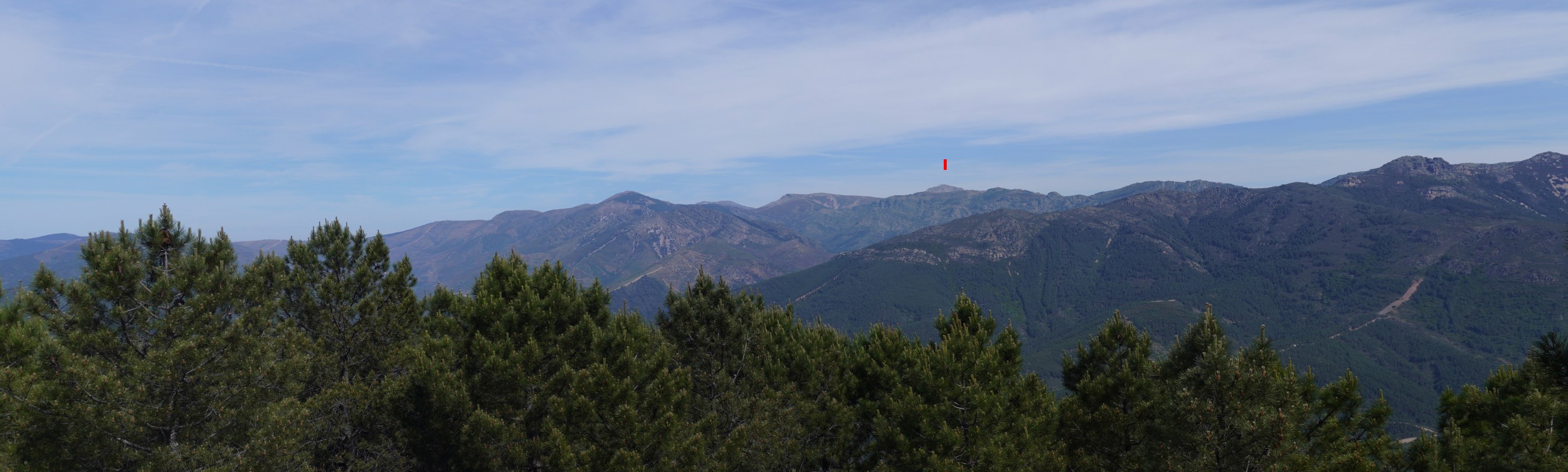 On our third day, we drove to the village of Riomalo de Abajo to explore the Meander de Melero of the Río Alagón. The river has its source in the Sierra de Francia, and is a tributary of the Tagus which itself flows into the Atlantic Ocean at Lisbon. Thomas concocted our walk of the day by combining bits of two hikes (one on each bank) found on Wikiloc which he peppered with the addition of a climb up to the surrounding ridges to admire the scenery. It was a hard day!
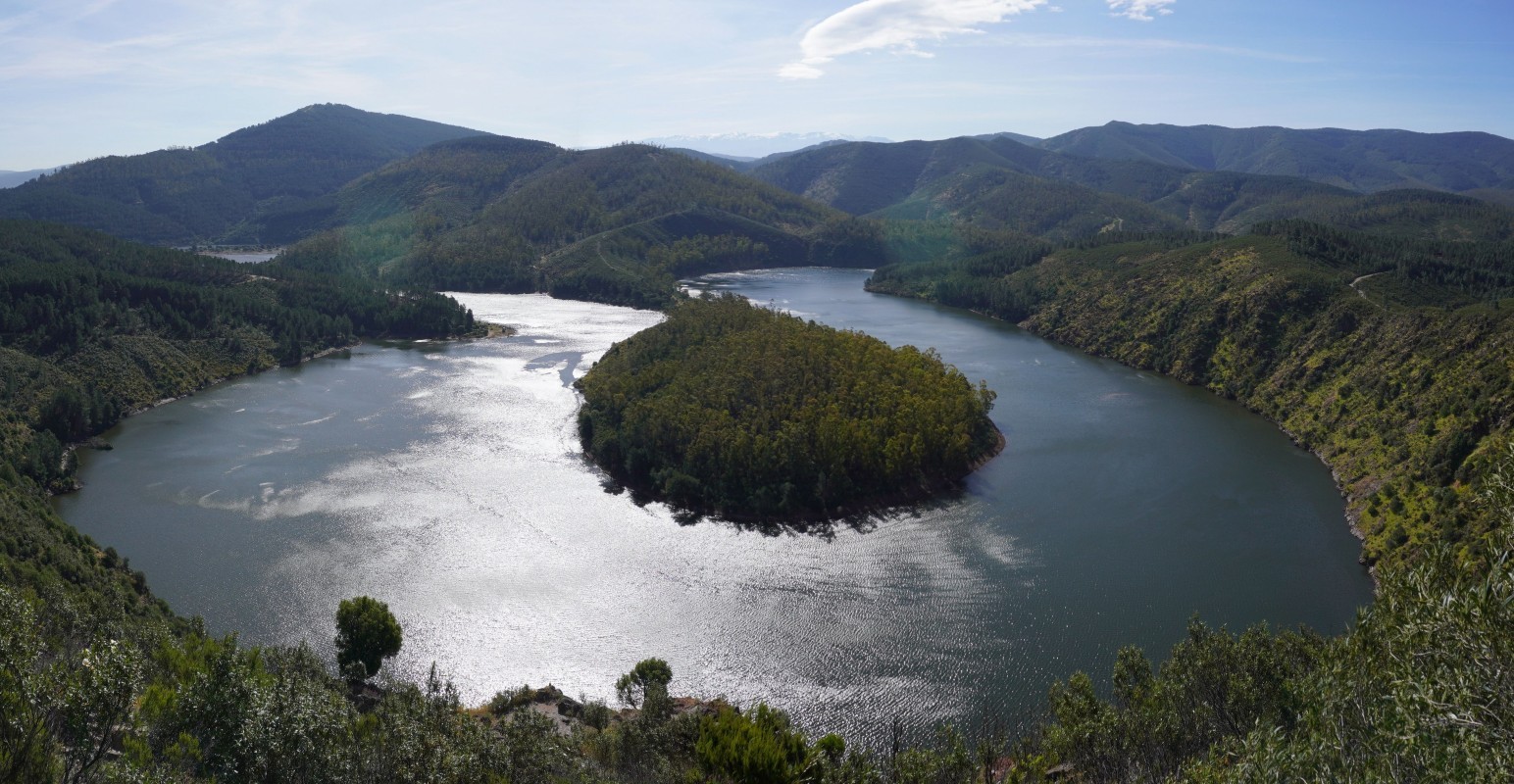 We started on the right bank and took our inspiration from this Wikiloc trail. We followed the easy path leading to the viewpoint of La Antigua, providing extensive views of the meander and much frequented by walkers and cyclists alike (there is a parking there but most people come on foot). We continued for a while on the path but instead of completing the loop, we diverged at some point and decided to climb up the ridge above the meander to get a better view of the surrounding landscape. There was no real path, only straight and (very) steep firebreaks left by forestry works. It was hard work but well worth it (see our panorama above). Luckily for our knees, we found a gentler path to regain the Wikiloc trail; we returned to the road on the way we came instead of completing the loop.
Back on the road, we followed it for a while until we crossed the Río Alagón on a bridge and gained the left bank. Our aim was the Mirador of la Romerosa for a view of the meander from the other side. We followed roughly this Wikiloc trail but started at the bridge and began the walk by passing through the ruins of the village of Cabaloria. Leaving the ruins, we went a bit off-path to find a shortcut in south-east direction which eventually took us to the Wikiloc trail, saving us time and kilometres. The view from the mirador of La Romerosa was not so impressive as from La Antigua but there was nobody around which felt like a treat. After a picnic break we veered down to the river along a kind of firebreak and followed its bank (we did not go round the meander), passing a ruined oil mill on the way until the path suddenly stopped and we had to leave the shore. We climbed for a while and then found an old paved path, a remain of an old mule track which brought us back down to the ruins of Cabaloria and the road (the village was abandoned in 1965 because of the construction of the Gabriel y Galan dam and reservoir).
We have a photo gallery dedicated to this walk.
Want to read more? Go back to Blinded by the light: El Rosario de Cristal, go on to Our road-trip of 2025 or go up to Blog
$ updated from: Blog.htxt Sun 24 May 2026 15:57:32 trvl2 — Copyright © 2026 Vero and Thomas Lauer unless otherwise stated | All rights reserved $