Welcome  FAQs
Links  News

France

La France… meilleur pays du monde (according to some).

Well. Let's face it: the French have it all. The highest mountains, the wildest coasts, amazing buildings, superb food, wines to die for… so what's not to like? (The frustrating strikes, perhaps?)

Full map of all France pages

Other Things

Translate & Share

Path: Photos > Museums > Metz: Musée de la Cour d'Or
Tags: France  Museum  News  2025

Metz: Musée de la Cour d'Or


(vero;2025-Nov-13)

We were impressed by our visit of the Musée de la Cour d'Or dedicated to the history of Metz and its region. It is housed in the town centre within a labyrinth of historic buildings including Roman baths, medieval granaries and former monastic chapels, the perfect setting to display the city's rich past. The exhibits are well presented and divided in three distinct parts: the first part deals with the Gallo-Roman period, the second one with the medieval times and finally there is a Beaux-Arts section with a focus on the so-called École de Metz. A biodiversity pavilion has been recently opened too, but we did not visit. The visit is free of charge (closed on Tuesdays and on open days from 12:45 to 14:00) and is the perfect introduction to the city. We recommend highly.

Metz started life as a celtic oppidum and became part of the Roman Empire under the name of Divodurum Mediomatricorum after Caesar's conquest of the Gaul. At the confluent of two rivers, the Moselle and the Seille, the town occupied a strategic location and flourished under Roman rule: it became an important staging point at the junction of several Roman roads and was one of the principal towns of Gaul. Later on, from the end of the 3rd century onwards, it fell prey to several attacks from invading tribes, among others the hordes of Attila the Hun who sacked the city in 451 AD. Metz became part of Austrasia under Frankish and later Merovingian rule by the end of the 5th century and became part of the Carolingian Empire in 768. After the partition of the Carolingian Empire, Metz became eventually the capital of the kingdom of Lotharingia and part of the Holy Roman Empire. It became a Free Imperial City in 1189 which granted the town some privileges and a certain independence leading to the creation of the Republic of Metz in the 13th century.

The town became French in 1552 after the signature of the Treaty of Chambord between the Holy Roman Emperor Charles V and the French King Henri II and remained so until the Franco-Prussian war of 1870-71 when both Alsace and Lorraine were annexed by the victorious Germany, rejoining France at the end of WWI in 1918, only to be re-annexed again during WWII from 1940 to November 1944. Many exhibits in the museum have been found and recovered during the German annexation from 1871 to 1918.

Our first gallery is dedicated to the Gallo-Roman and Medieval periods. The second one further down shows some paintings of the Beaux-Arts section which caught our attention.

The Gallo-Roman and Medieval collection
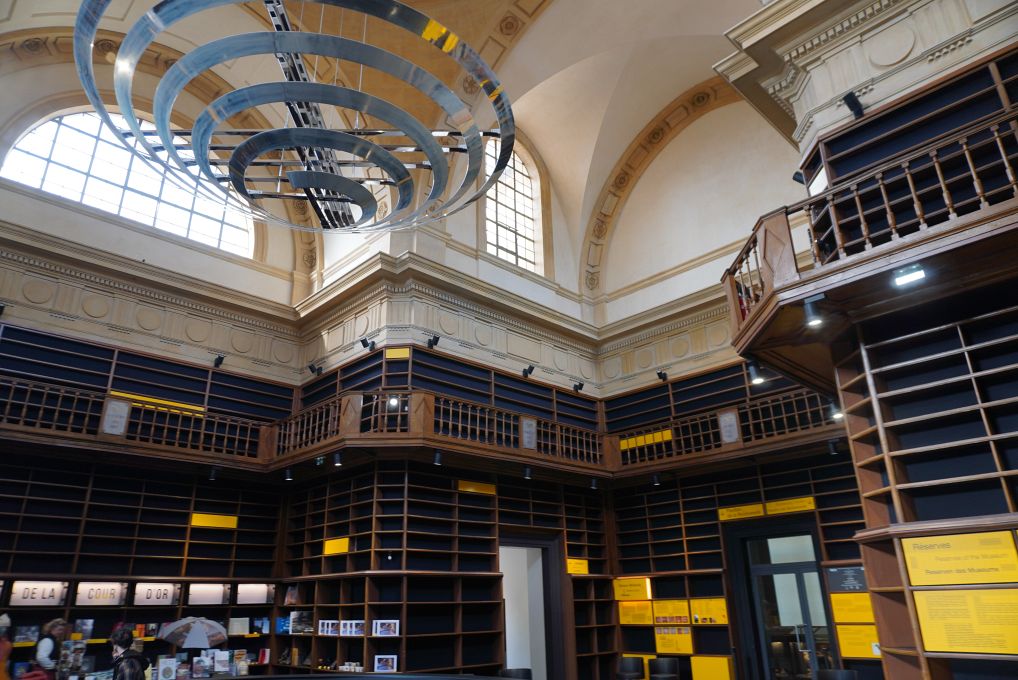
The reception area of the museum. It is located in the former public library which had been established in the former abbey church of Petits Carmes during the Revolution. The book shelves lining the walls can still be seen.
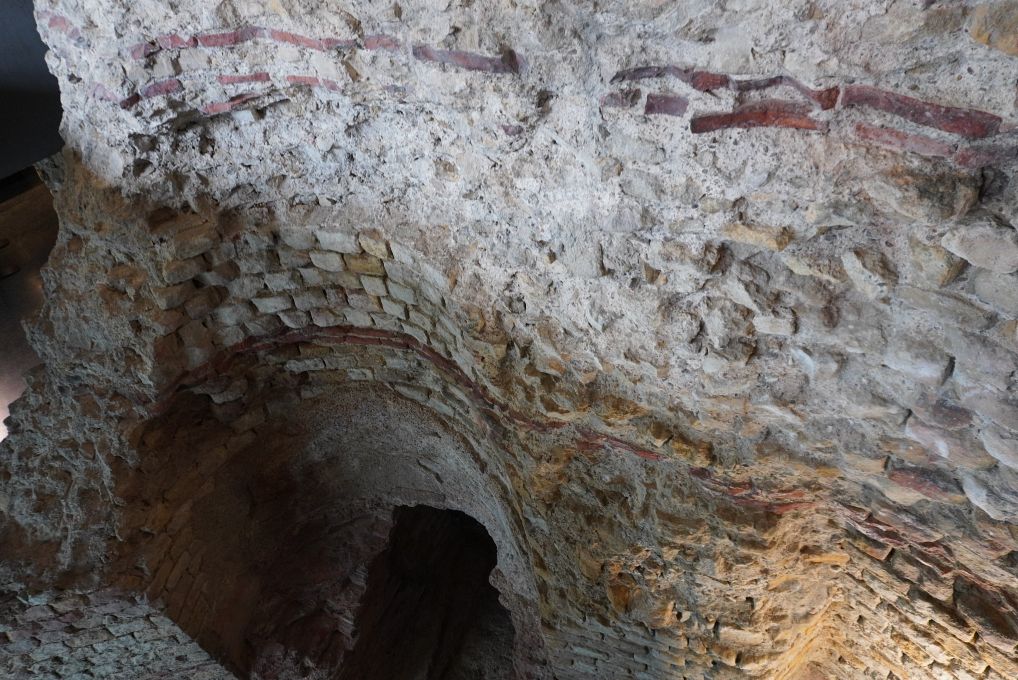
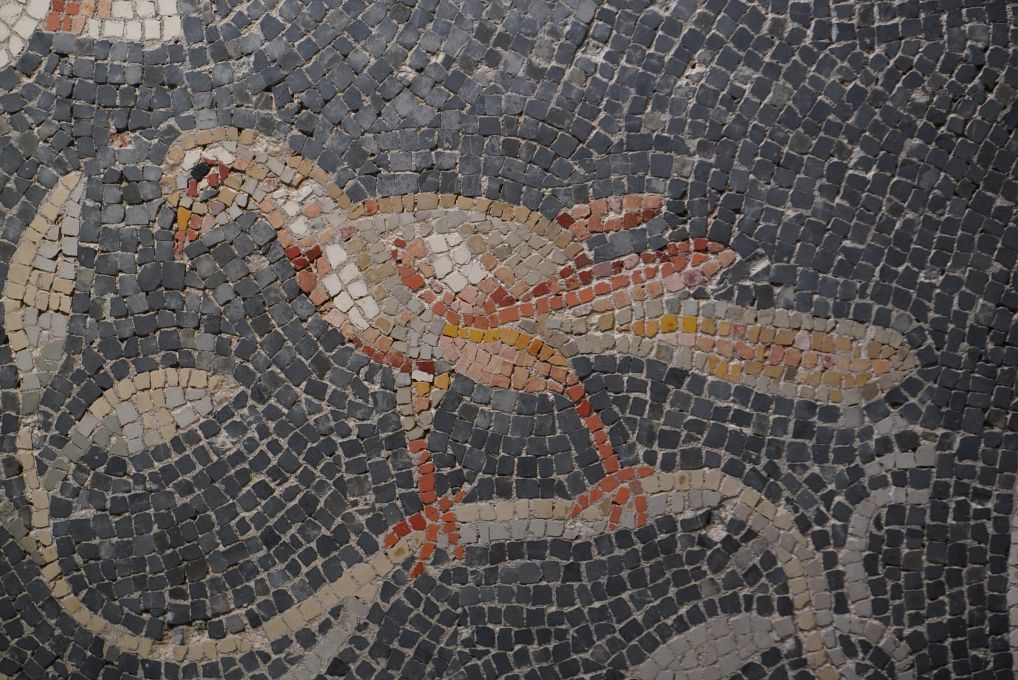
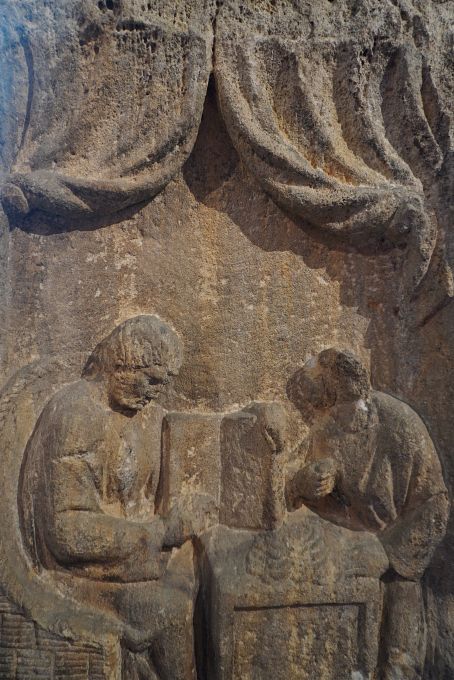
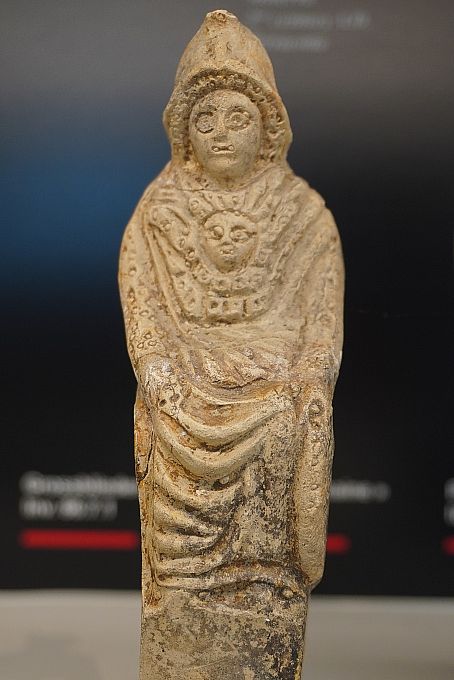
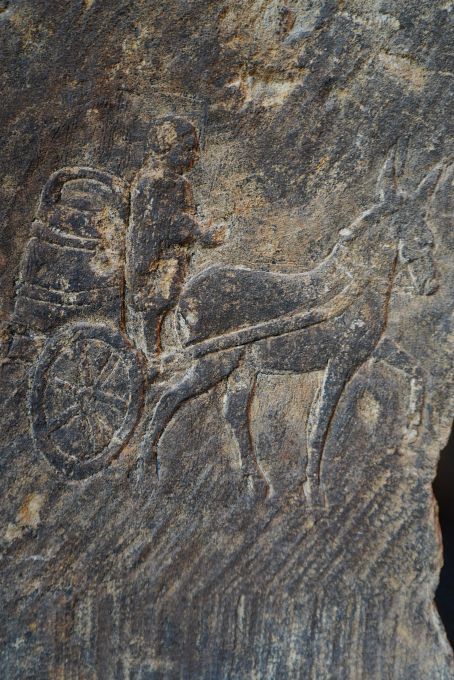
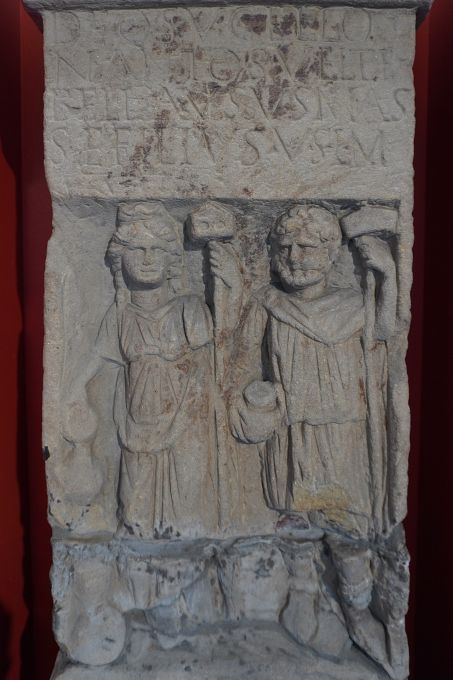
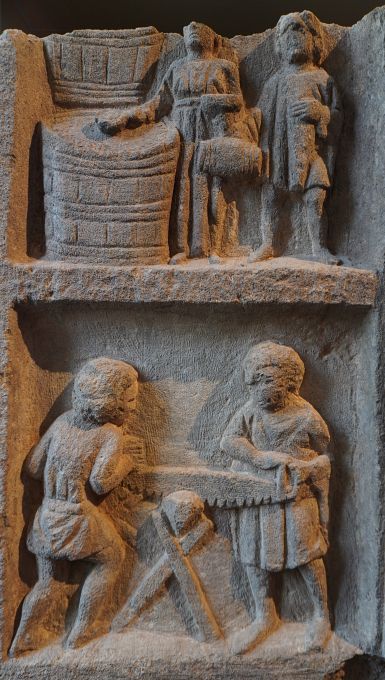
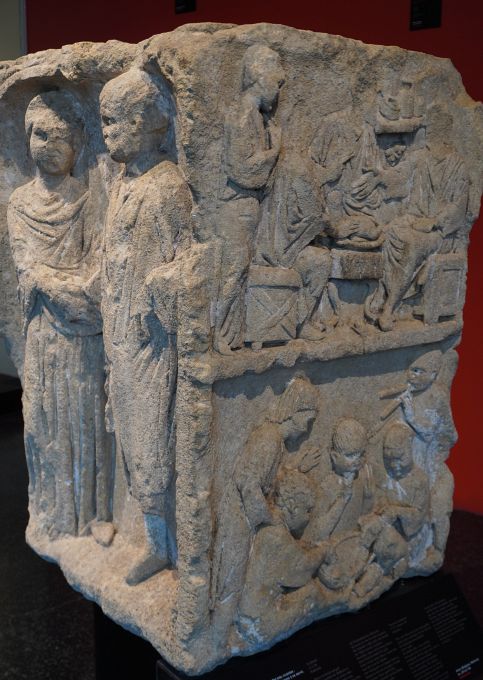
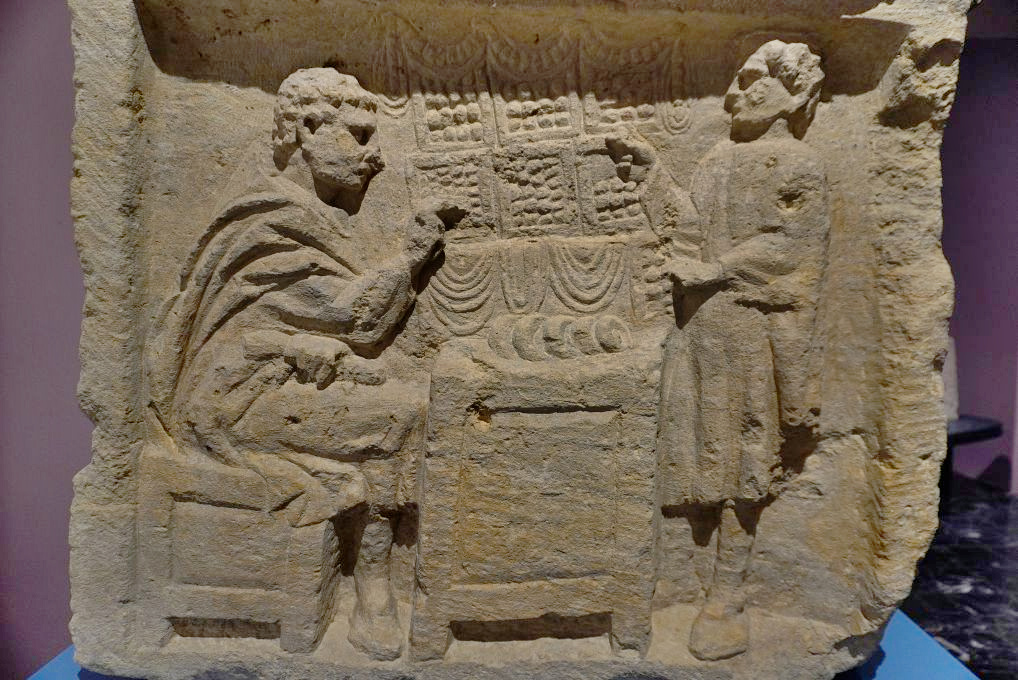
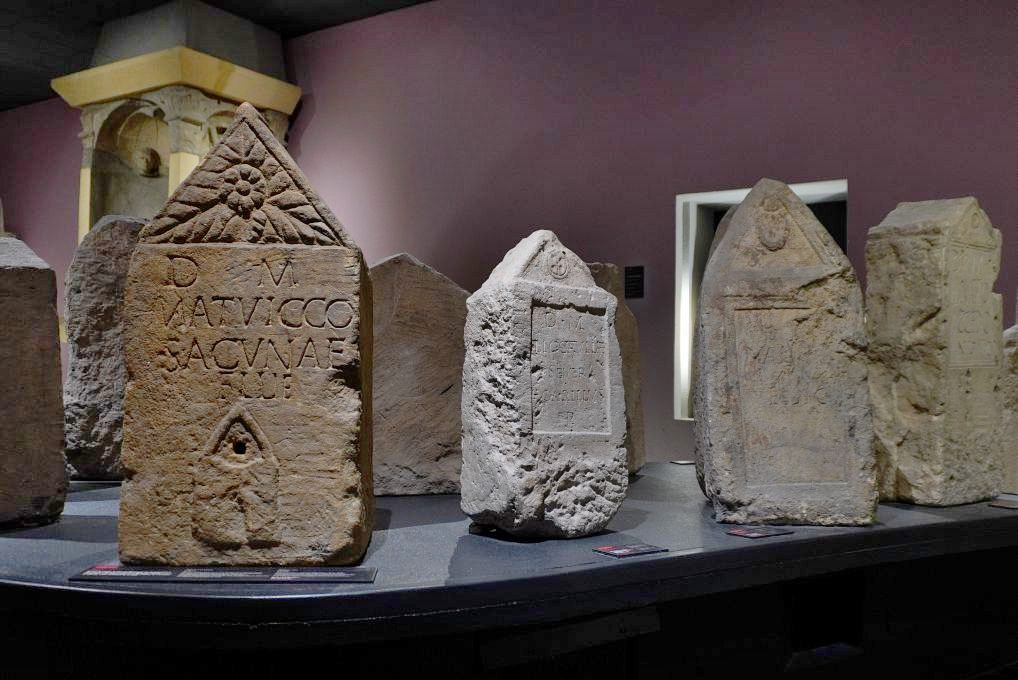
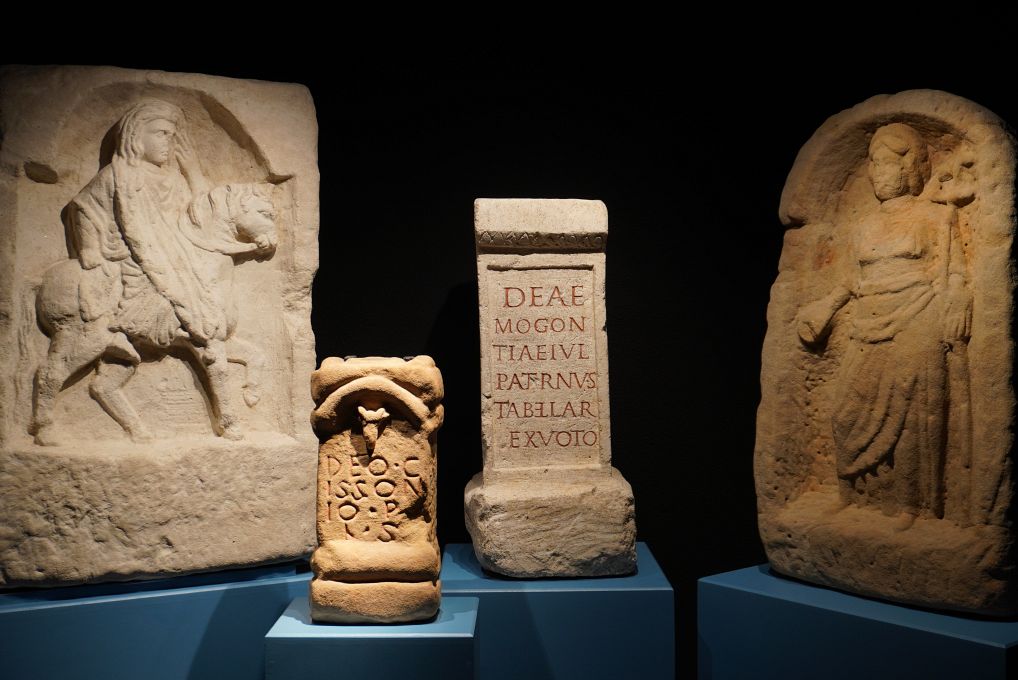
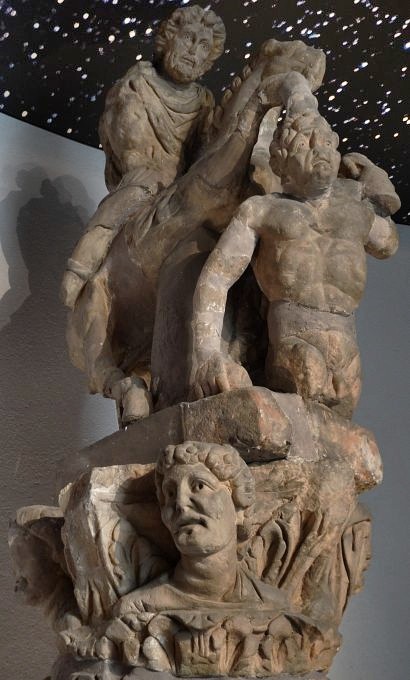
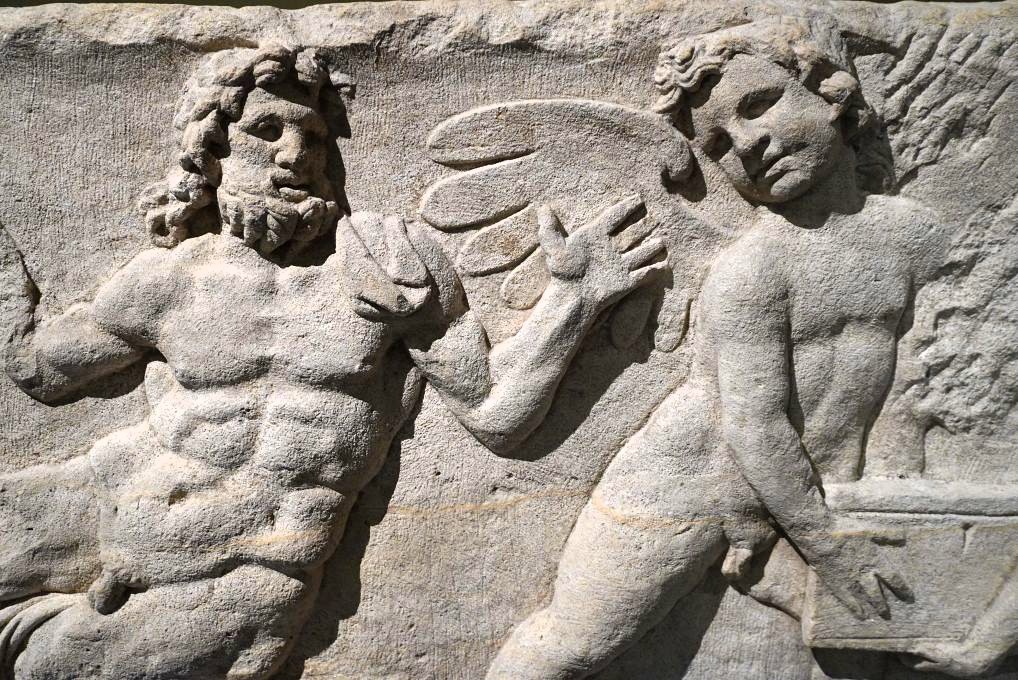
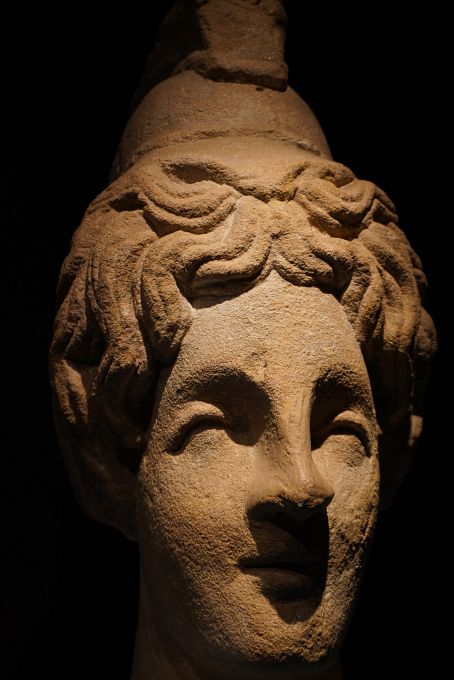
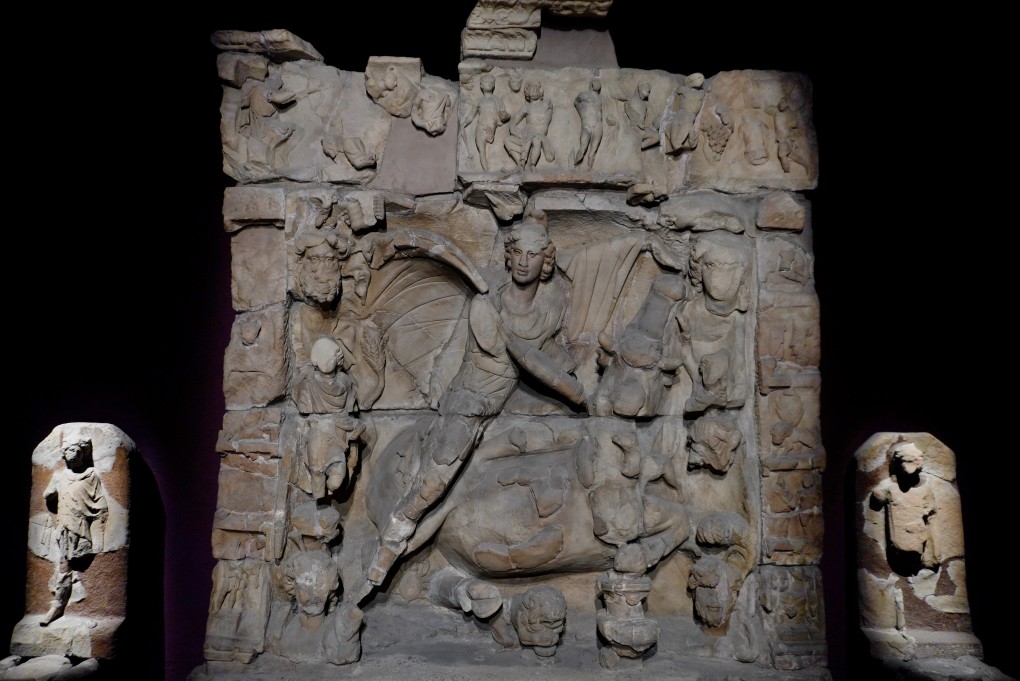
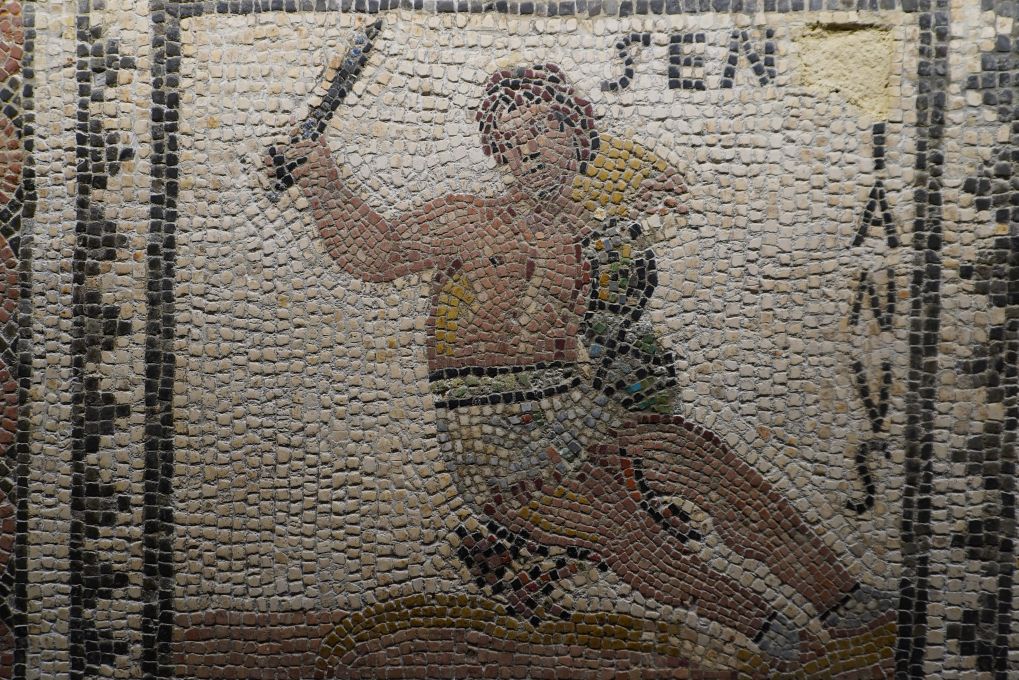
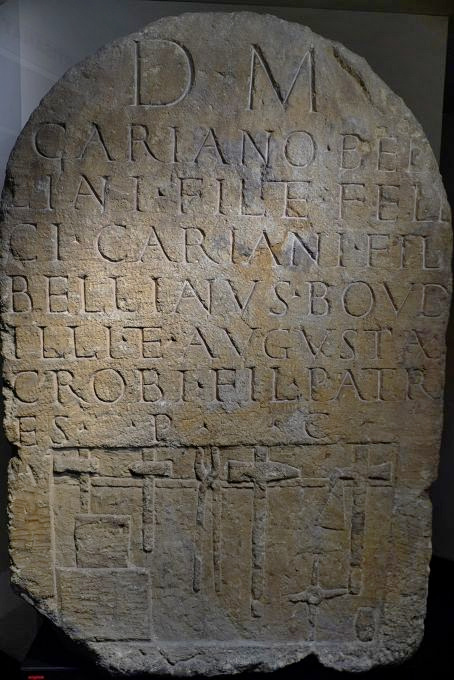
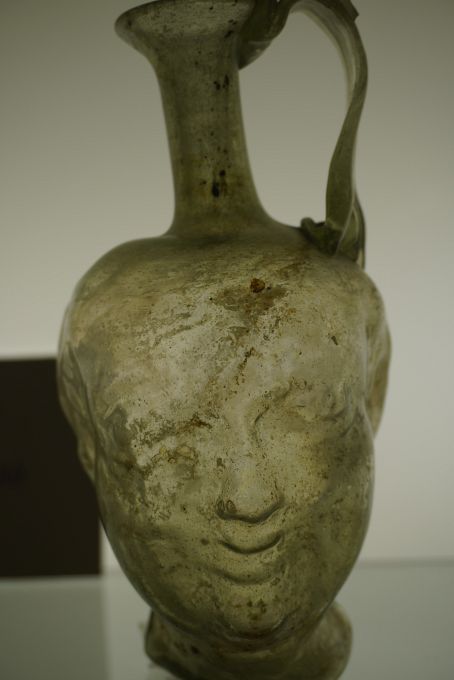
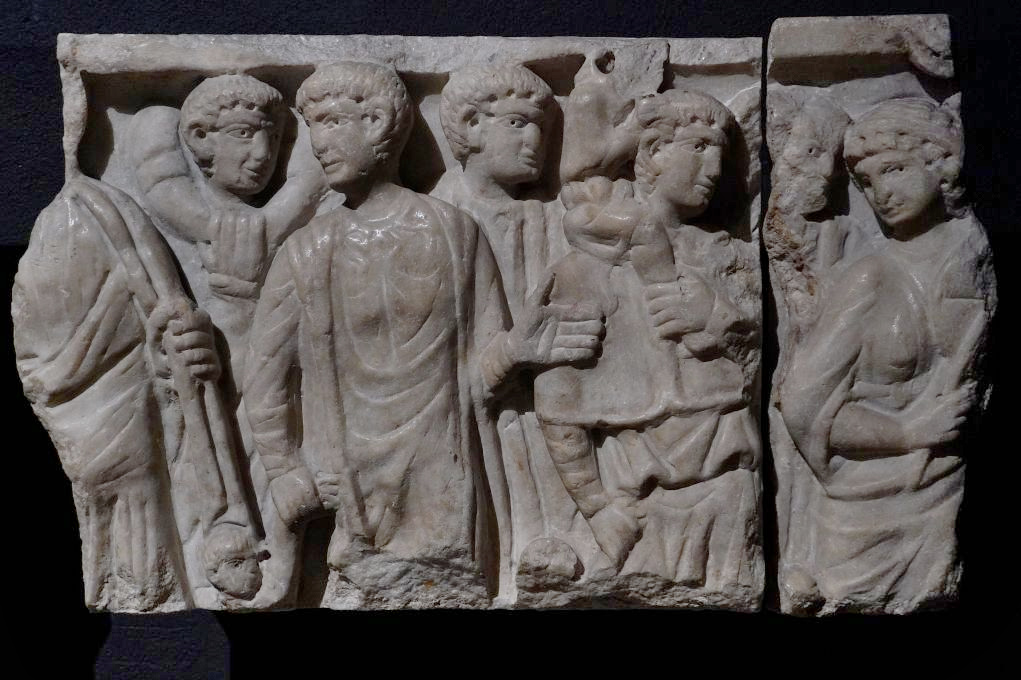
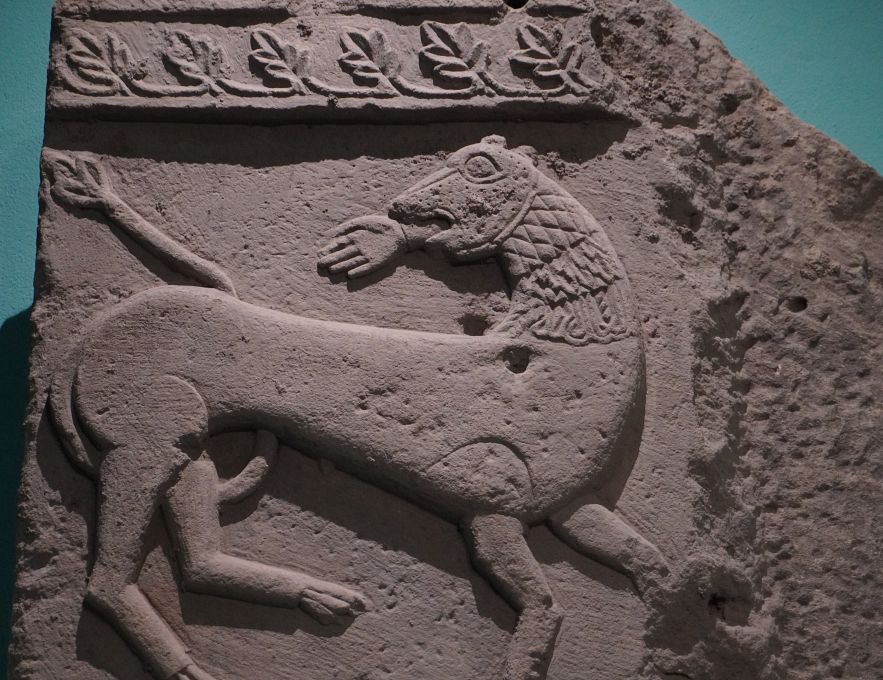
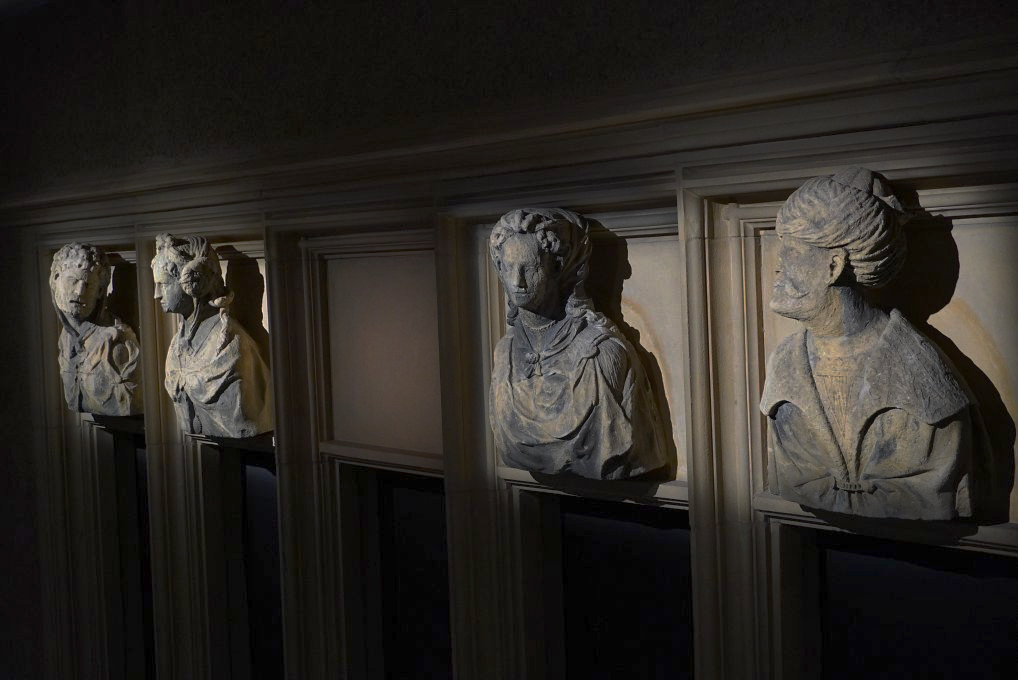
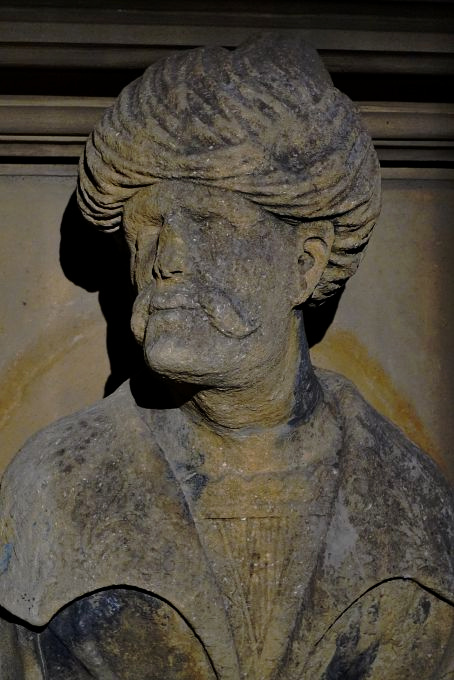
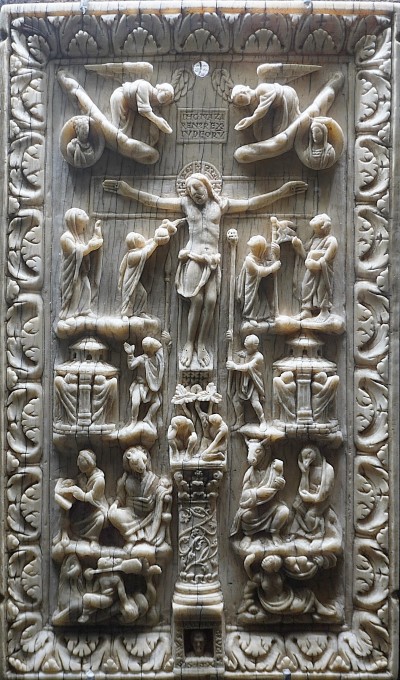
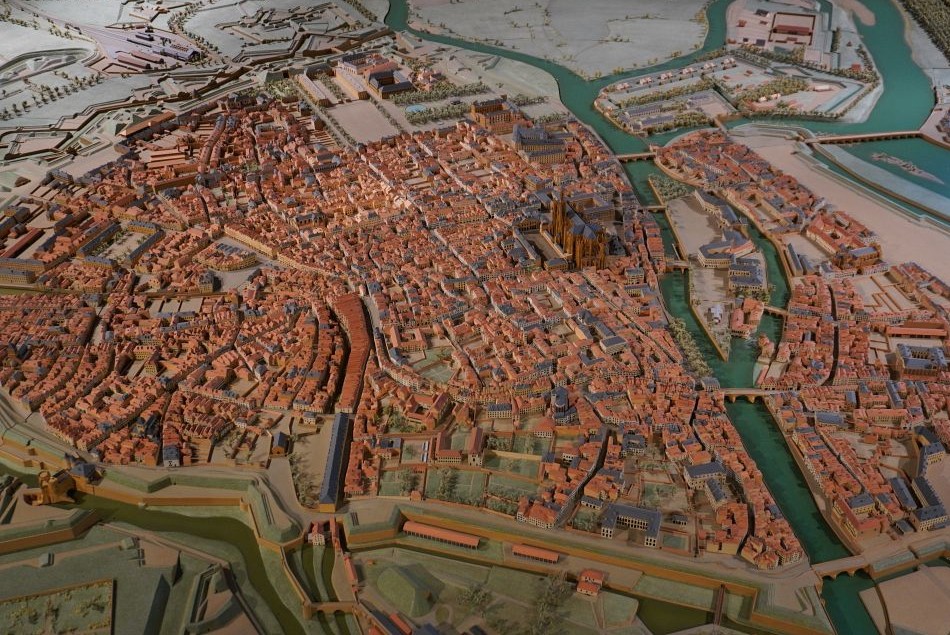
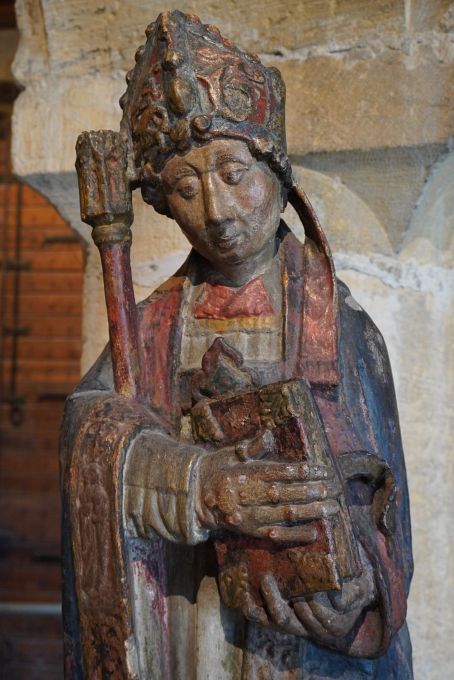
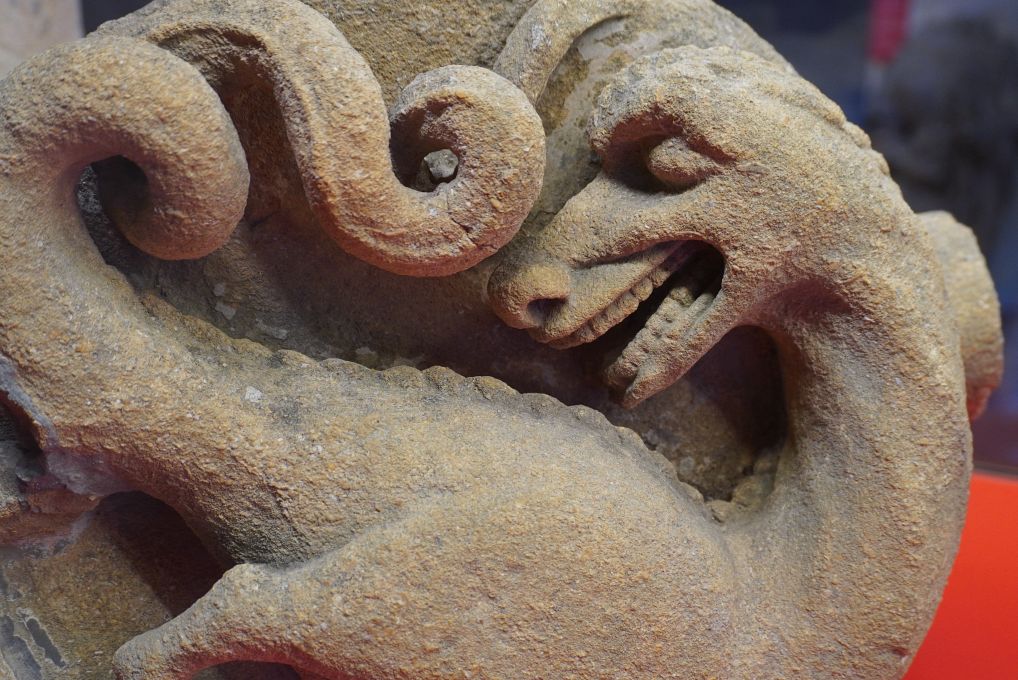
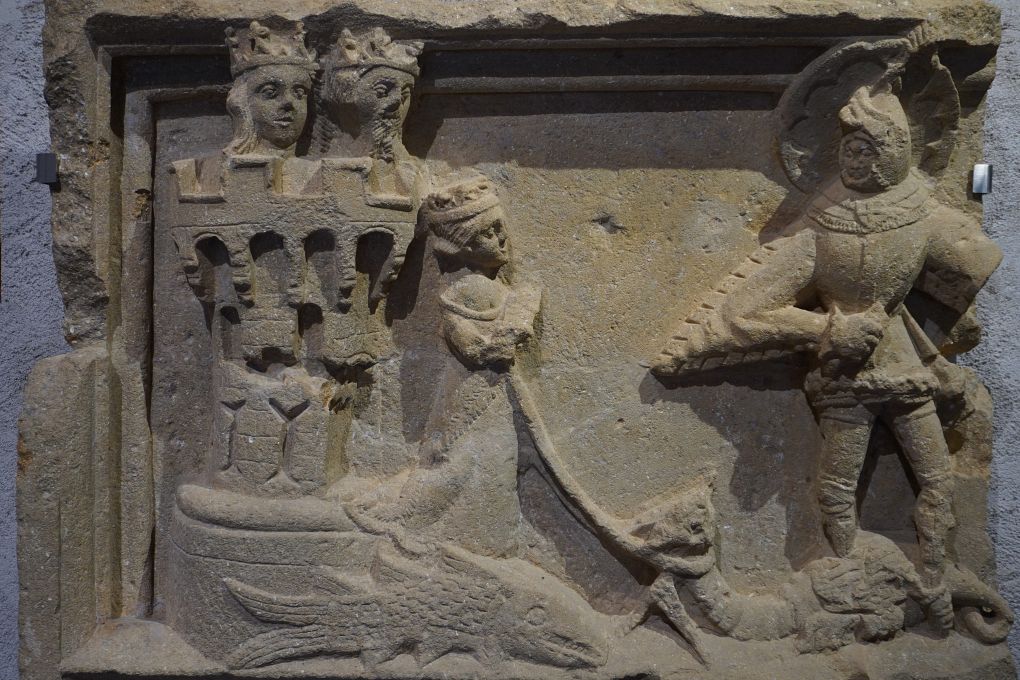
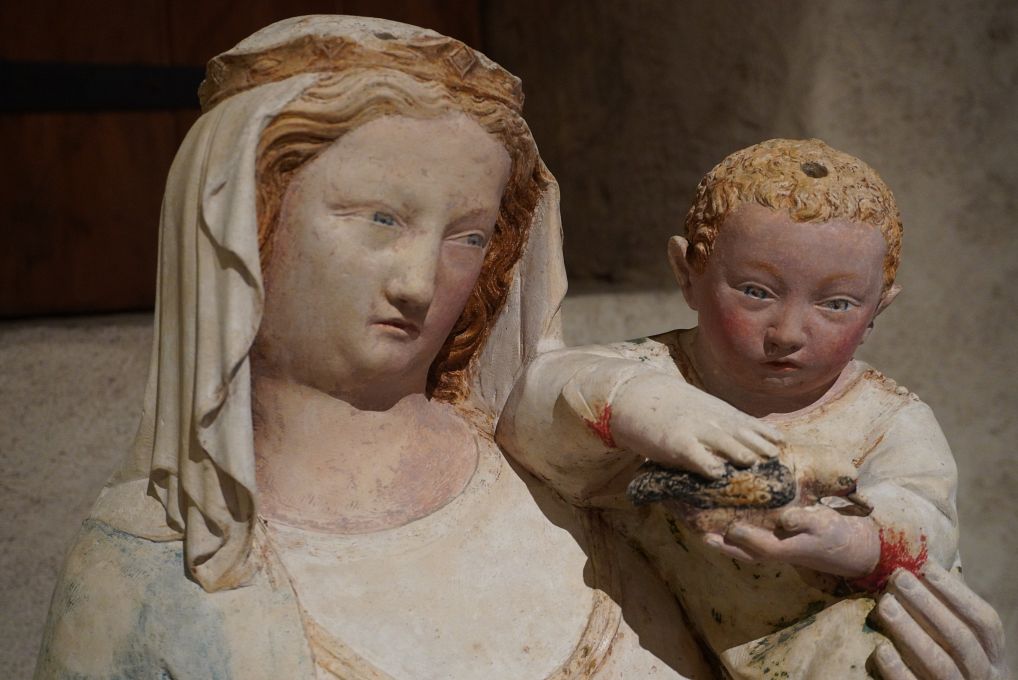
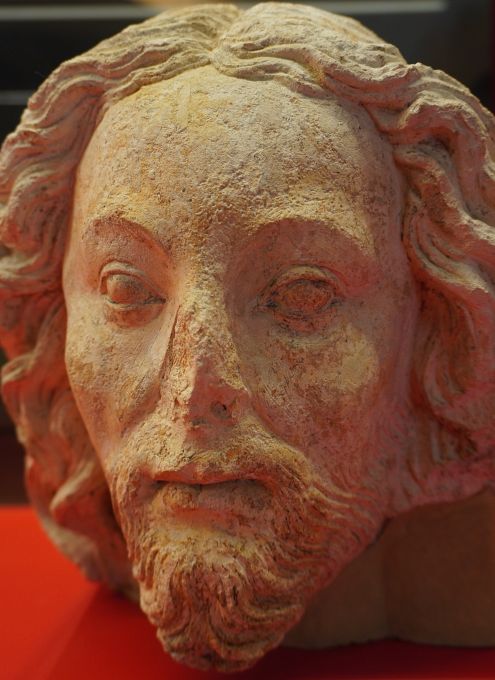
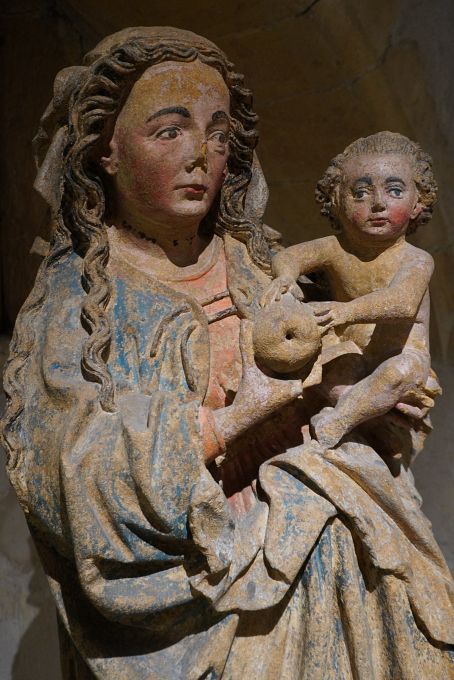
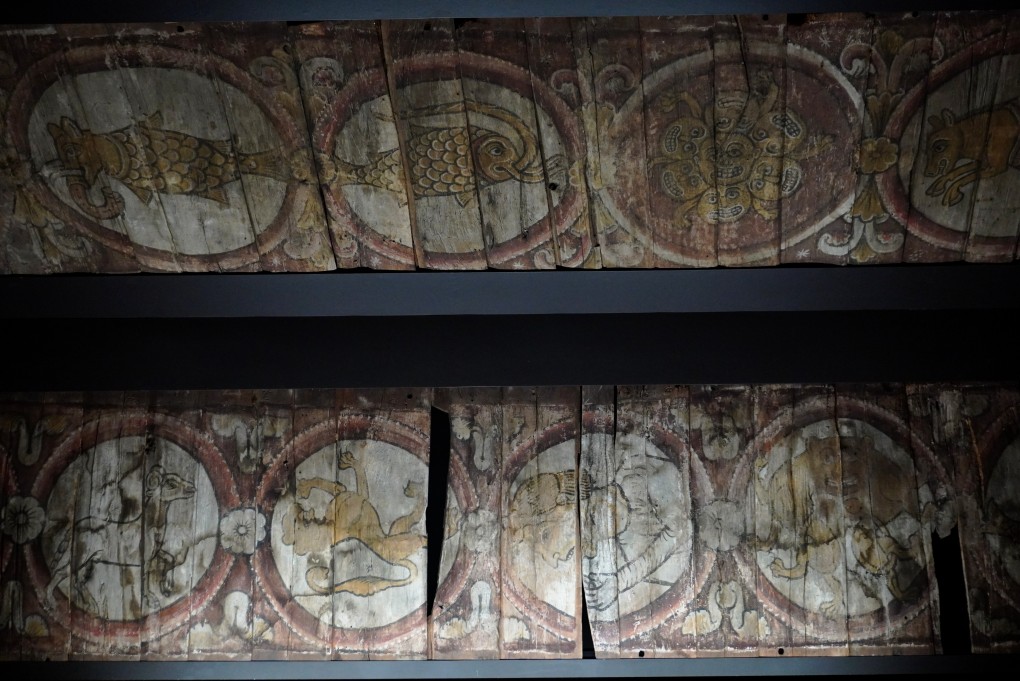
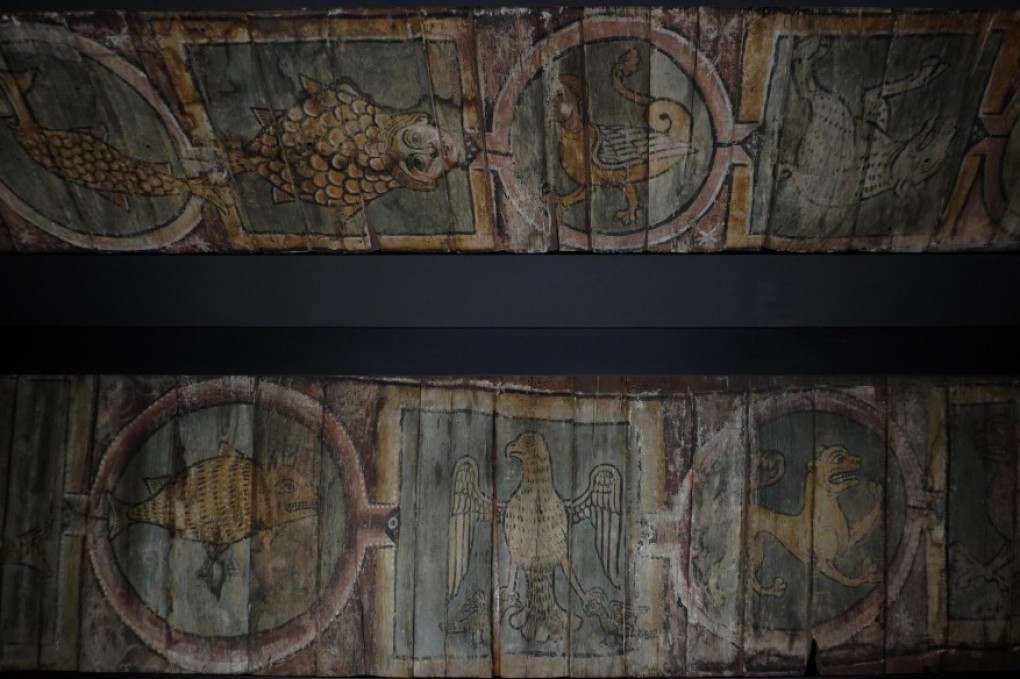
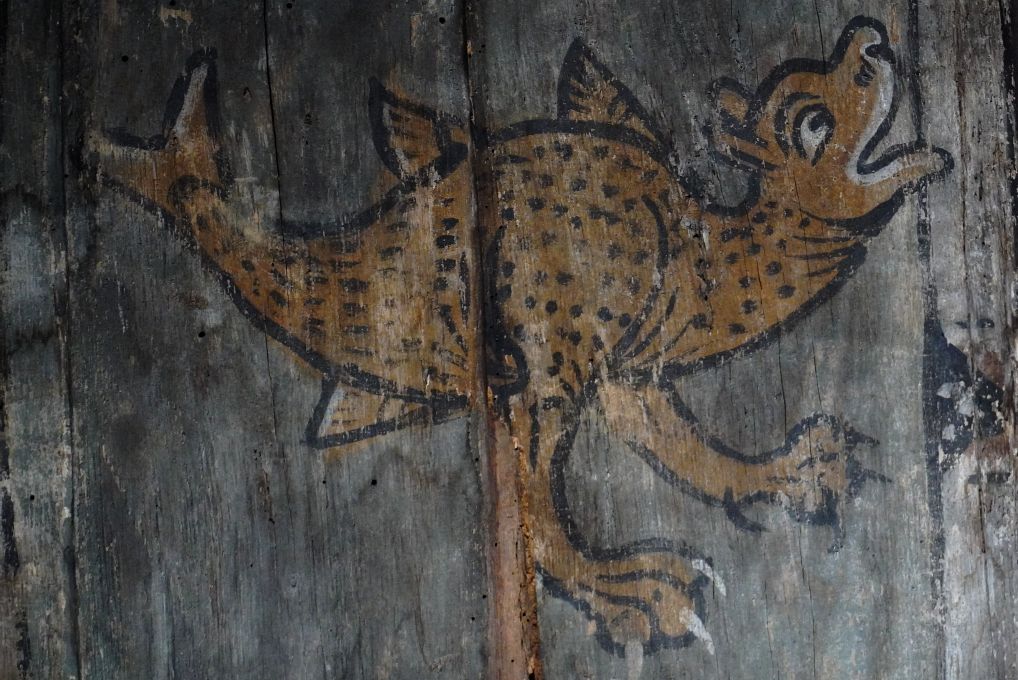
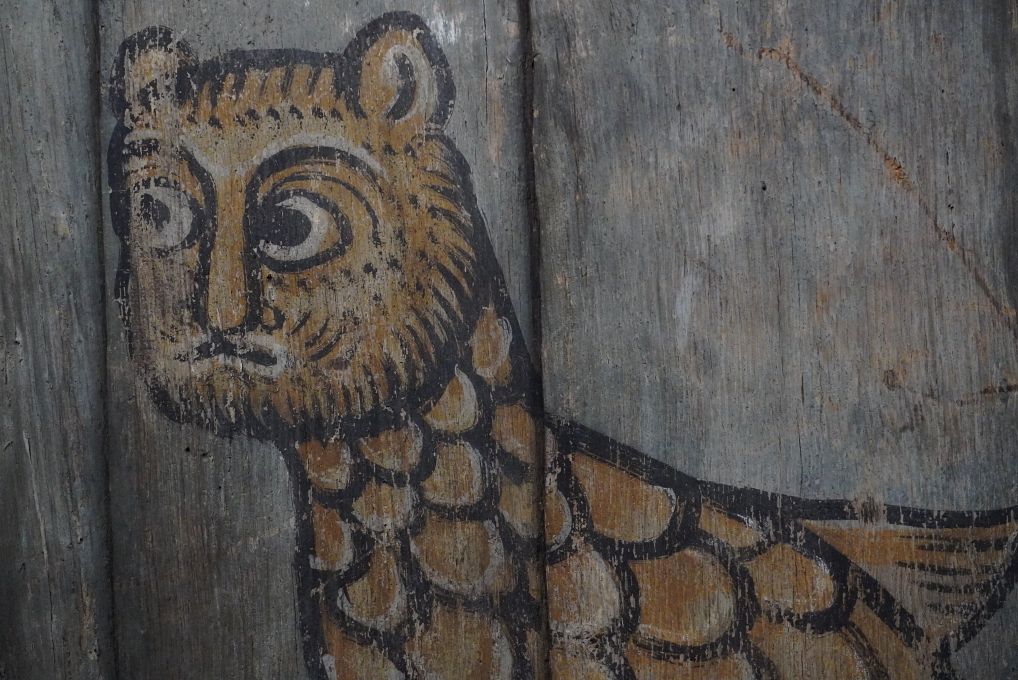
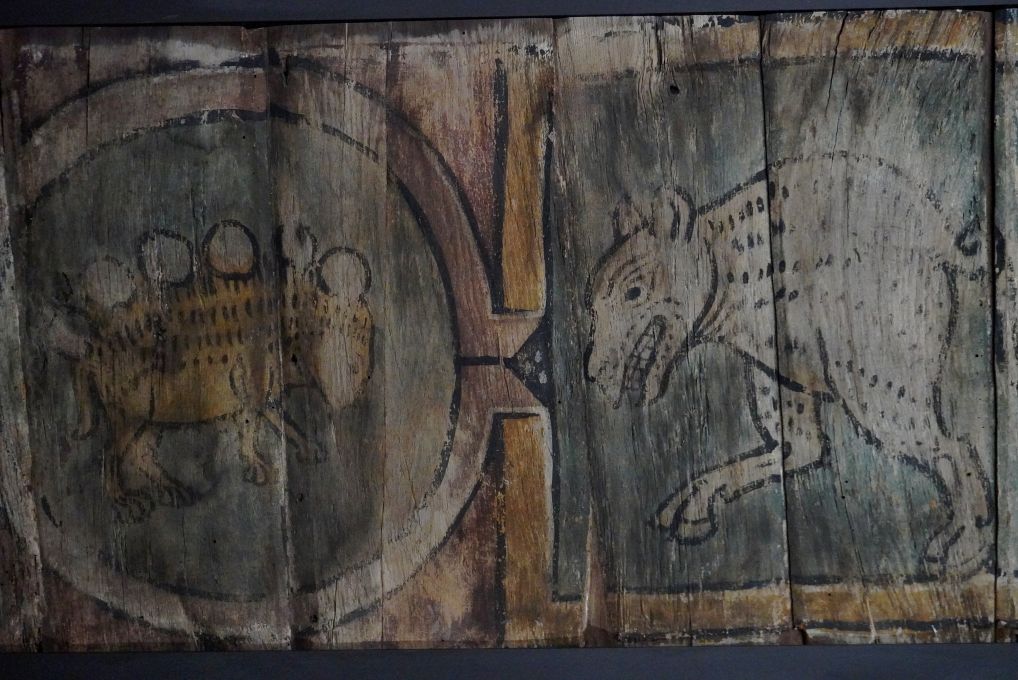
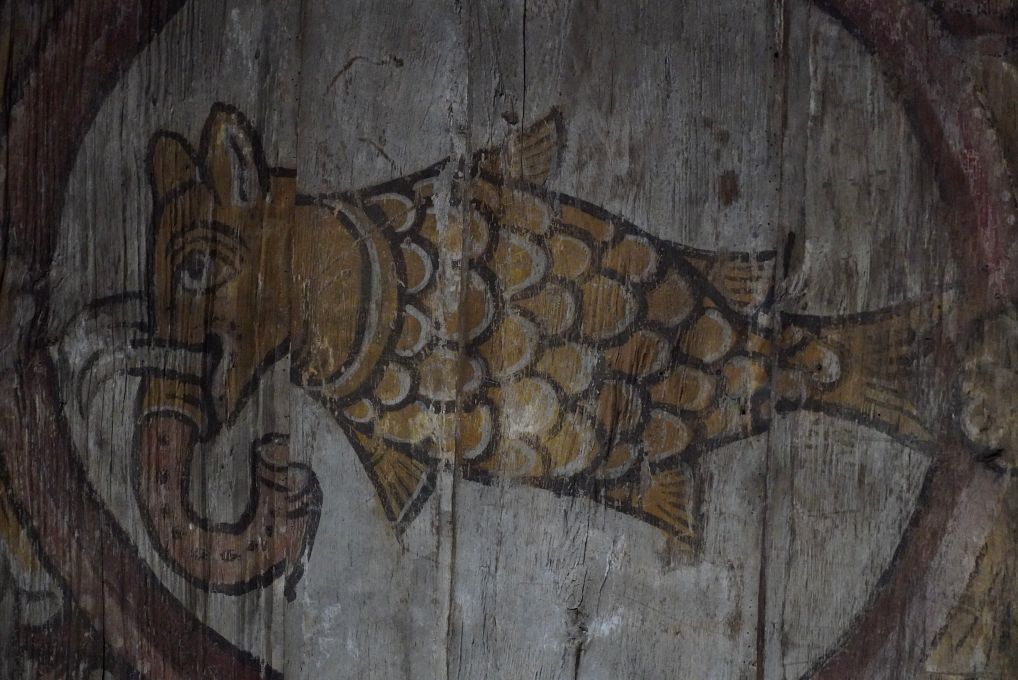
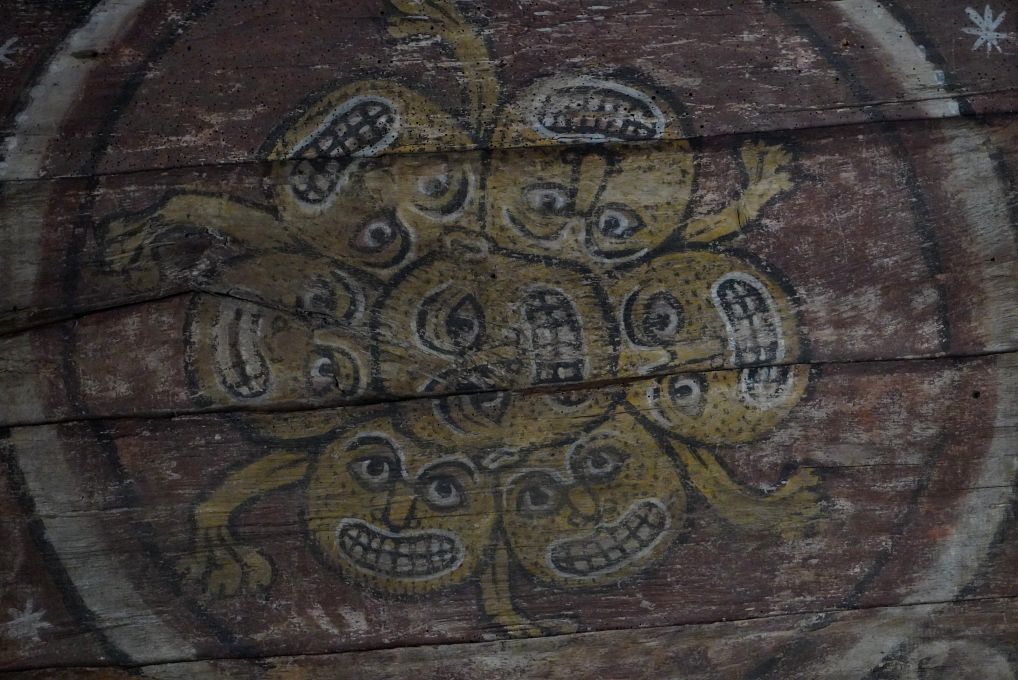
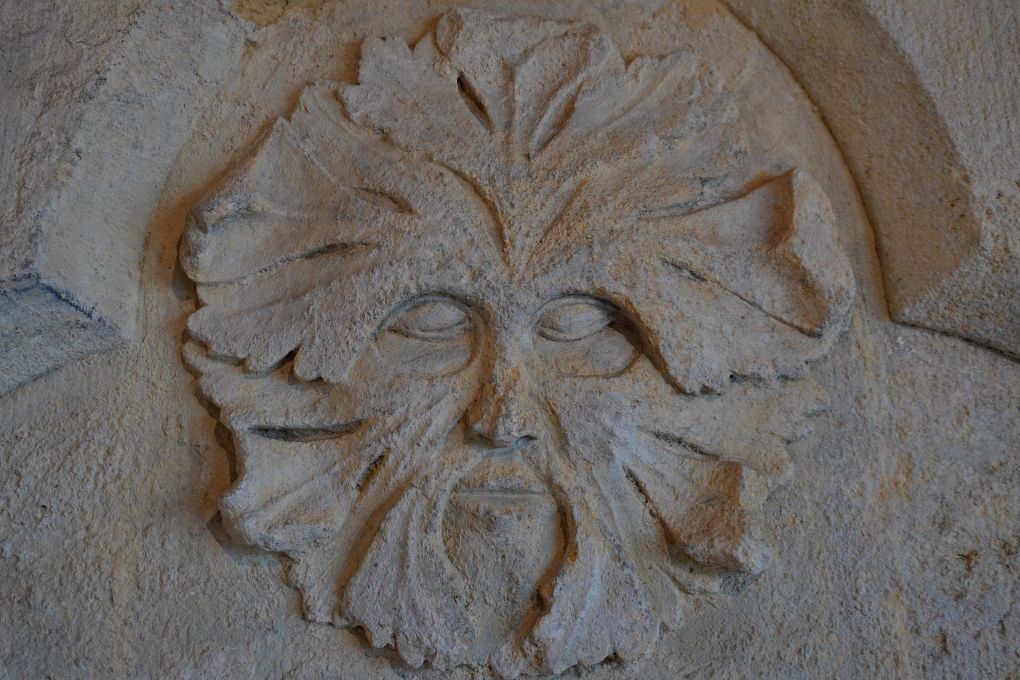
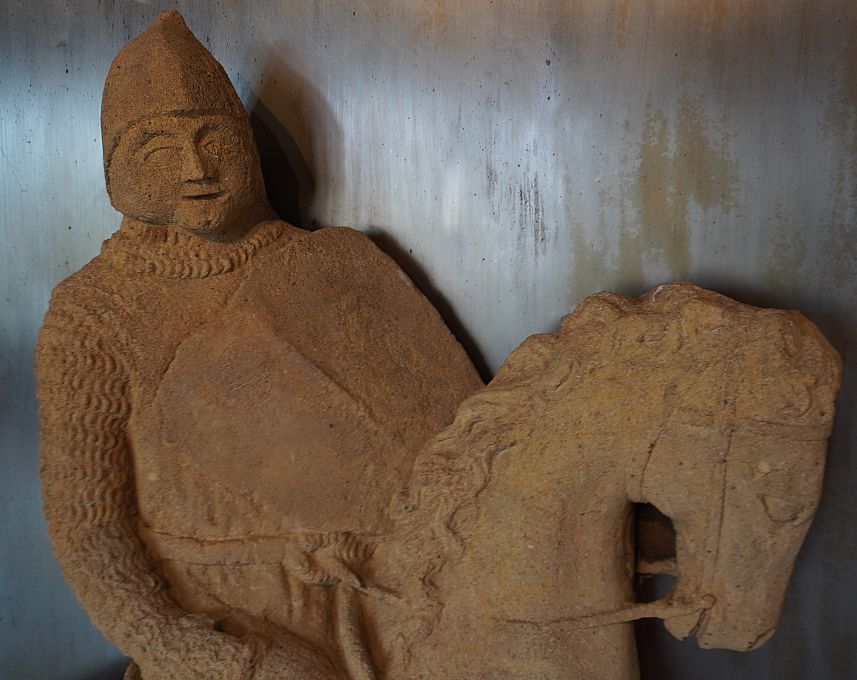
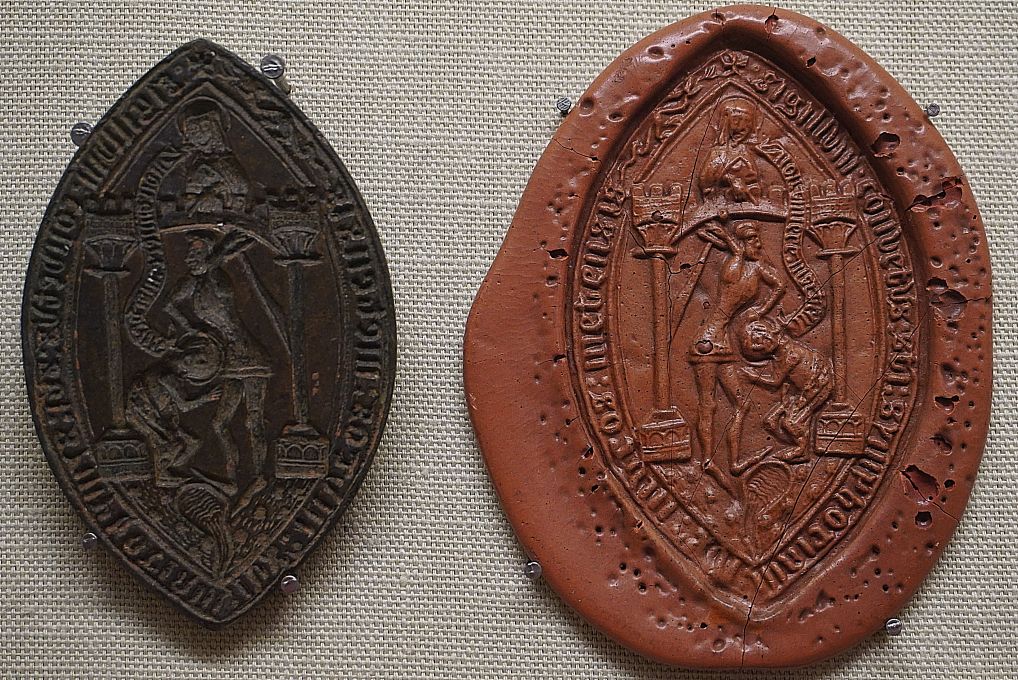
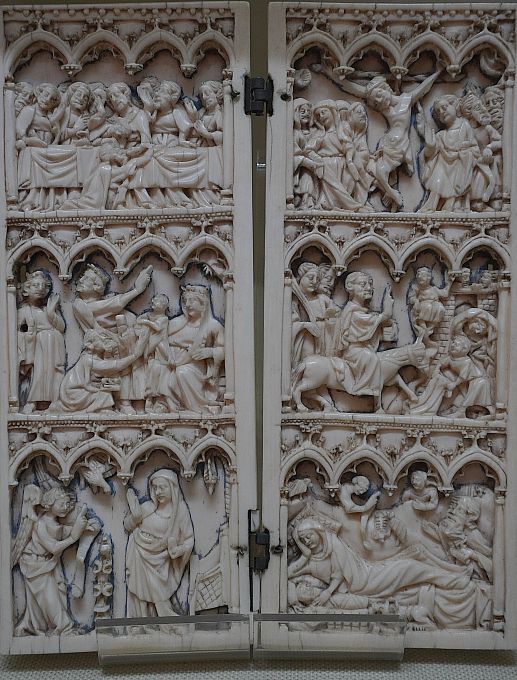
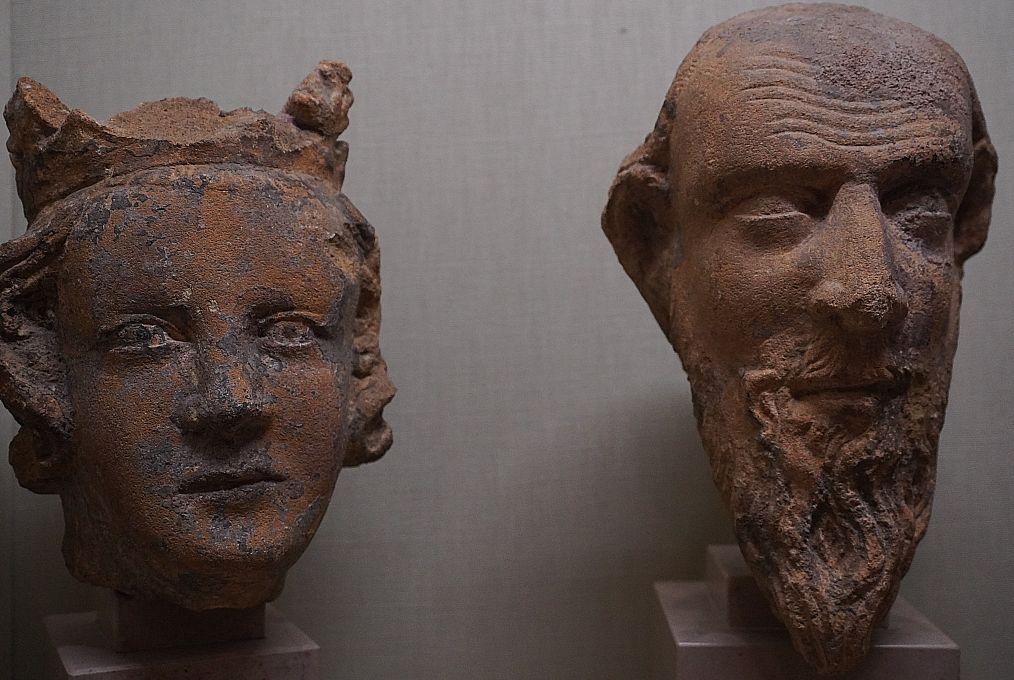
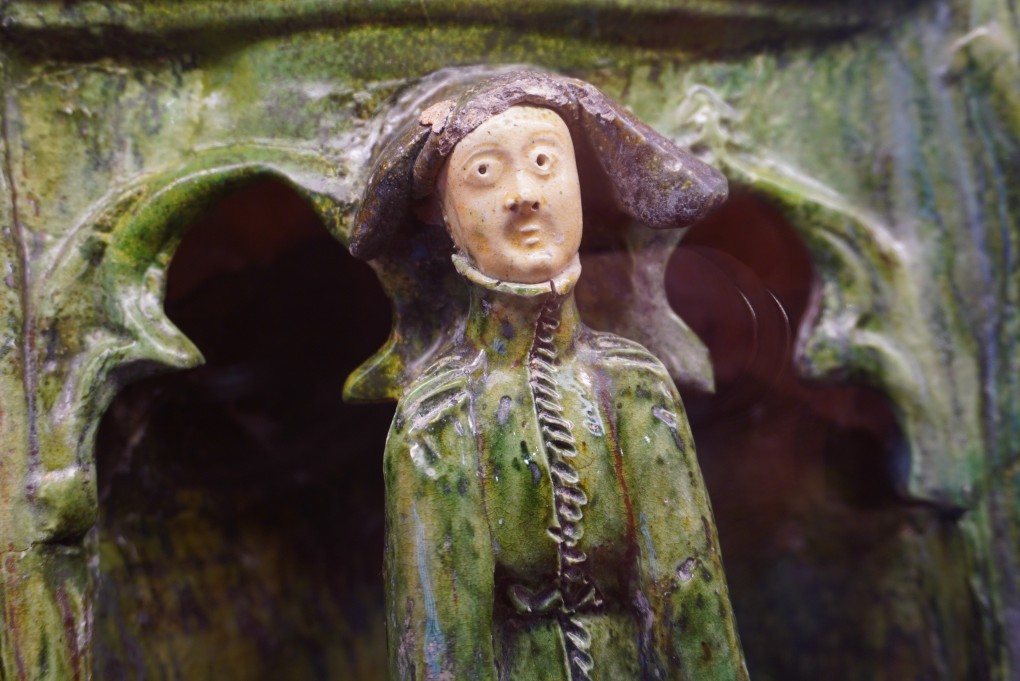
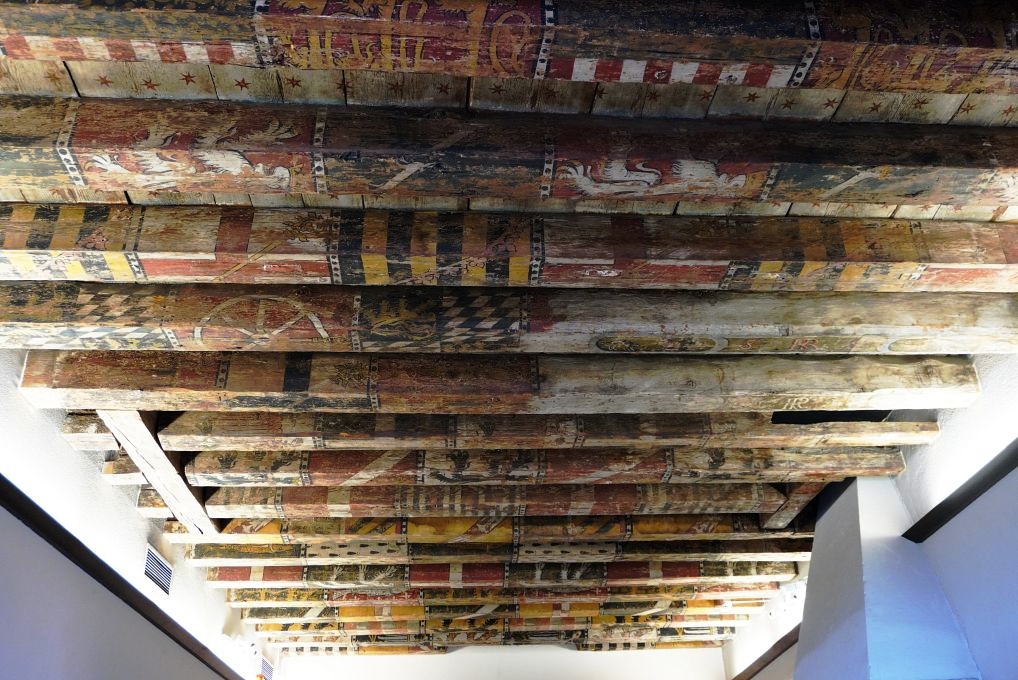
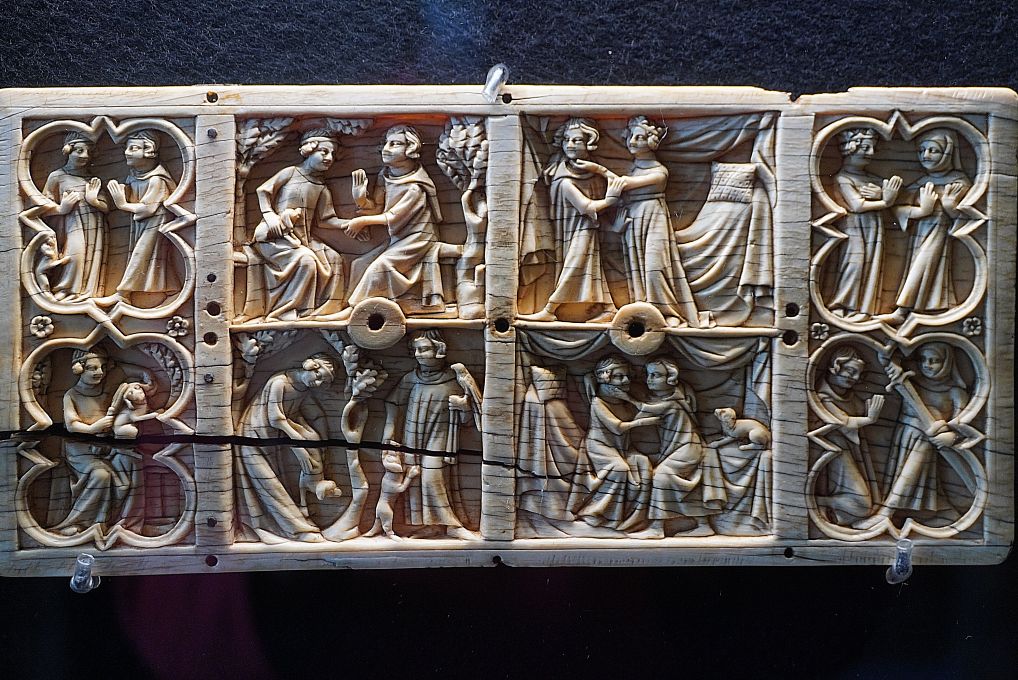
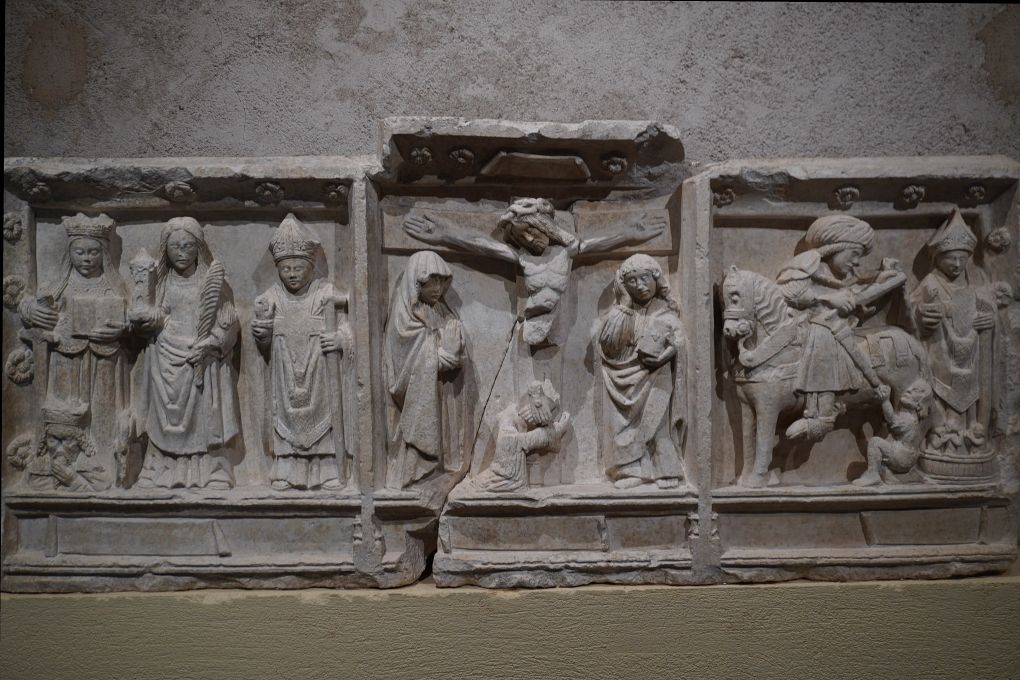
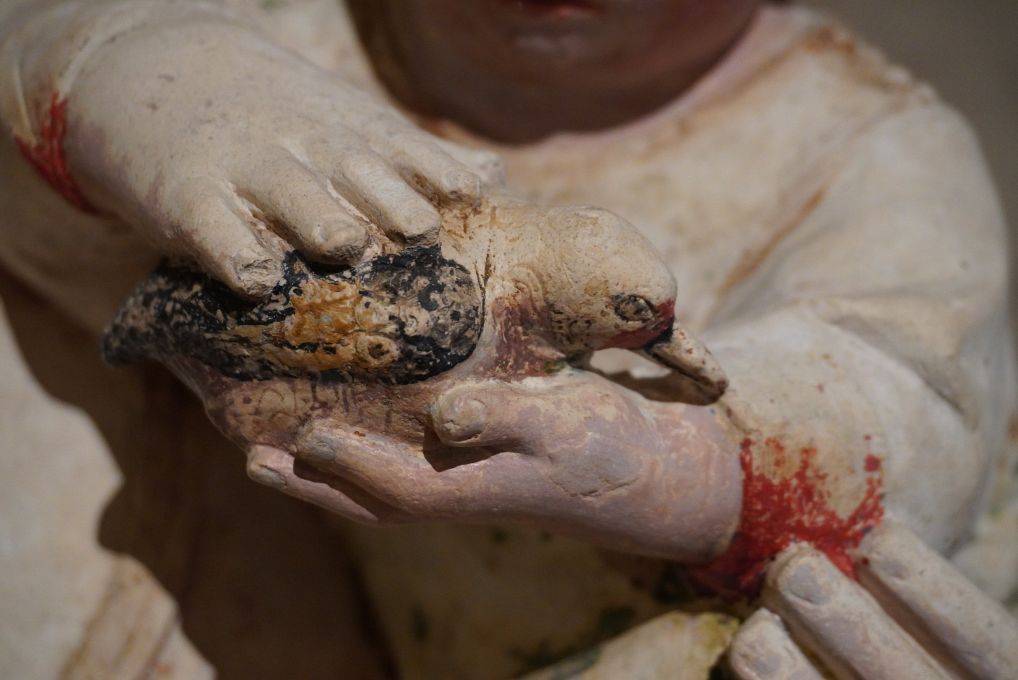
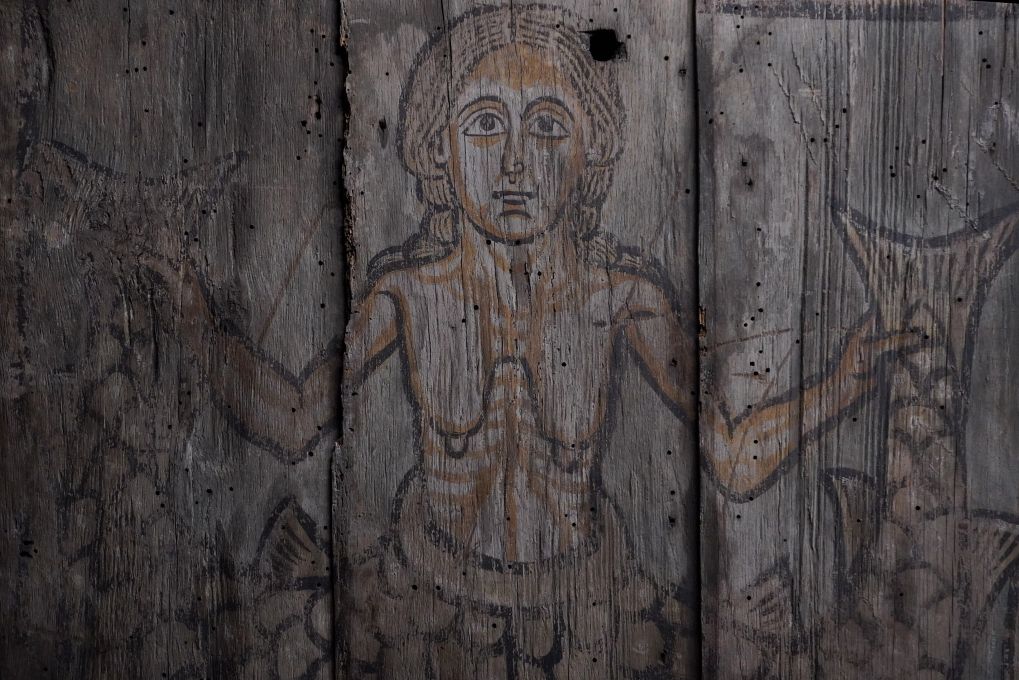
Gallo-Roman section: remains of the Roman thermal baths inside the museum. Click here for a short video of the baths. Gallo-Roman section: detail of the aptly named "bird mosaic" discovered in a house rue Maurice Barrès in 1970. Gallo-Roman section: Roman funerary stela representing a tax collector (seated) receiving money from the standing man on the right (a pile of coins can be seen on the table), 2nd-3rd century AD. Gallo-Roman section: terracotta statuette of Minerva, 2nd century AD, found in the Roman villa of Rouhling (Moselle) Gallo-Roman section: Roman relief depicting a man transporting a wine barrel on a donkey cart, 1st century AD. Gallo-Roman section: Roman relief depicting the Celtic deities Nantosuelta and Sucellus (late 1st/early 2nd century AD, found in Sarrebourg). They are consorts, Nantosuelta is a goddess of nature, earth, fire, and fertility, while Sucellus is a god associated with agriculture and wine. On this relief, Nantosuelta on the left is wearing a long gown. In her left hand she holds a small house-shaped object with two circular holes and a peaked roof. Her right hand holds a ceramic bowl that she is tipping onto a cylindrical altar. To the right Sucellus stands, bearded, in a tunic with a cloak on his right shoulder. He holds his mallet in his right hand and a jar in his left. Above the figures is a dedicatory inscription (description copied from this Wikipedia article) Gallo-Roman section: Roman funerary stela, also known as the "Pillar of the Farmer" depicting scenes of daily life and work. The upper part shows a man buying some wine at a market stall. A woman is taking wine out of a large barrel and transfers it to the smaller barrel held by the man; the lower part shows two carpenters cutting wood with a saw. Gallo-Roman section: Roman funerary stela. The left part shows the deceased while the more interesting right part shows scenes of a meal. The upper panel shows adults seating on chests eating poultry on a low table, some glasses and jugs can be seen on a shelf on the right of them. The lower panel shows children having a meal, they are eating from the same dish, a small dog is trying to get to the food (bottom right) while a child standing on the right is playing some music with a double flute. Gallo-Roman section: Roman funerary stela showing the shop of a jeweller, 2nd-3rd century AD. The customer is standing on the right while the jeweller sits on a chest on the left. The display includes bracelets, necklaces and some gems. Gallo-Roman section: funerary stelae reminiscent of the necropolis which was situated along the roads outside the town. They have the shape of houses with a triangular top and were erected above the place where the urns containing the ashes of the deceased were buried. Gallo-Roman section: stelae in the so-called room of the Gods. On the left is a stela representing Epona, protector of horses and other equidae, goddess of fertility. In the centre, the smaller altar is dedicated to Cissonius, god of trade and travellers. The larger one is dedicated to Mogontia, goddess of healing springs. The stela on the left, features an unidentified female deity holding a figurine of a boar on a pole. These stelae were used to pay homage to the deities and were often found in temples but also near water points or along country lanes. Gallo-Roman section: detail of the monumental column of Merten (12 metres height), a highlight of the museum. This picture shows the upper part of the column resting on a stone featuring the four seasons. The horseman on top is no less than Jupiter fighting an Anguiped (a half-human half-snake gigantic being). It is believed that the giant embodies the barbarians that the Roman emperor, in the guise of the horseman, must subdue. Gallo-Roman section: bas-relief on a Roman sarcophagus showing Neptune and Cupid. Gallo-Roman section: head of the so-called Minerva of Hérapel (name of the hill where it was found in the village of Cocheren). Gallo-Roman section: altarpiece of the Mithraeum (end of 2nd/beginning 3rd century AD, found in Sarrebourg). Mithraism was a mystery religion (i.e. for initiates only) dedicated to the god Mithra and popular among soldiers of the Roman Empire. Mithra is a young and triumphant god who performs tauroctony (the sacrifice of a bull) in a cave, as can be seen in the central section of the altarpiece: Mithra is slaying a bull, whose blood flows onto the ground to fertilise the earth. On either side of the deity are two adolescents, the torchbearers. One personifies the rising sun, the other the setting sun. The god Sol is featured on the right column framing the scene as he holds the hand of Mithra in a show of friendship. The upper frieze shows some of the traditional Roman deities (Jupiter, Mercury, Bacchus, etc.), while Mithra is shown on the left shooting an arrow at a rock to make a spring gush forth. Click here for a full zoomable view of the altarpiece. Gallo-Roman section: detail of "the mosaic of the gladiators", 2nd-3rd century AD. The complete mosaic comprises four scenes each showing a different type of gladiator. This one is the portrait of Senilianus, a retiarius fighting with a net and a sword (found place Coislin in 1969). Gallo-Roman section: depiction of Gallo-Roman blacksmith's tools on a funerary stela, limestone, 2nd century. Gallo-Roman section: glass jug in the form of a human head (4th century AD). Medieval section: re-use of a Roman sarcophagus for King Louis le Pieux, son of Charlemagne. He died in 840 in Ingelheim and was brought back to Metz to be buried in the abbey of Saint-Arnould alongside his mother Hildegarde de Vintzgau. Medieval section: relief of an man-eating lion, beginning of the 12th century. Medieval section: sculptures of heads which adorned the facade of the "Maison des Têtes", a renaissance house from 1529 located in the street En Fournirue in the centre of Metz. These are originals, the heads which can be seen today in the street are copies. There were originally five heads; four are kept in the museum and the fifth one is in Boston, USA. Medieval section: close-up of one of the heads of the Maison des Têtes. Medieval section: ivory binding plate (ca. 1000) of a book belonging to Adalberon II, Bishop of Verdun and then of Metz from 984 to 1005. Copy of the relief map of the city of Metz. Relief maps are the brainchild of Vauban (1633-1707), a French military engineer who served in all of Louis XIV's wars. A master in the art of siege craft and defensive fortifications, he ordered relief maps of strategic and fortified towns to be created so that army commanders would have a clear idea of their layout, their strengths and weaknesses. The original can be seen among many others in the Musée des Plans-Reliefs in Paris, which we recommend highly. Medieval section: polychrome statue of a bishop. Medieval section: bas-relief of the Graoully, a mythical dragon which has become the symbol of Metz and the Lorraine. According to legend, the Graoully was a fearsome dragon that lived in the ruins of the Roman amphitheatre in Metz and terrorised the city in the 3rd century. It was subdued with the sign of the cross by Saint Clement of Metz, the city's first bishop who led it into the river Seille to disappear for ever. The legend is often interpreted as a metaphor for Christianity overcoming paganism. Medieval section: this bas-relief depicts Saint George standing victorious over the dragon he has slain to save the princess, who had been offered as a sacrifice to calm the beast (15th century). Medieval section: part of a retable showing the Crucifixion; on the left are Saint Catherine of Alexandria, Saint Barbara and a saintly bishop; on the right are Saint Martin and Saint Nicholas. Medieval section: detail of a sculpture of the Virgin and Child, circa 1320-1330. Medieval section: detail of the previous picture. The Child is holding a goldfinch, symbol of the Passion because of the red spot on its head, from the blood of Christ which it received  when removing a thorn with its beak. Medieval section: a beautiful head, but I don't know whose one. I guess Saint John the Baptist, prove me wrong. Medieval section: polychrome statue of the Virgin Mary giving an apple to the infant Jesus, limestone (1450, Saint-Symphorien convent). Medieval section: detail of the first of the so-called "plafonds au bestiaire" (ceilings of the bestiary) dating from the 13th century. There are two of them (see next picture) which were in a house located rue du Poncelet in the town centre; a bestiary is a "collection of descriptions or representations of real or imaginary animals" (definition from Merriam-Webster) intended in the Middle Ages to teach morals and to entertain. This ceiling featuring extraordinary creatures is one of the oldest preserved painted wooden ceilings in the world. Medieval section: detail of the second of the so-called "plafonds au bestiaire" (ceilings of the bestiary) dating from the 13th century. There are two of them (see previous picture) which were in a house located rue du Poncelet in the town centre; a bestiary is a "collection of descriptions or representations of real or imaginary animals" (definition from Merriam-Webster) intended in the Middle Ages to teach morals and to entertain. This ceiling featuring extraordinary creatures is one of the oldest preserved painted wooden ceilings in the world. Medieval section: the ceilings of the bestiary are made of oak beams and planks and feature a total of fifty-eight figures inscribed within circles or frames. It is one of them. Medieval section: a leopard (ceiling of the bestiary). Medieval section: a mermaid with two tails (ceiling of the bestiary). Medieval section: a hedgehog on the left, laden with berries on his back and a wolf on the right (ceiling of the bestiary). Medieval section: an elephant fish. Or is it a fish elephant? (ceiling of the bestiary). Medieval section: not sure what they are! (ceiling of the bestiary). Medieval section: relief on the top of the entrance door to a building. Medieval section: limestone sculpture of a knight, early 14th century. Medieval section: wax seal and its mould from the former abbey of Saint Symphorien located outside Metz' city walls. It shows Saint Symphorian beneath a vault supported by two small columns and topped with battlements kneeling before an executioner who is about to behead him. On the terrace supported by the vault, the Virgin Mary is depicted from the waist up, with a banner emerging from her mouth bearing the words "Noli timere mortem" (do not fear death). The roll around the seal reads: SIGILLUM CONVETU'S ST'I SYMPHRIANI IUX' MUROS METENSIS (Seal of the Council of St Symphorian by the Walls of Metz). Medieval section: ivory diptych featuring scenes from the lives of Jesus and Mary. The scenes depicted include from left to right: the Annunciation and the Nativity on the lower part, the Adoration of the Magi and the Entry into Jerusalem on the middle part, the Last Supper and finally the Crucifixion on the upper part. Medieval section: two statues found during the demolition of the abbey of Petit-Clairvaux in 1955. Head of the Magi Gaspar on the left and head of a bearded man on the right (ca. 1370). Medieval section: detail of the tile of a tiled stove discovered on the site of a potter's workshop (1400-1500). Medieval section: the so-called ceiling of the coats of arms (plafond aux armoiries), 14th century. It was discovered during some extension works in the building of the regional newspaper Le Quotidien Lorrain, rue des Clercs in the centre of town. It reflects the political affinities of the family who owned the property. The coats of arms are arranged in a hierarchical order and illustrate the European and local powers of the time: the Holy Roman Empire, the kingdoms of France, England, Bohemia, and Hungary, as well as the Papacy of Avignon, with the arms of Pope Clement VII. Finally, there are also coats of arms of the lords and numerous duchies more or less close to the city, such as those of Lorraine, Luxembourg or Burgundy to name just a few. Click here for a zoomable view of the ceiling. Medieval section: ivory plate depicting scenes of romance.


[Go to Top]

The Beaux-Arts collection
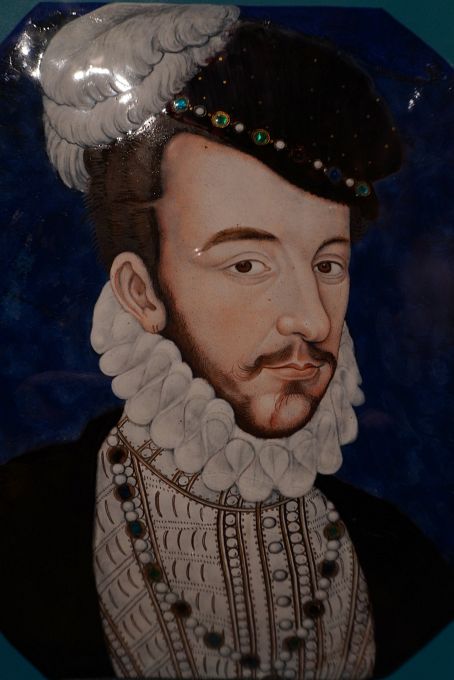
Enamel painting on copper of the French King Charles IX (reign 1560-1574).
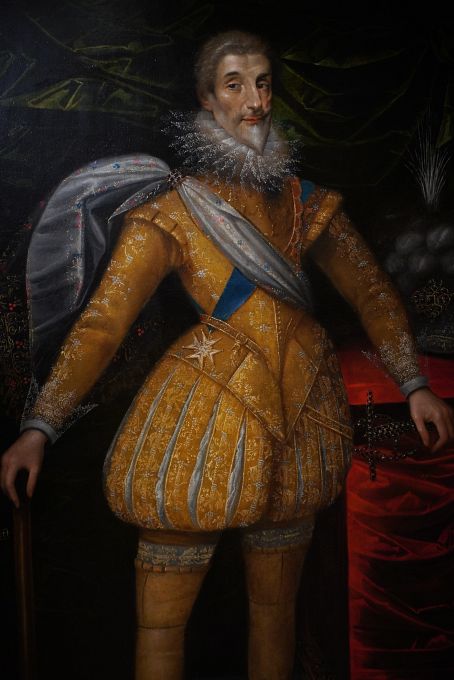
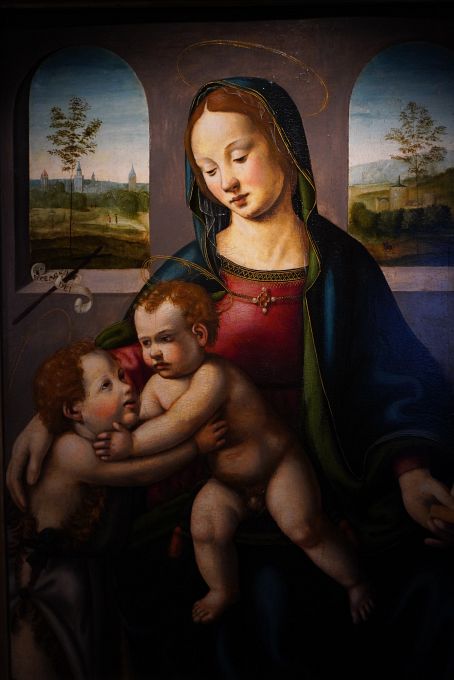
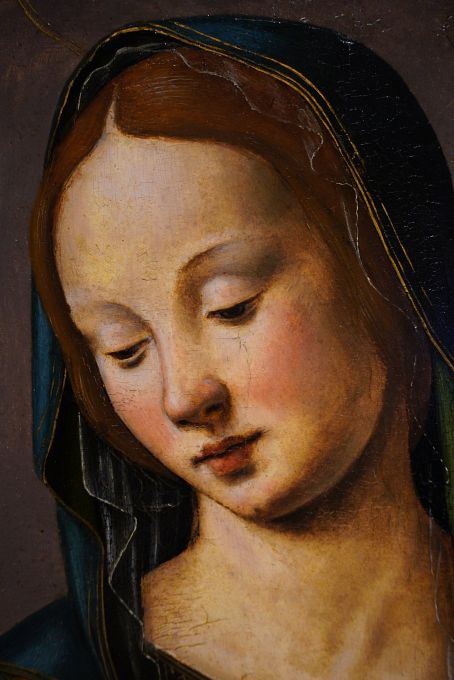
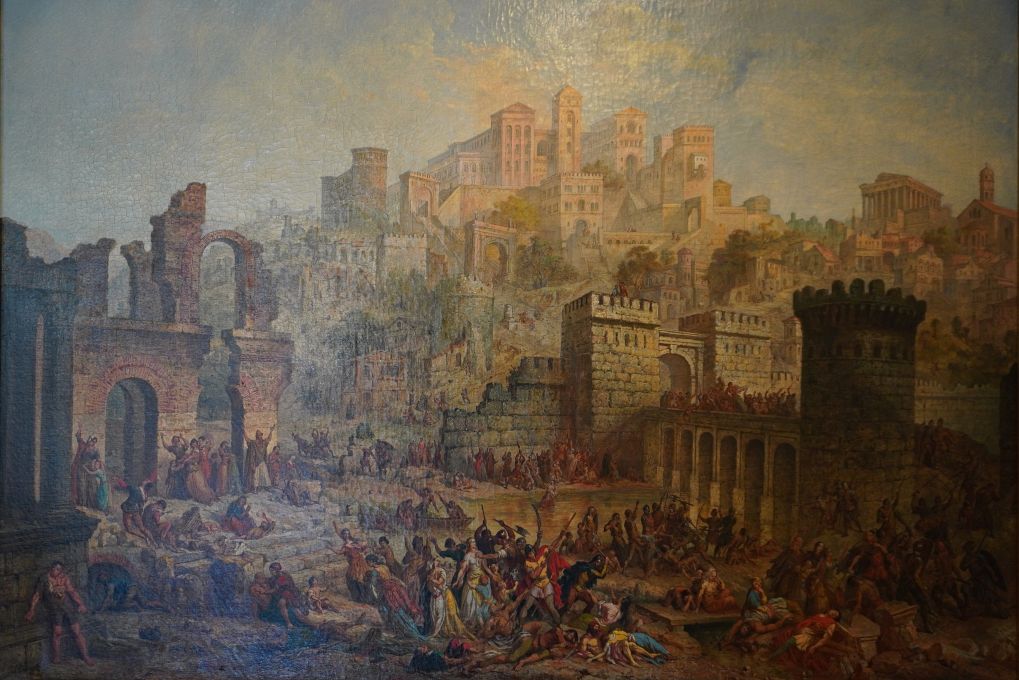
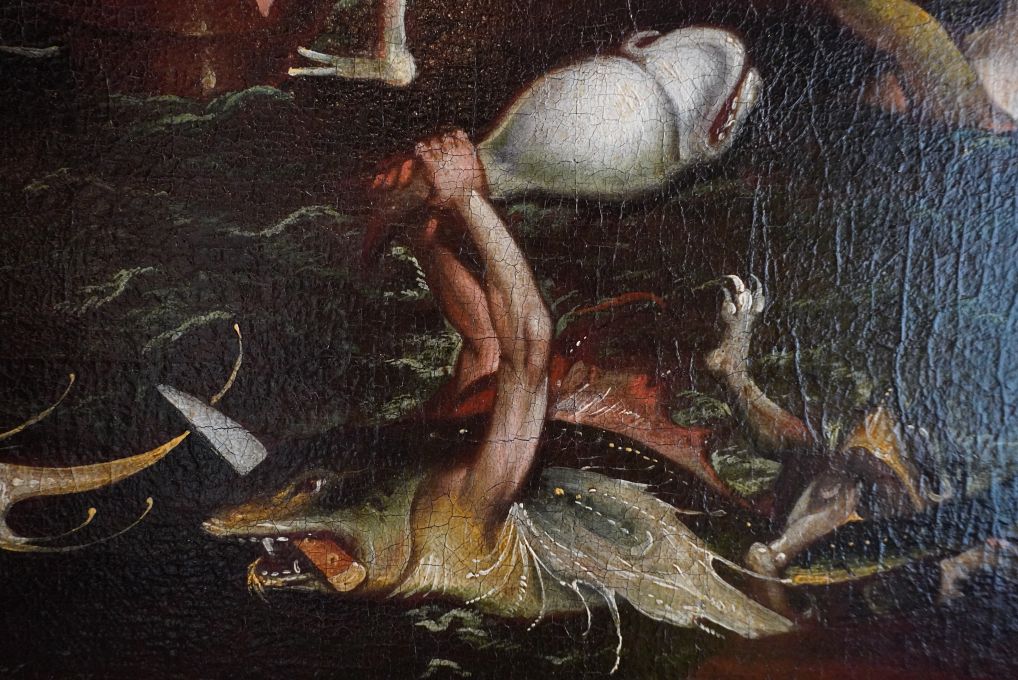
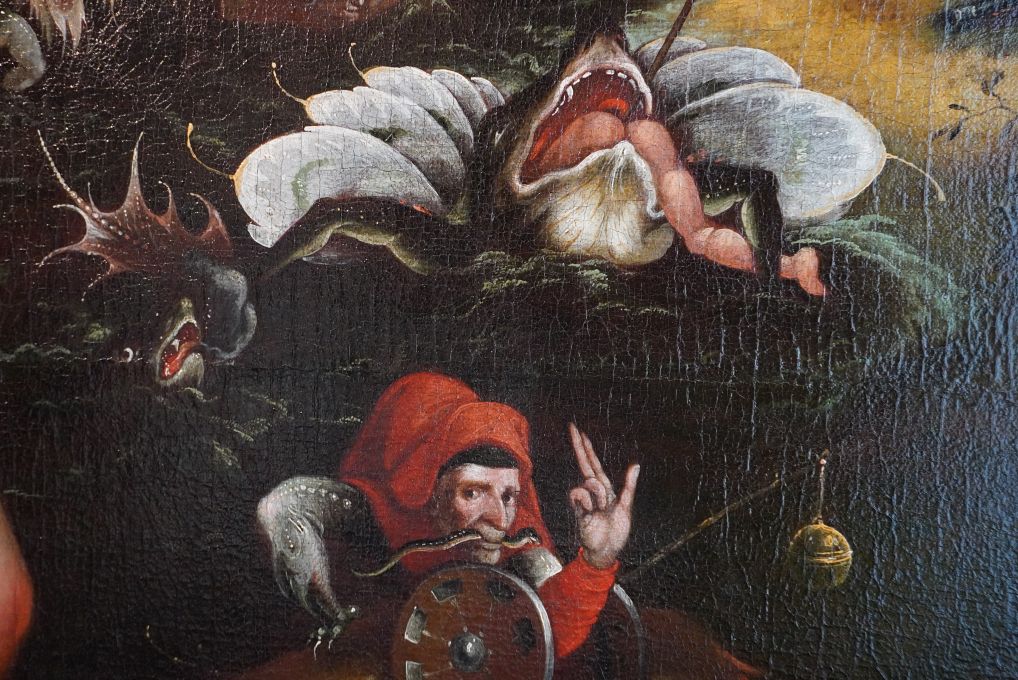
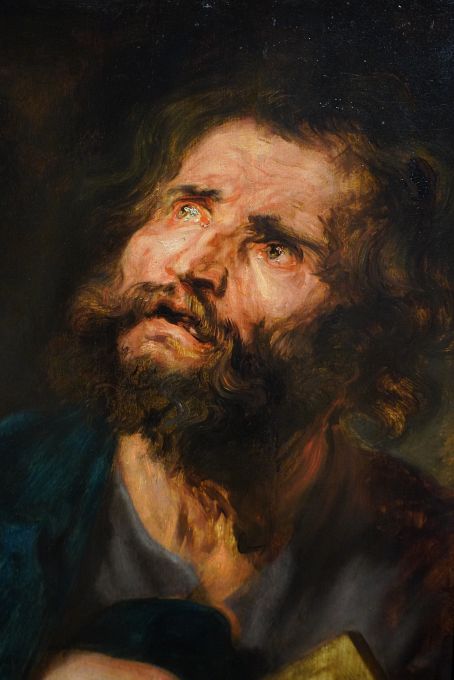
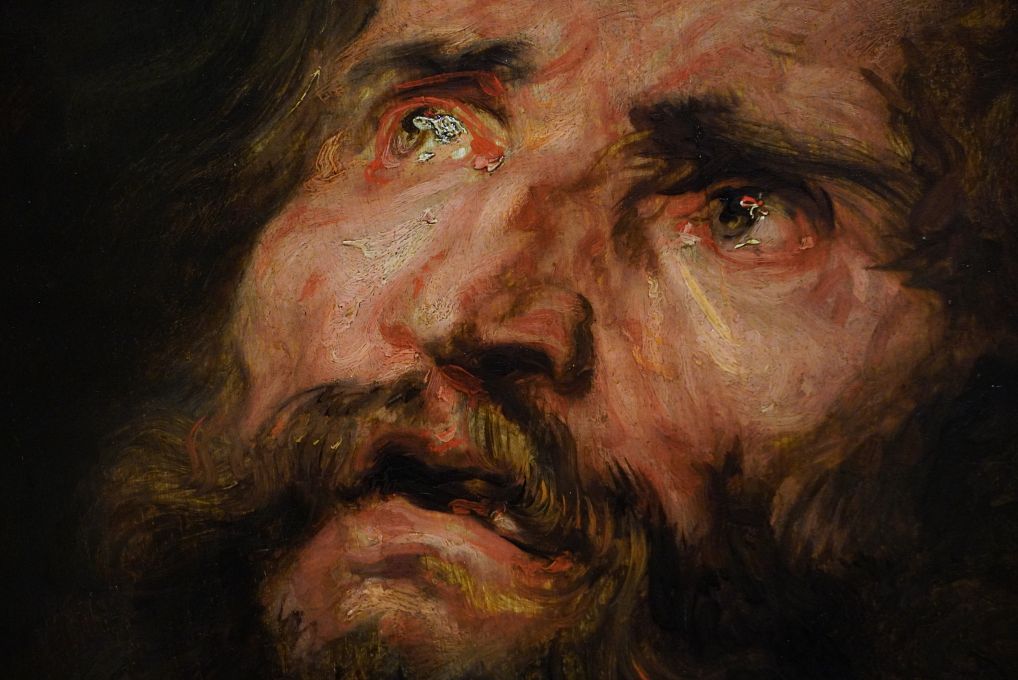
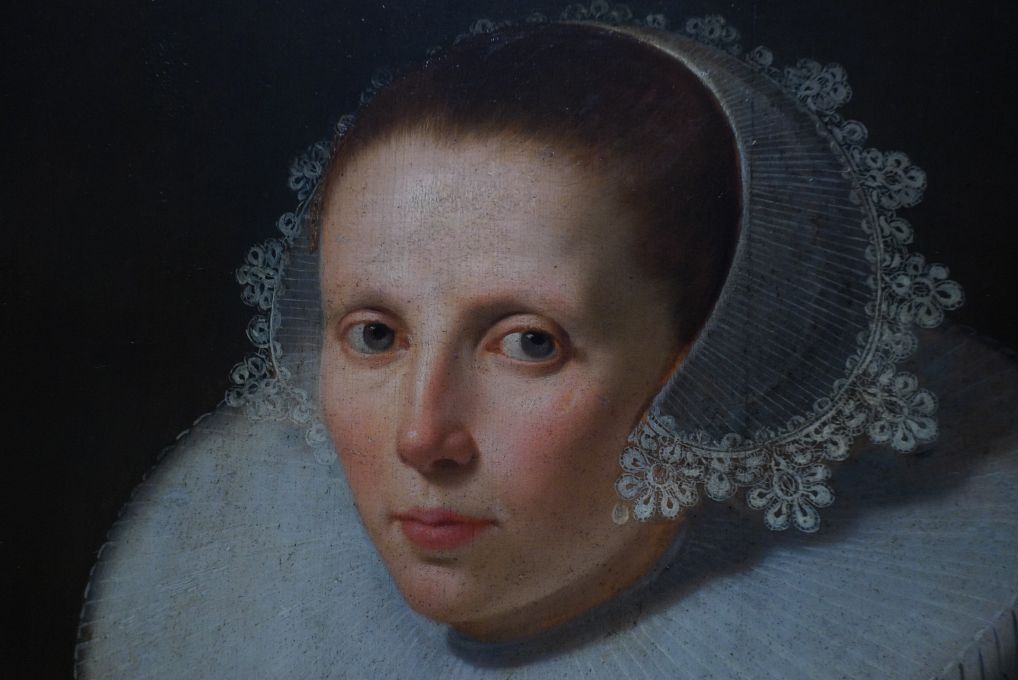
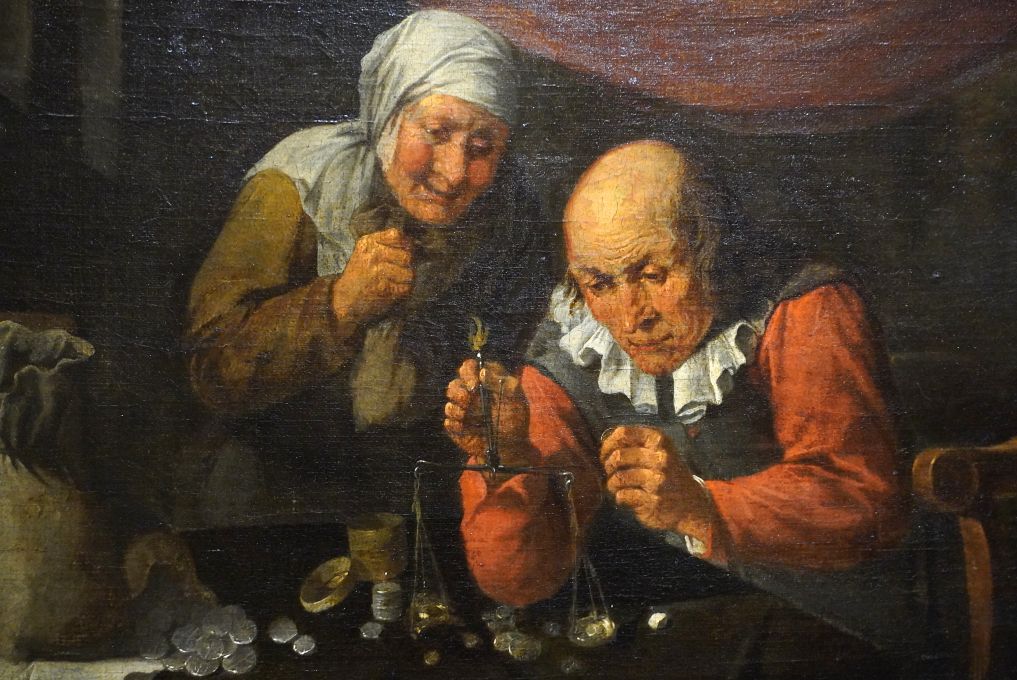
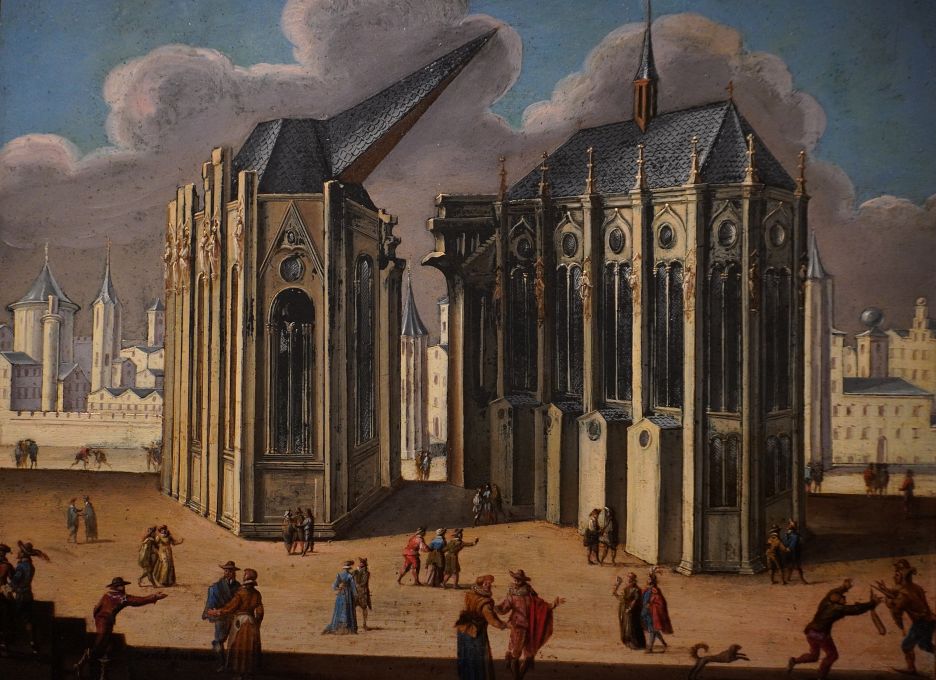
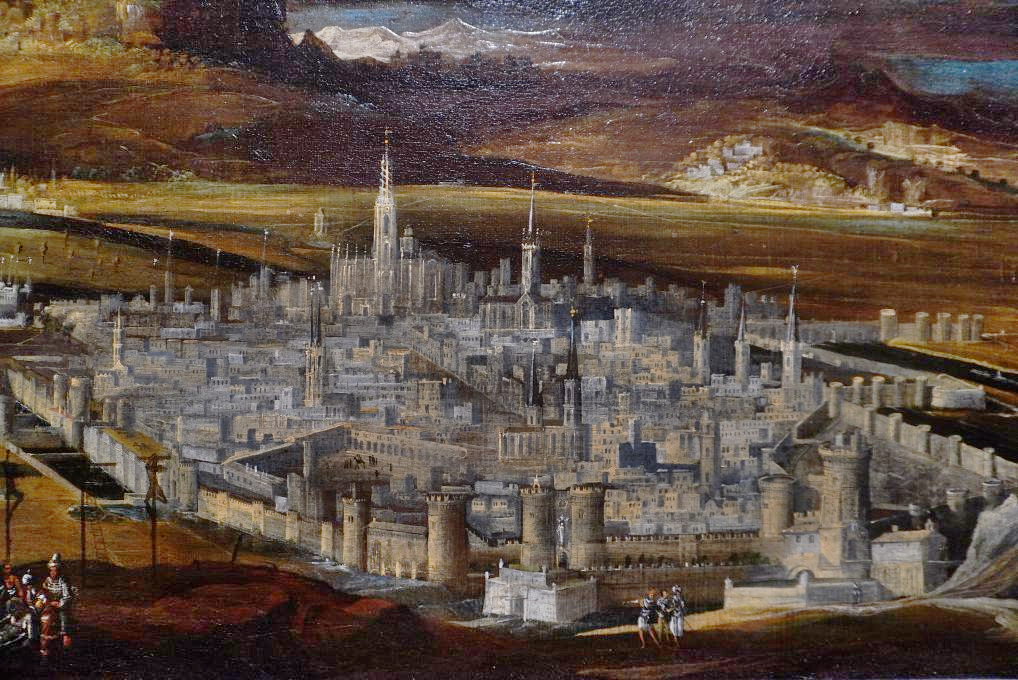
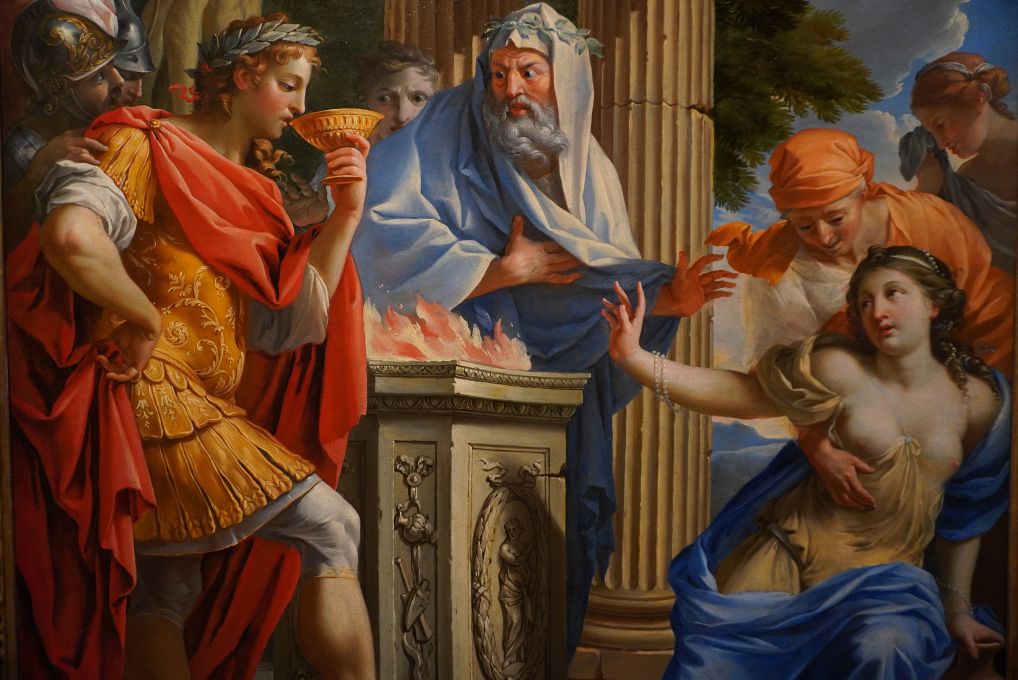
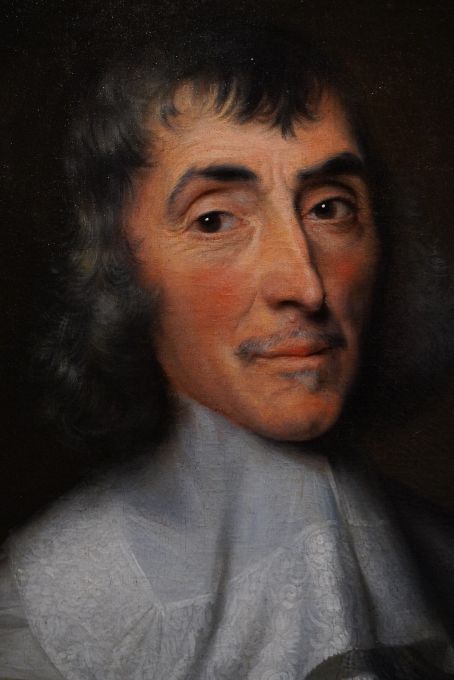
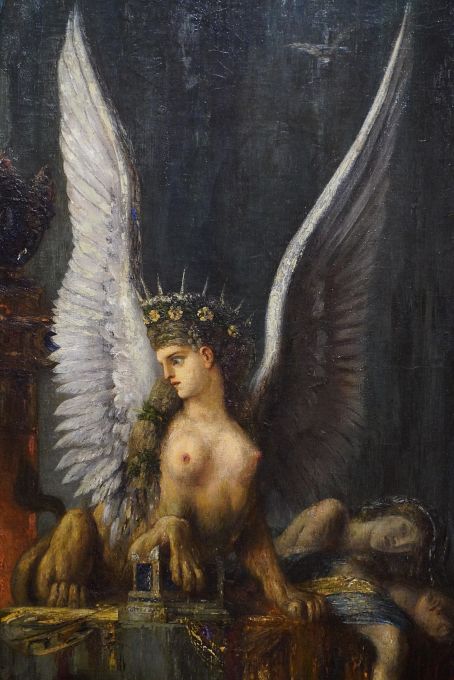
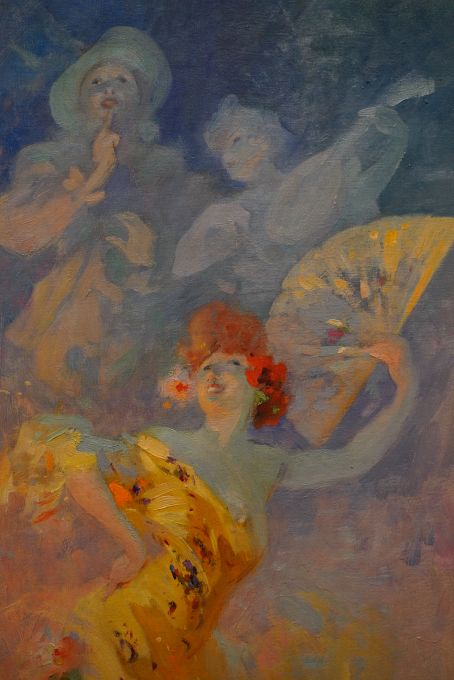
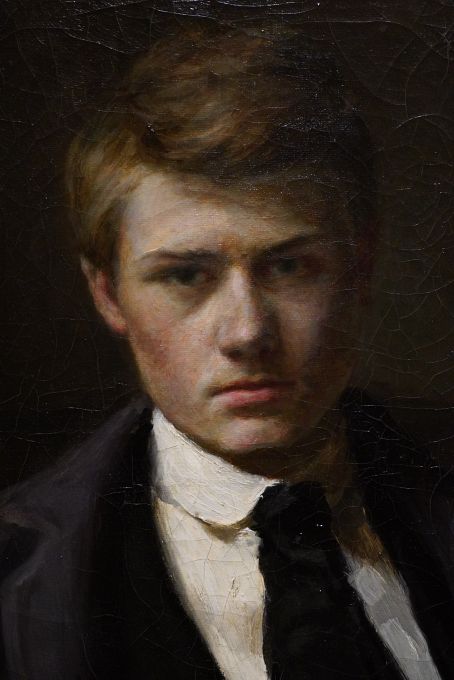
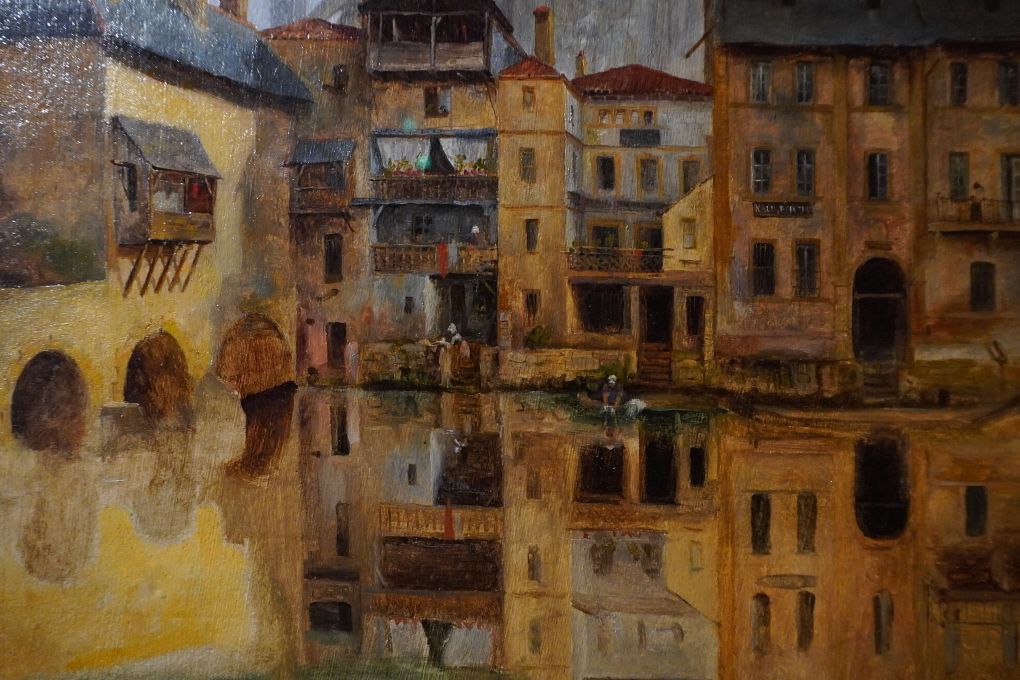
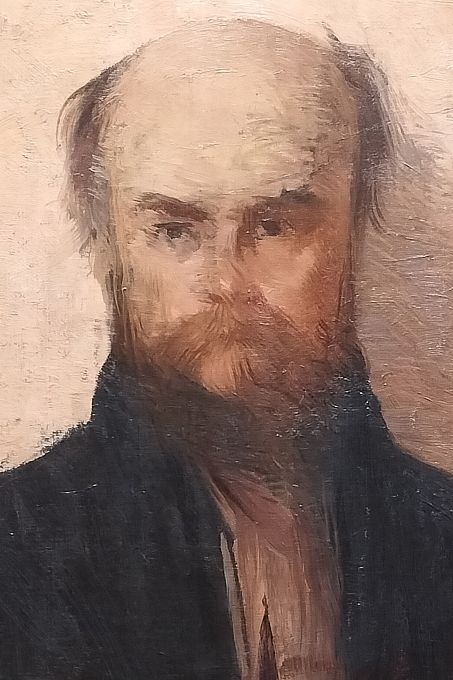
Portrait of Jean Louis de Nogaret of Valletta, Duke of Epernon (1554-1642). Colonel general of the infantry and admiral of France, knight of the Order of the Holy Spirit, he was among others Governor of Metz and the Pays messin. He was one of King Henry III's favourites and feared by Cardinal Richelieu. Virgin and Child with Saint John the Baptist, by Andrea Sabbatini (1487-1530). Detail of the previous picture, the Virgin by Andrea Sabbatini (1487-1530). Massacre of the Jews of Metz during the first Crusade by Auguste Migette (1802-1884). Detail of a painting of Saint Christopher attributed to here to see a full version of the painting. Detail of a painting of Saint Christopher attributed to here to see a full version of the painting. Saint Jude Thaddeus (one of the Twelve Apostles) by Anthony van Dyck (1599-1641). Detail of Saint Jude Thaddeus by Anthony van Dyck (1599-1641). Portrait of a lady by Jan van Bijlert, oil on panel (1597-1671). Greedy old couple weighing their possessions. Painting by Gillis Van Tilborgh (ca.1625-1678). Fantastic view of a Gothic cathedral by Didier Barra (1590-1656). View of Metz from the Bellecroix hill, a collaboration between artists François de Nomé (c.1593-c.1623). Note the depiction of a descent of the cross on the bottom left part of the painting. The poisoning of Camma and Synorix in the temple of Diana by Charles Poerson (1609-1667). Camma was a princess wooed by two officers, Sinatus and Sinorix. She married Sinatus but Synorix murdered him in the hope of winning Camma. To escape his advances, Camma took him to a temple of Artemis where she was priestess and poisoned both herself and him with a drink to avenge her husband without whom she did not want to live. Portrait of Abraham Fabert (1599-1662) by Louis Elle dit Ferdinand le Vieux. He was born in Metz and a leading French commander during the reigns of Louis XIII and Louis XIV. He became Marshal of France in 1658. The city of Metz is mightily proud of him and has honoured him in many ways: a street and a grammar school have been named after him and a bronze statue has been erected on the Place d'Armes next to the cathedral. Detail of the painting Oedipe Voyageur ou l'Égalité devant la mort (Oedipus the Traveller or Equality in the Face of Death) by here for the legend of Oedipus. Spanish dancer by Jules Chéret (1836-1932). Émile Friant (1863-1932), self portrait at the age of fifteen. Unfortunately, I could not find who is the painter of this work of art. Any input welcome... Portrait of the famous French poet click here to read it. Translation of the two first verses: "You caught me in a moment of familiar calm // When the mask becomes childlike once again".

[Go to Top]

Want to read more? Go back to Limoges: The Enamel Collection in the Musée des Beaux-Arts or go on to Paris: Musée d'art médiéval de Cluny or go up to Museums

$ updated from: Museums.htxt Wed 17 Dec 2025 16:13:49 trvl2 — Copyright © 2025 Vero and Thomas Lauer unless otherwise stated | All rights reserved $