Welcome  FAQs
Links  News

United Kingdom

Quaint, peculiar, funny: the United Kingdom… our "Wahlheimat".

We actually like it here: the weather (and the food) are not quite as bad as the natives (and the French) make you believe.

Full map of all UK pages

Other Things

Translate & Share

Path: Photos > England > South West England > Devon > A La Ronde: a Quirky Cottage to Remember
Tags: UK  England  NationalTrust  Museum  Devon  2025  News

A La Ronde: a Quirky Cottage to Remember


(vero;2025-July-15)

À La Ronde is a 16-sided cottage built on a hill overlooking the Exe estuary and designed by two spinster cousins, Jane and Mary Parminter. Jane (1750-1811) was born in Portugal where her father traded in wine and relocated to England when the Lisbon earthquake destroyed the family business. Mary (1767-1849) came on her father's side from a wealthy merchant family, while her mother's were large landowners in Devon and Somerset. Mary's mother died when she was 5 (that's when Jane became her guardian) and her father died when she was 12, leaving her with a considerable fortune and estates in Devon.

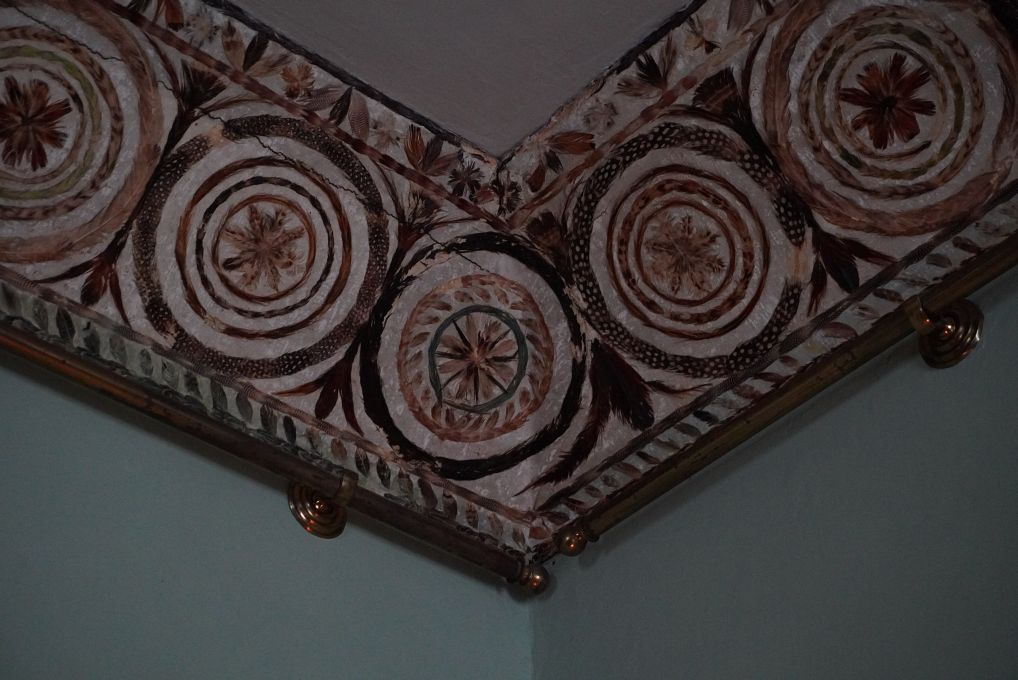
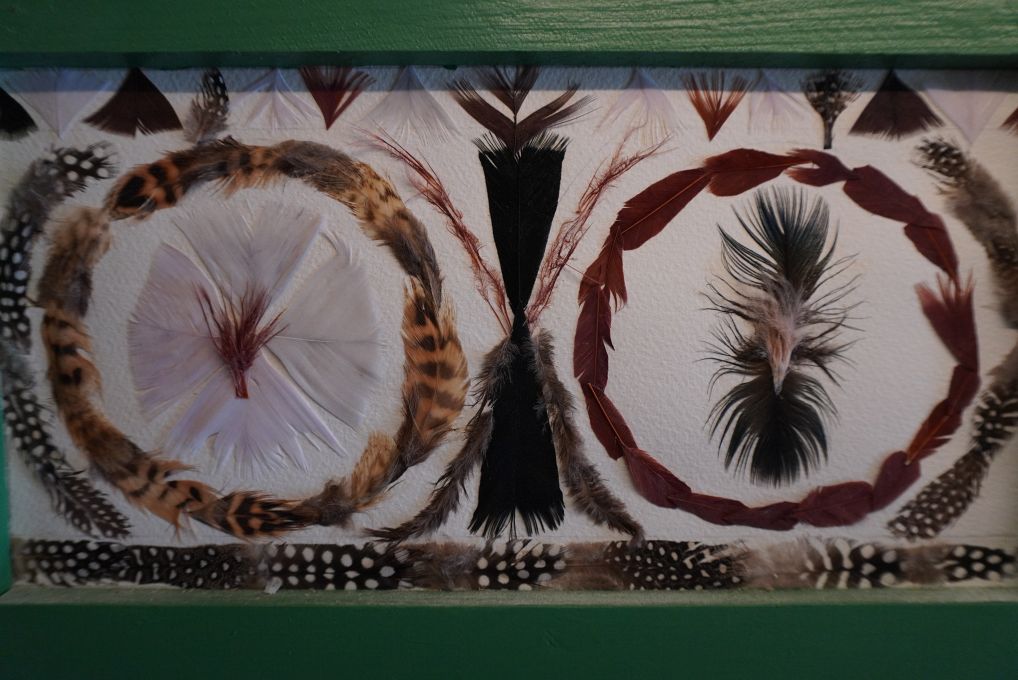
Jane and Mary embarked on a Grand Tour when Mary turned 17 in 1784. They returned to England in 1795 and settled in Exmouth where they bought land and built À La Ronde. The house is a shrine crammed to the brim with trinkets and mementos brought back from their travels and the interior is decorated in some rooms with hundreds of shells or handcrafted friezes made of feathers, everything really worth seeing.

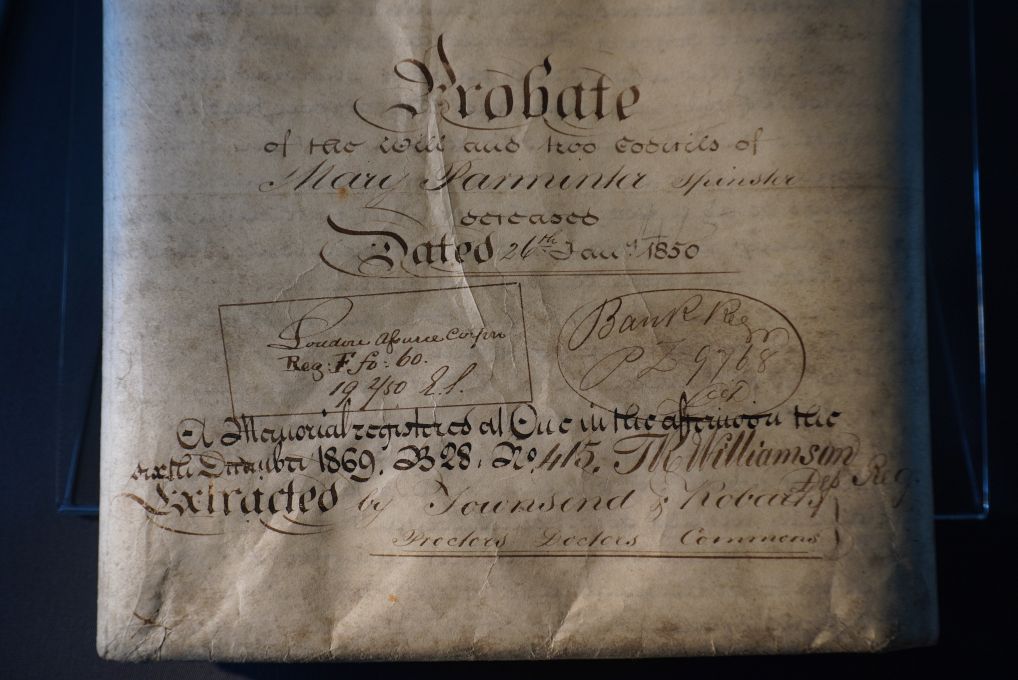
Jane died in 1811 and Mary remained in the house until her death in 1849. She specified in her will that À La Ronde could be inherited only by "unmarried kinswomen", a condition fulfilled until 1886 when it was transferred to the Reverend Oswald Reichel (brother-in-law of a former owner) who made extensive changes to the structure of the house to modernise it.

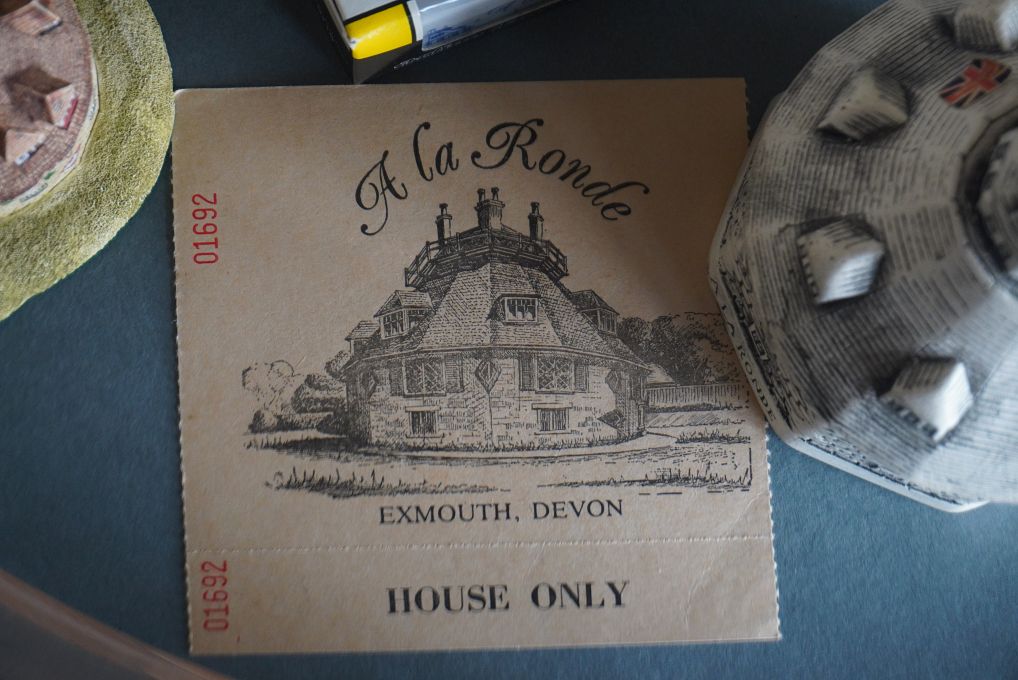
À La Ronde is a National Trust property; the entrance fee to the house and grounds was 11£ for non-members when we visited in 2025, the car park is free for all. Click here for up-to-date visitor information and follow this link to browse the collection of the house.
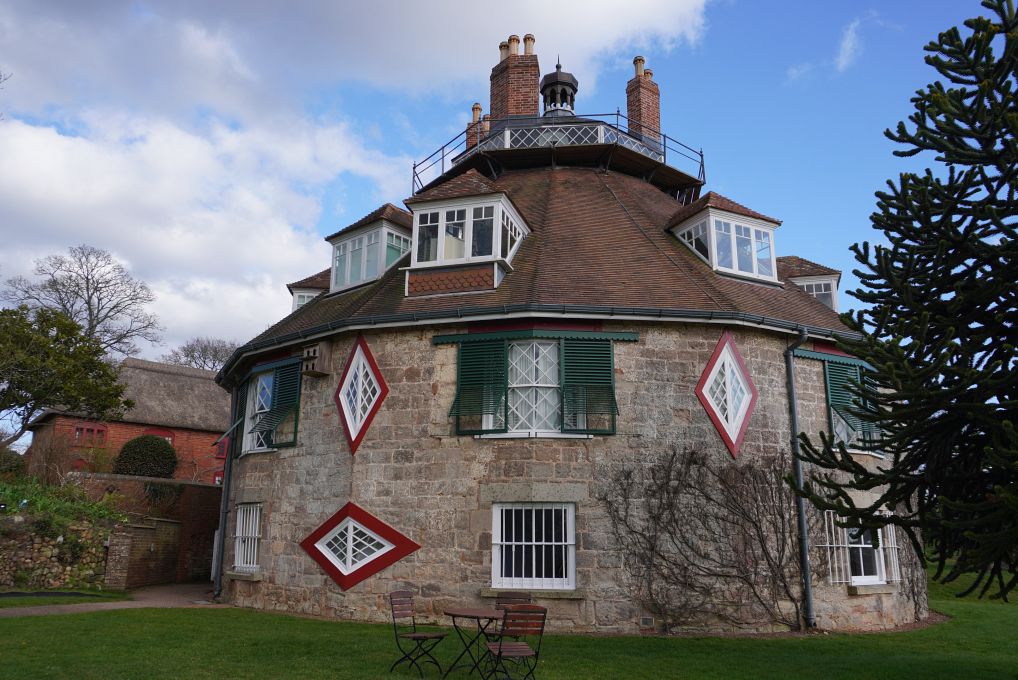
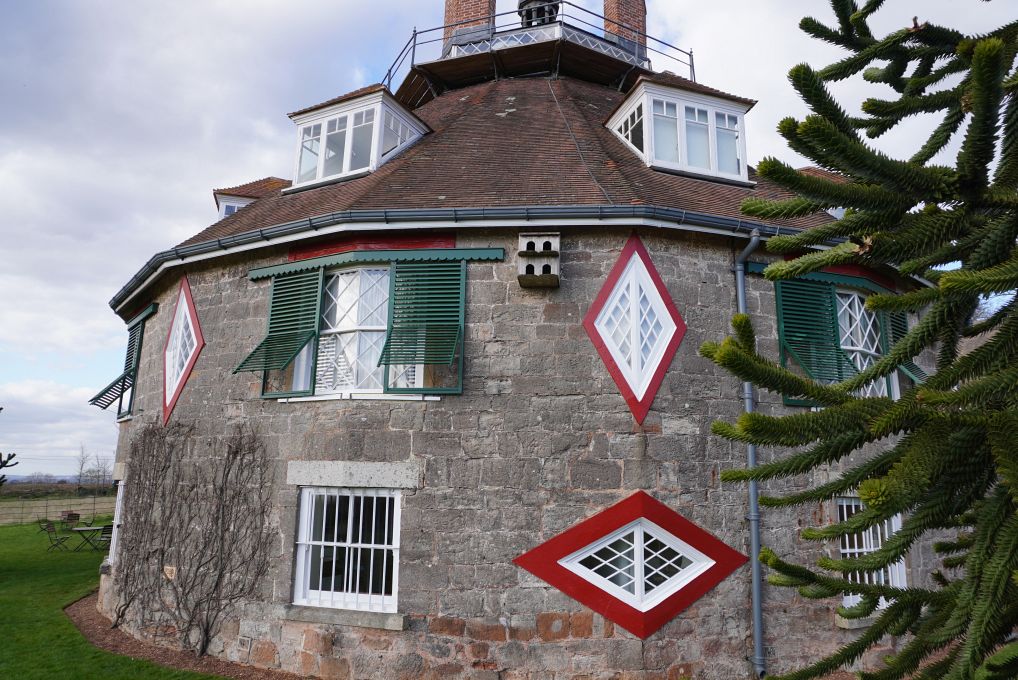
The 16-sided shape of the house is believed to have been inspired by the sixth-century Byzantine basilica of San Vitale at Ravenna. In its centre is a 10.7m high octogonal hallway (the Octagon), a hub opening into all other rooms and culminating in a central lantern reaching over the roof as can be seen on the picture.
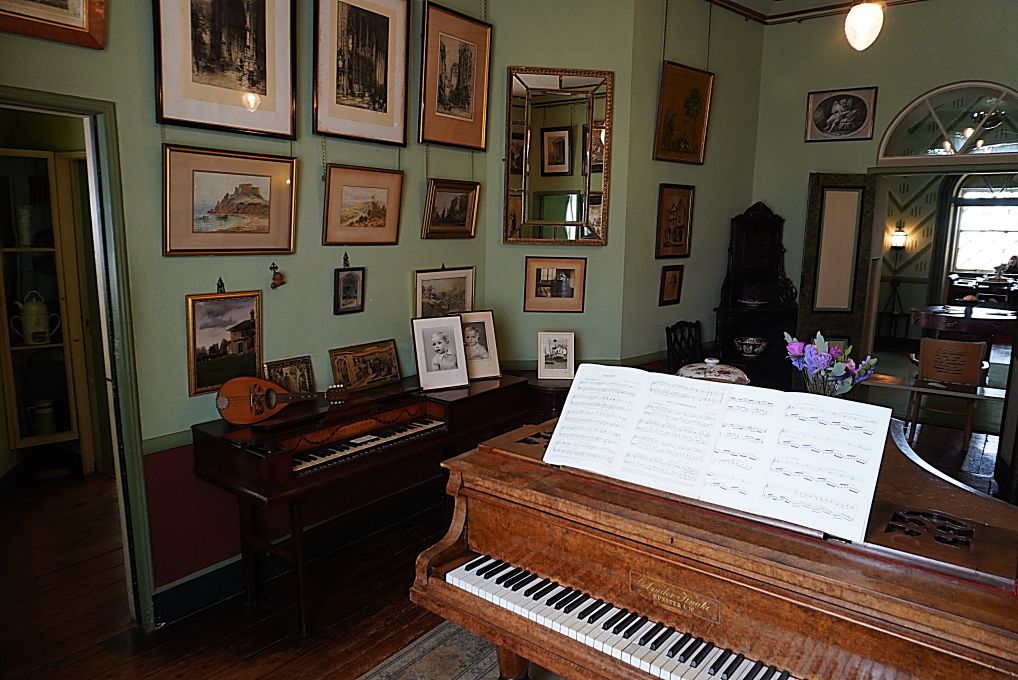
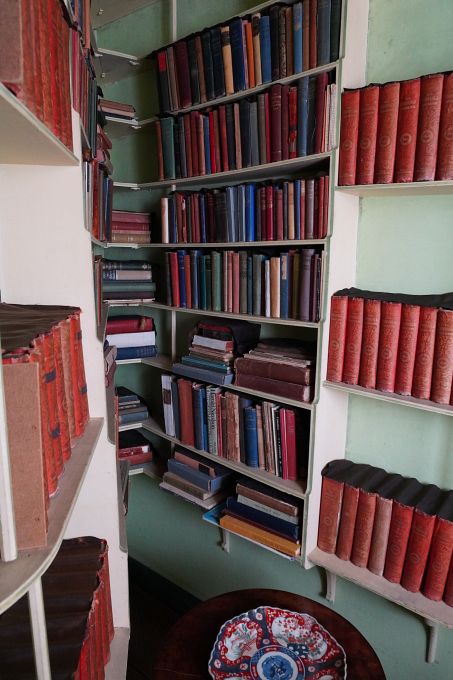
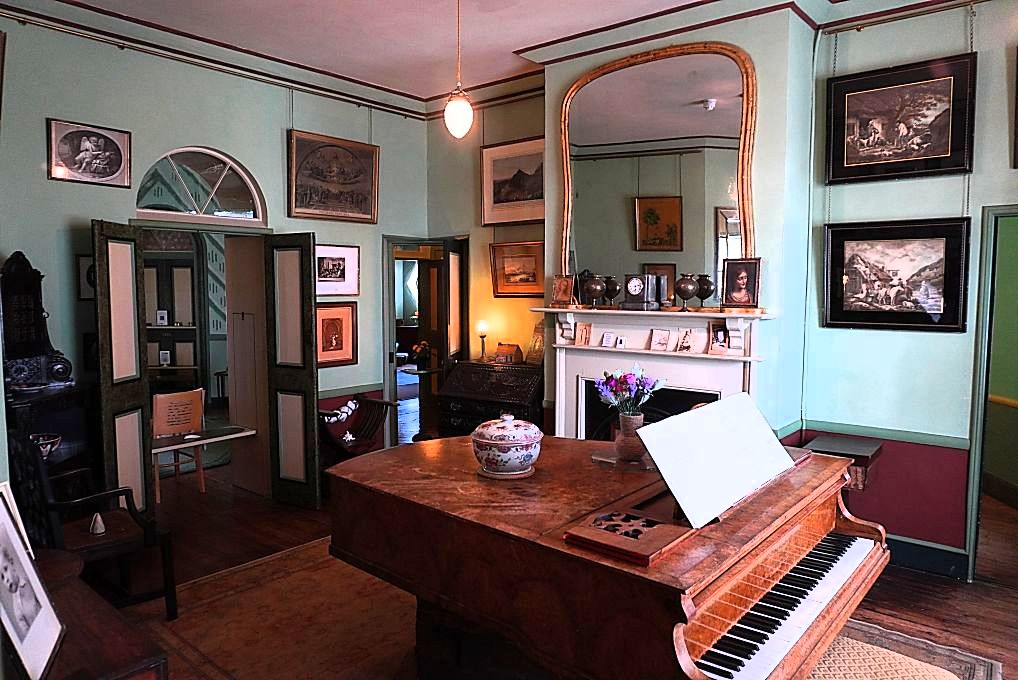
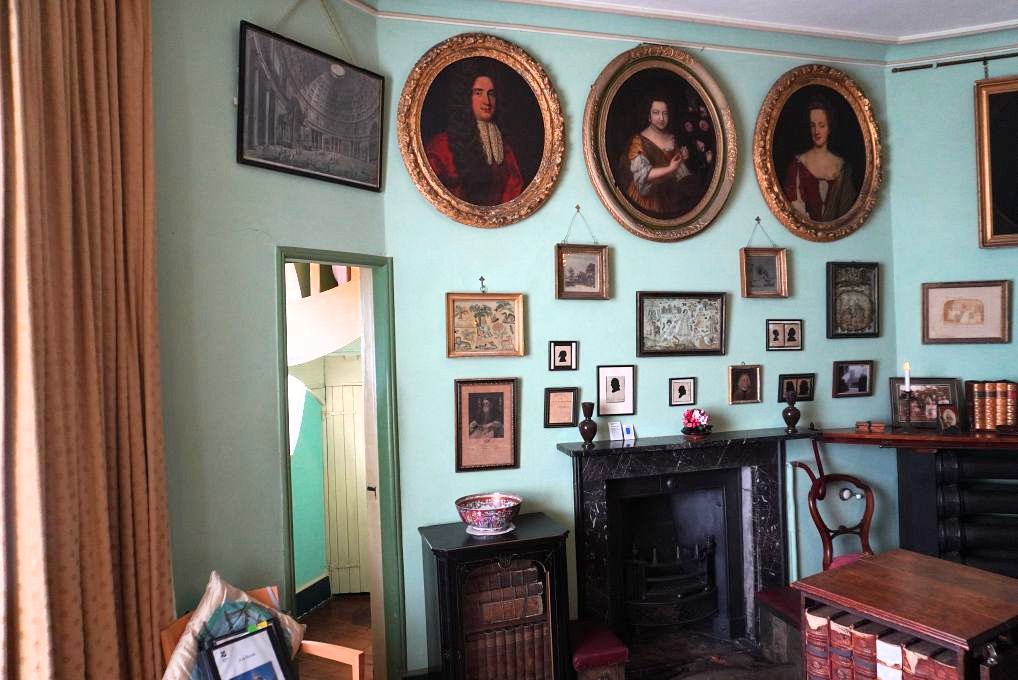
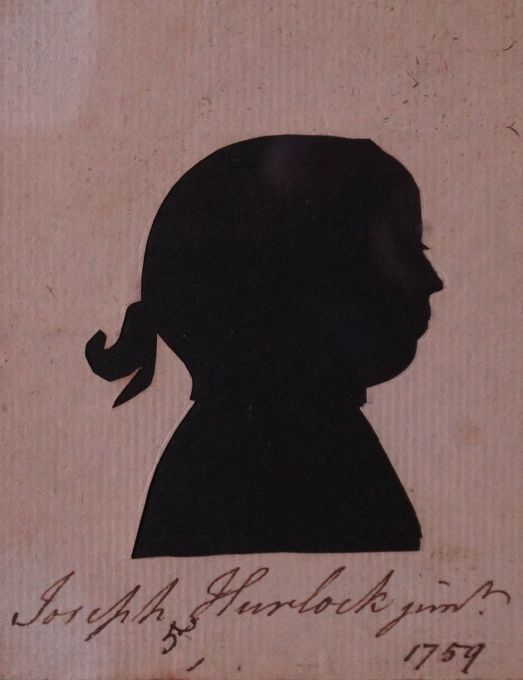
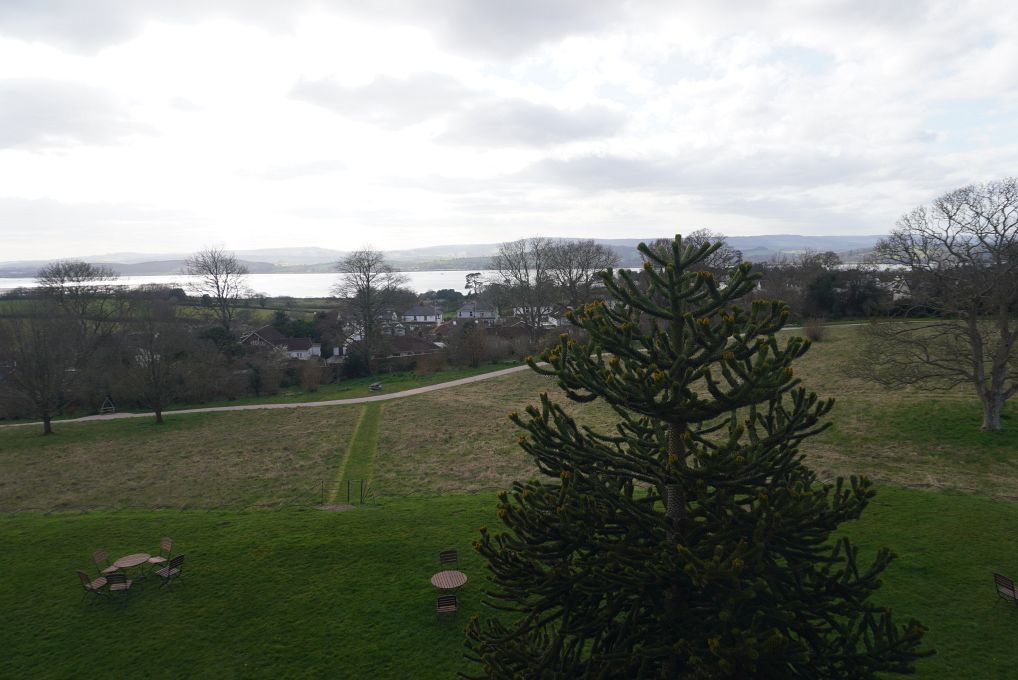
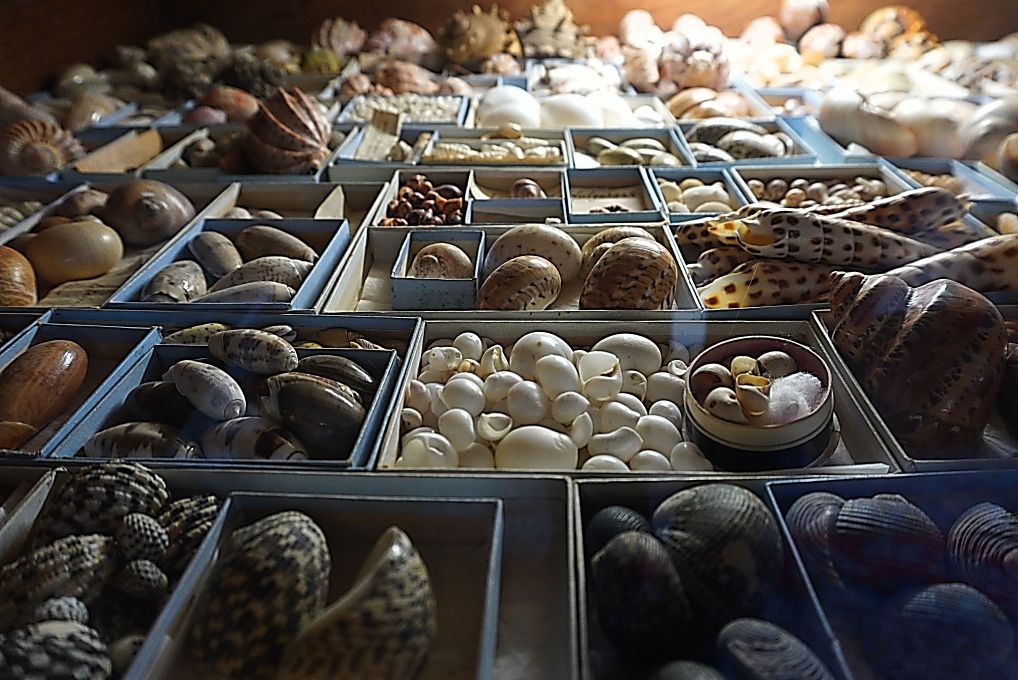
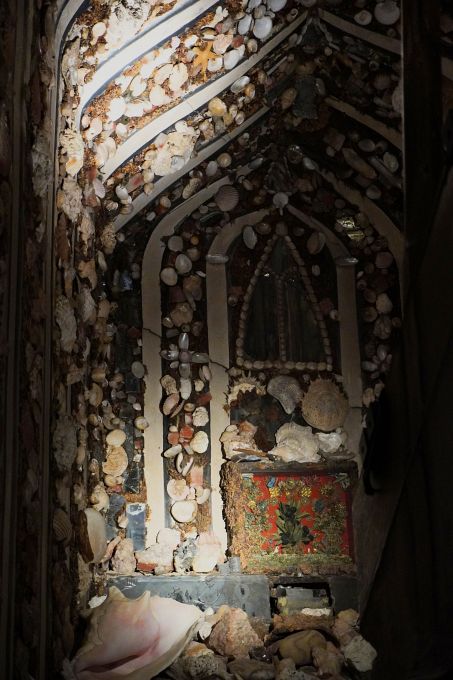
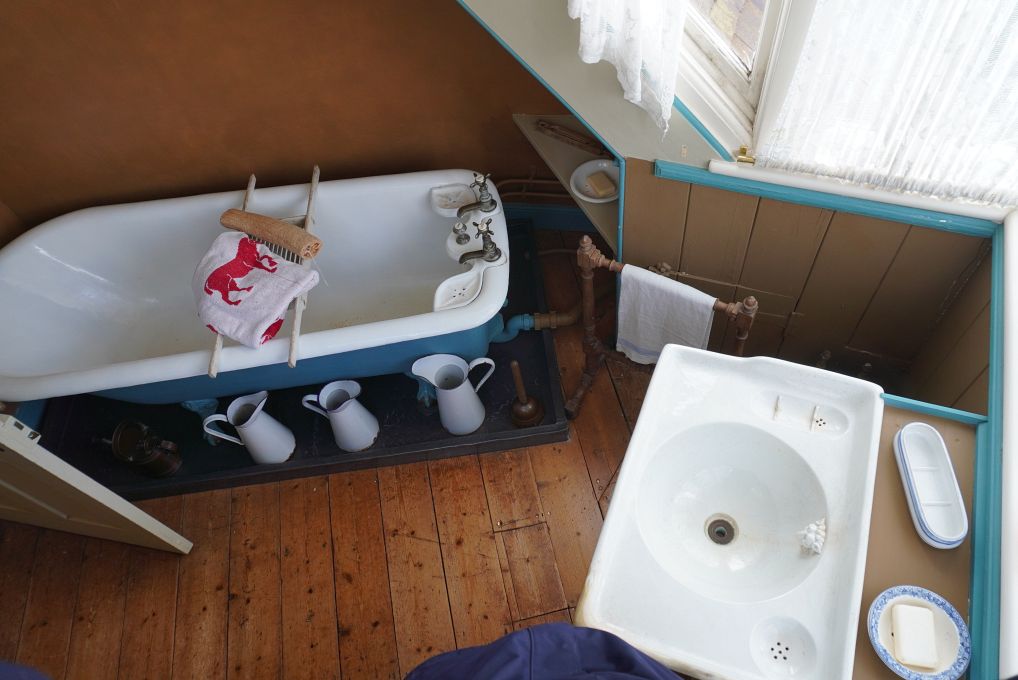
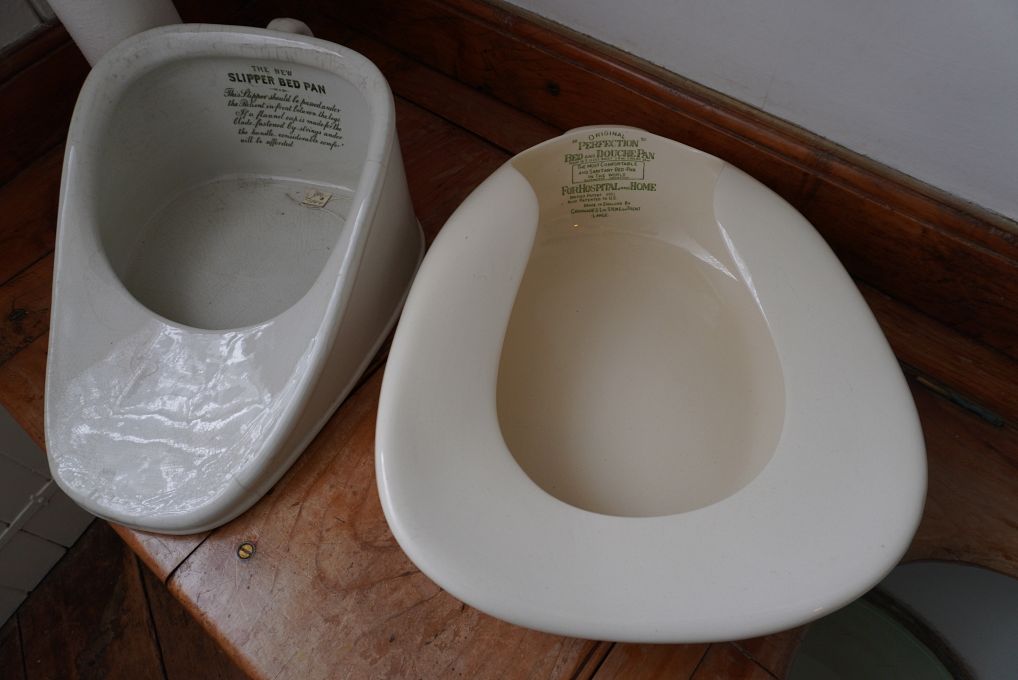
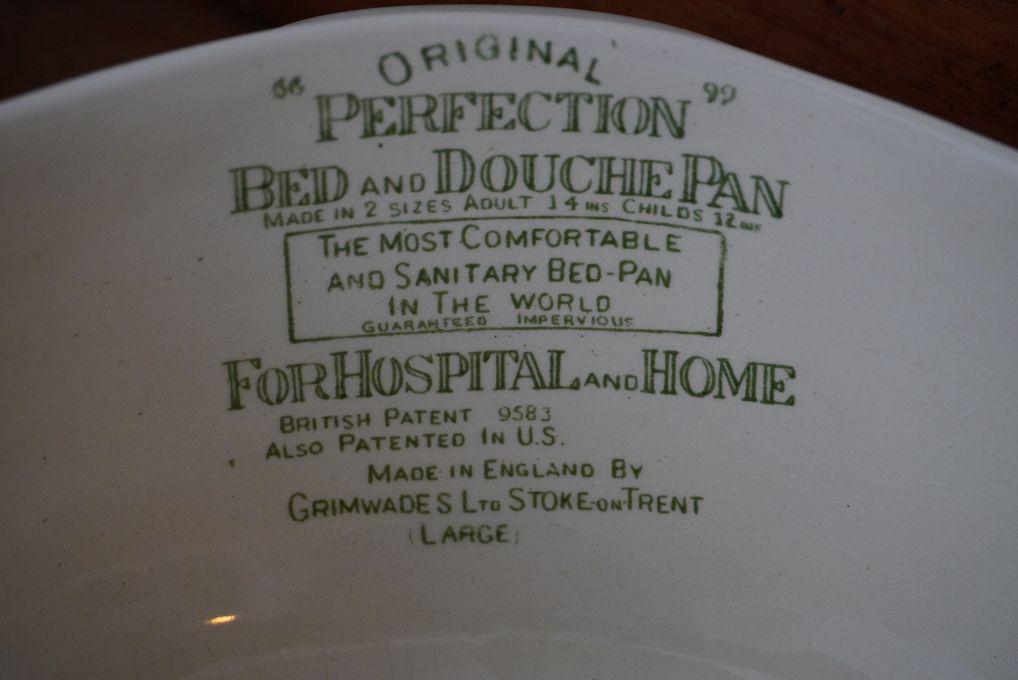
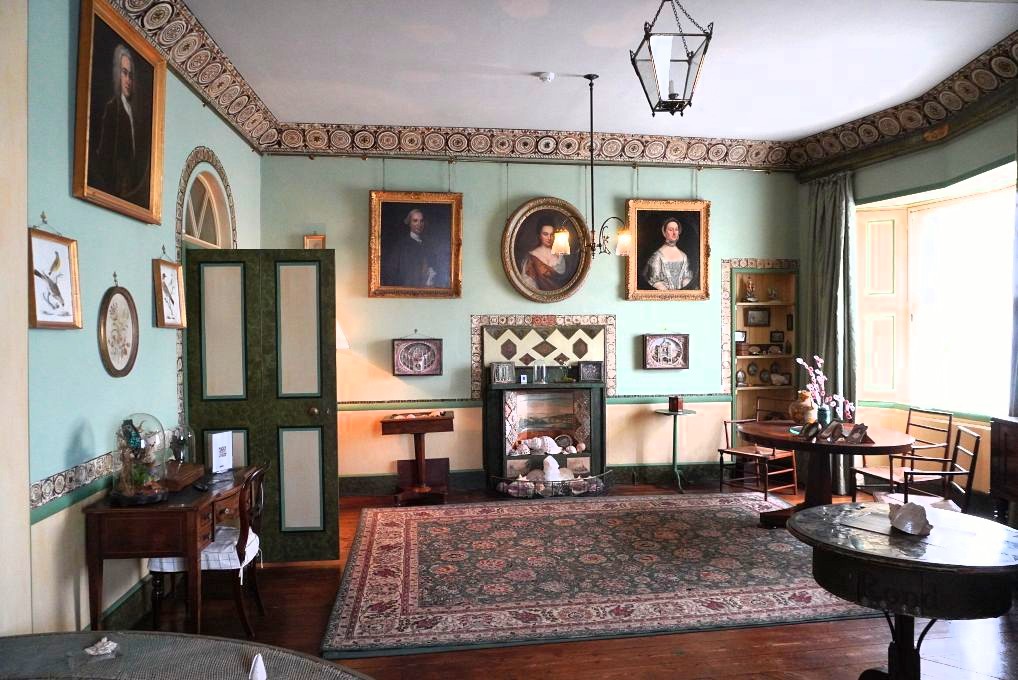
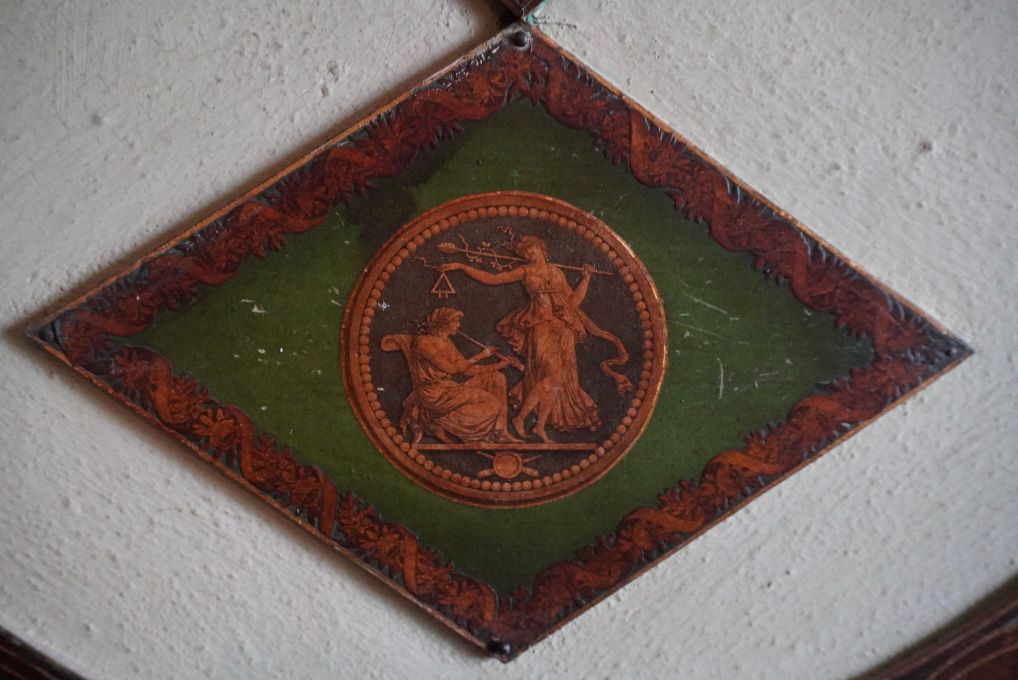
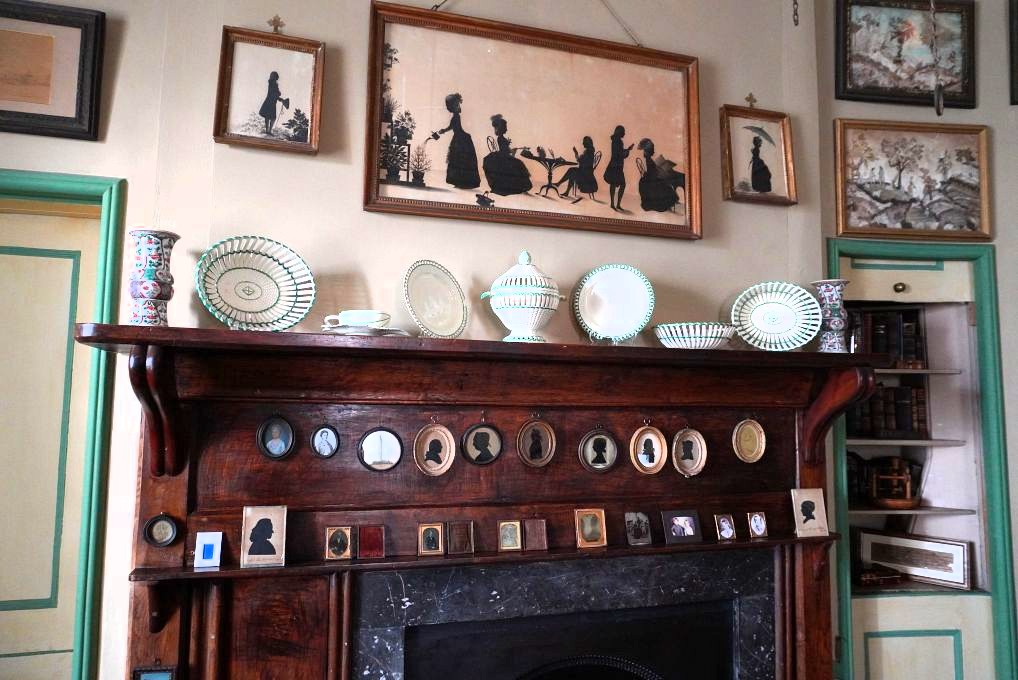
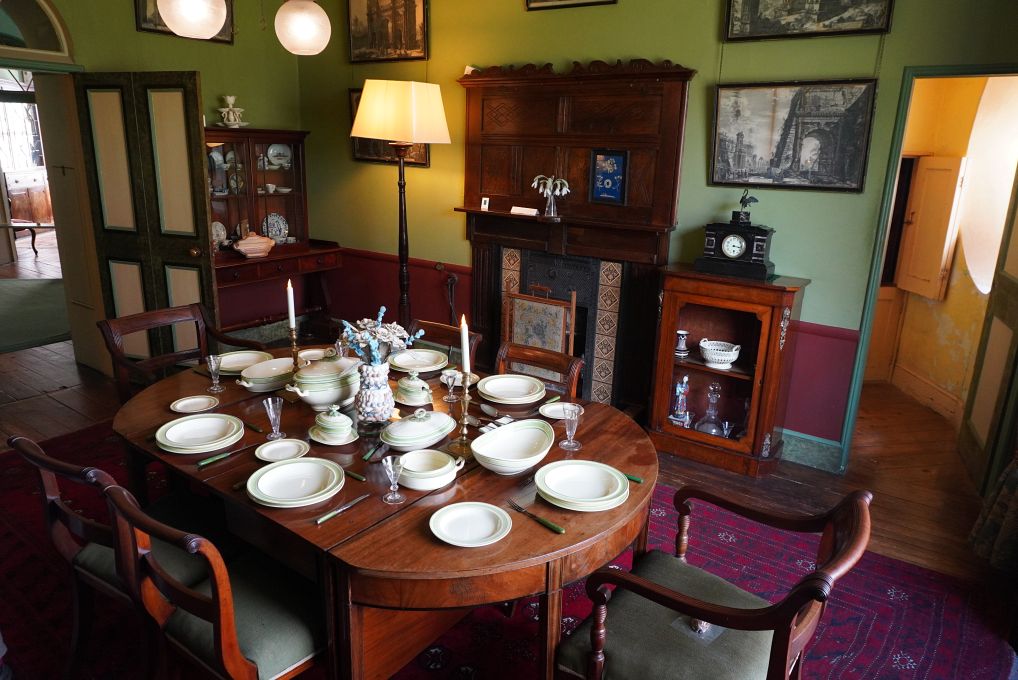
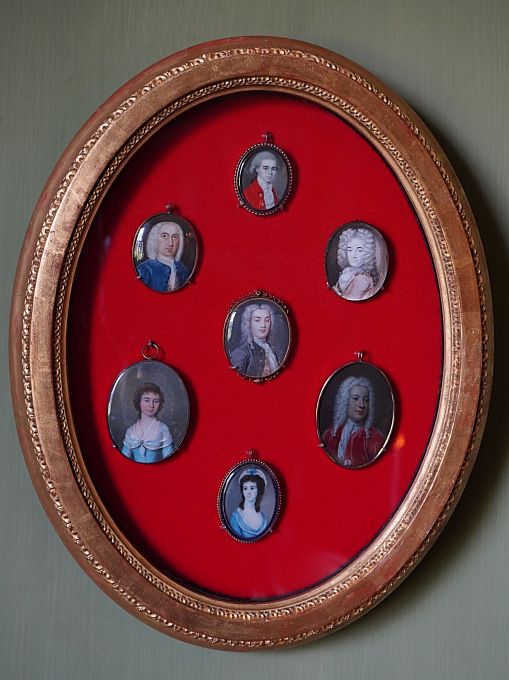
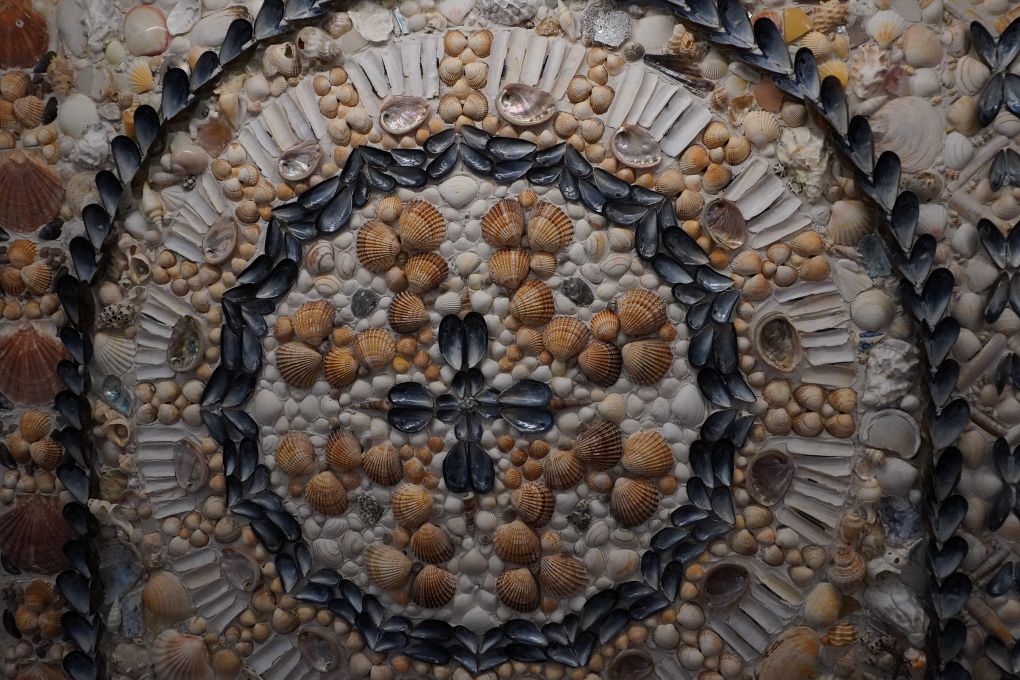
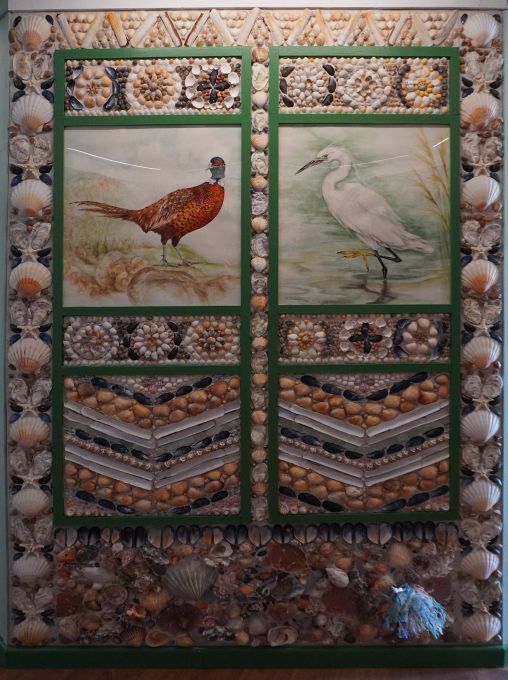
Diamond-shaped windows have been placed on the corners of the house. The dormers and the walkway on the roof have been added by Oswald Reichel. The Music Room. The main rooms are separated by triangular-shaped closets with diamond shaped windows. This one between the Music Room and the Study is filled with books. The Music Room. Inside the library. Library, silhouette of Joseph Hurlock Jnr (1754-1845) as a young boy. Joseph was a second cousin of Jane Parminter. View over the Exe estuary from the first floor. Mary left a will with two principal aims: to preserve A la Ronde and its contents and to allow only unmarried kinswomen to inherit. Click on this link to read how it was nevertheless transferred to Oswald Reichel in 1886. Later owners opened À La Ronde to visitors. Shelves of a cabinet in the library filled with shells and other souvenirs. View up the decorated stairs leading to the Shell Gallery. The Shell gallery is not open to the public anymore but you can click on this link for a 360° video of this special place. Bathroom in the first floor. Assorted bed pans. Detail of one of the bed pans. Inside the drawing room. One of the ornaments above the fireplace in the drawing room. Frieze below the ceiling of the drawing room. It is handcrafted and is a collage of feathers. Detail of the frieze and the feathers collage. The other side of the drawing room. Jane Parminter can be seen as a silhouette above the fireplace: she is the one holding a watering can. The dining room. Some medaillons, the bottom left one is of Mary Parminter. A Room of Discovery has been created in the underground floor to recreate an impression of what the shell gallery is (without reproducing it). Detail of a wall decorated with shells. Another display in the Discovery Room.

[Go to Top]

Go back to Berry Pomeroy Castle or go on to East Anglia or go up to Devon


$ updated from: South West England.htxt Wed 17 Dec 2025 16:13:48 trvl2 — Copyright © 2025 Vero and Thomas Lauer unless otherwise stated | All rights reserved $